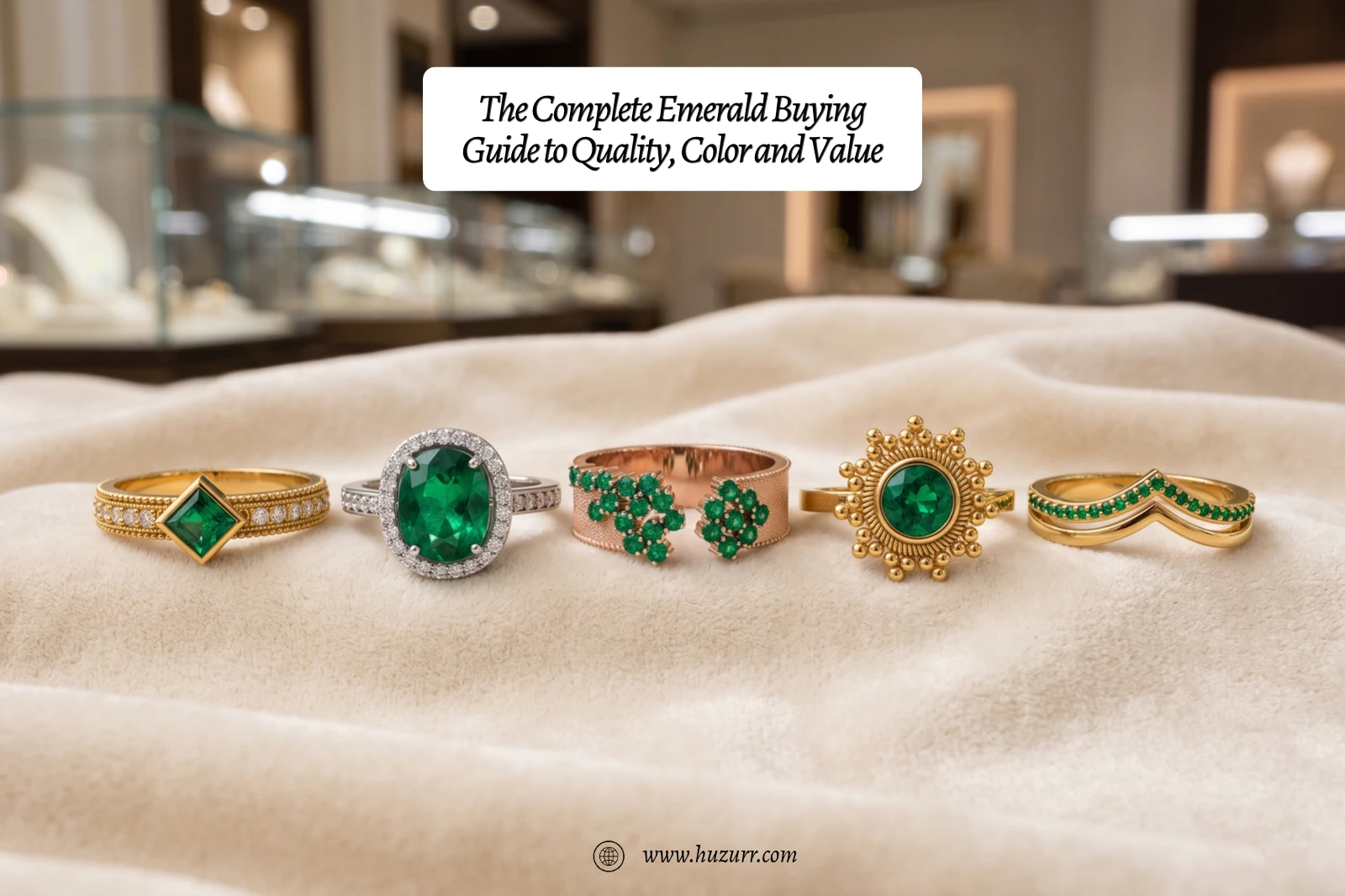
That beautiful green gemstone has caught your eye. Now let's make sure it deserves your money, too.
Imagine walking into a jewelry showroom.
On one side, there's a bright green emerald ring. On the other, a deeper green emerald that looks like it belongs in a royal collection.
Both look gorgeous. Both have price tags. And both seem to be whispering, "Take me home."
But which is actually the better gemstone?
Here's the thing: choosing a good emerald isn't just about finding the greenest stone in the room. It's about understanding its color, clarity, cut, treatments, authenticity, and how well it suits the jewelry you'll actually wear.
Don't worry. You don't need a gemology degree or a magnifying glass permanently attached to your eye.
Consider this your personal emerald-shopping tour. We'll help you look past the sparkle, ask the right questions, and recognize an emerald worth bringing home.
Ready? Let's open the jewelry case.
What Makes an Emerald Gemstone Worth Buying?
A good emerald combines attractive color, appealing transparency, a well-executed cut, appropriate durability, and trustworthy information about its identity and treatments.
Emerald is the green variety of the mineral beryl. Its beautiful color comes primarily from trace amounts of chromium, vanadium, or both.
But two genuine emeralds can look surprisingly different—and have very different values.
Before choosing one, consider these factors:
|
Quality factor |
What to look for |
What to be cautious about |
|
Color |
Rich, appealing green with good saturation |
Grayish, overly pale, or excessively dark appearance |
|
Clarity |
Attractive transparency with tolerable inclusions |
Large fractures, heavy cloudiness, or obvious durability concerns |
|
Cut |
Balanced proportions and lively appearance |
Large dark areas, poor symmetry, or excessively shallow cutting |
|
Carat weight |
A size that fits your style and budget |
Paying more for size while sacrificing visual quality |
|
Treatments |
Clearly disclosed enhancement information |
Vague answers about oiling or other fillers |
|
Authenticity |
Reliable identification and supporting documentation |
Unsupported claims of natural origin |
|
Setting |
Secure craftsmanship and protected vulnerable edges |
Loose stones, damaged prongs, or overly exposed designs |
Our showroom advice: When comparing emeralds, look at color and overall beauty first, but never ignore treatment disclosure or structural condition.
After all, you're buying a gemstone—not auditioning a green traffic light.
1. Start With Color: The First Thing You'll Fall in Love With
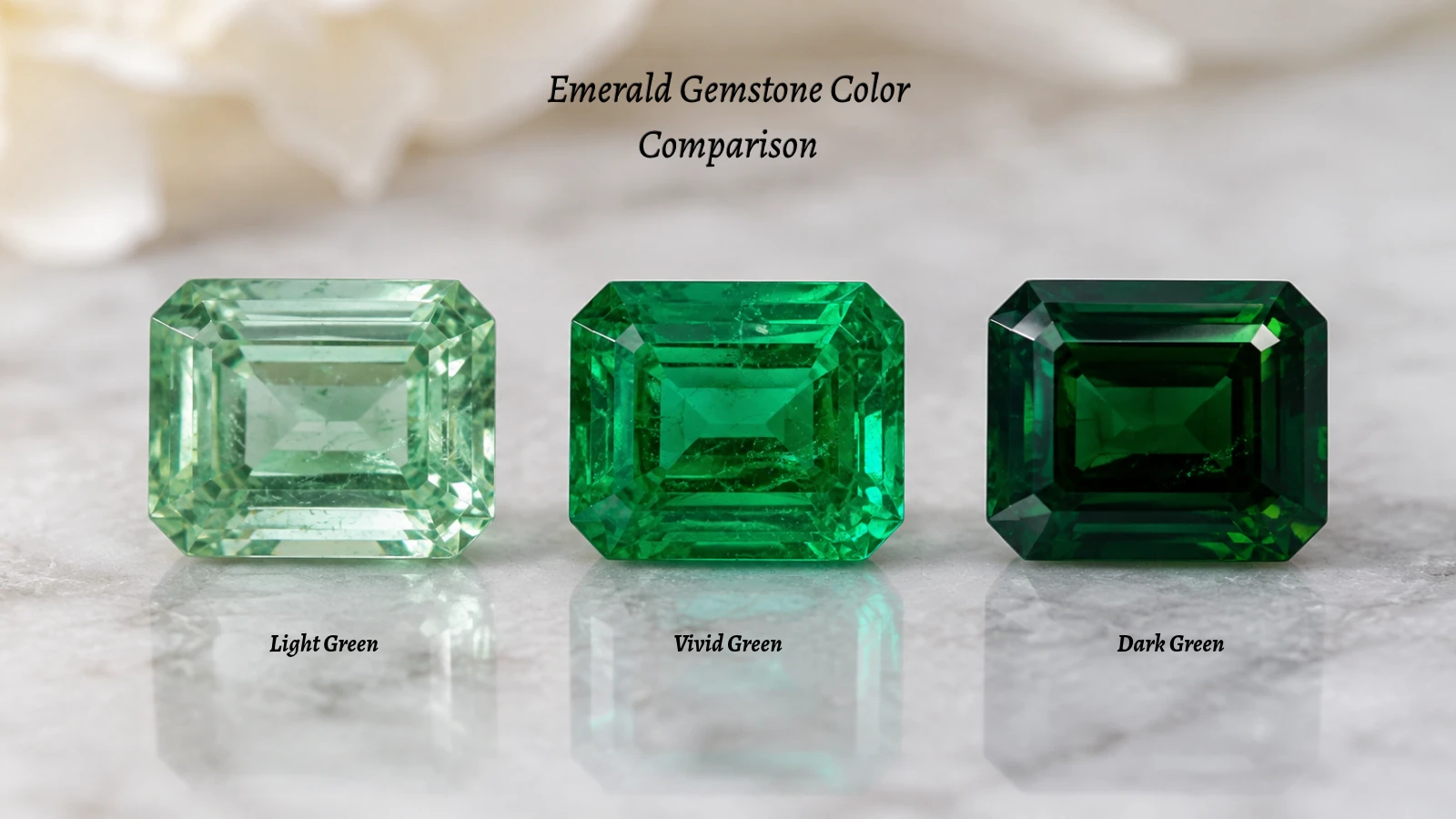 Let's place three emeralds on the showroom counter.
The first is light green. The second is a rich, vivid green. The third is so dark that it almost looks black in certain lighting.
Which should you choose?
For many buyers, the second stone will have the strongest visual appeal.
Emerald color is evaluated through three characteristics:
- Hue: The basic green color and any secondary yellowish or bluish tones.
- Tone: How light or dark the gemstone appears.
- Saturation: How strong and vivid its color looks.
Fine emeralds often display vivid green to slightly bluish-green colors with a medium to medium-dark tone. But personal taste matters, too.
The showroom color test
Before buying, ask to view the emerald in different lighting conditions.
- Look at it under neutral indoor lighting.
- View it in indirect daylight when possible.
- Check whether the green looks appealing across different angles.
- Notice whether the stone becomes excessively dark or washed out.
Don't rely on one heavily edited product photograph or showroom spotlight.
Those lights are excellent at making jewelry look glamorous. Unfortunately, even your kitchen spoon might feel like luxury jewelry under the right spotlight.
Huzurr shopping tip: Start by exploring the emerald ring collection. Compare the different green tones and ring styles, then check the individual product details before choosing your favorite.
2. Check Emerald Clarity: Perfection Isn't Always the Goal
 Here's where emeralds get interesting.
With many gemstones, buyers look for as few visible inclusions as possible.
Emeralds are different.
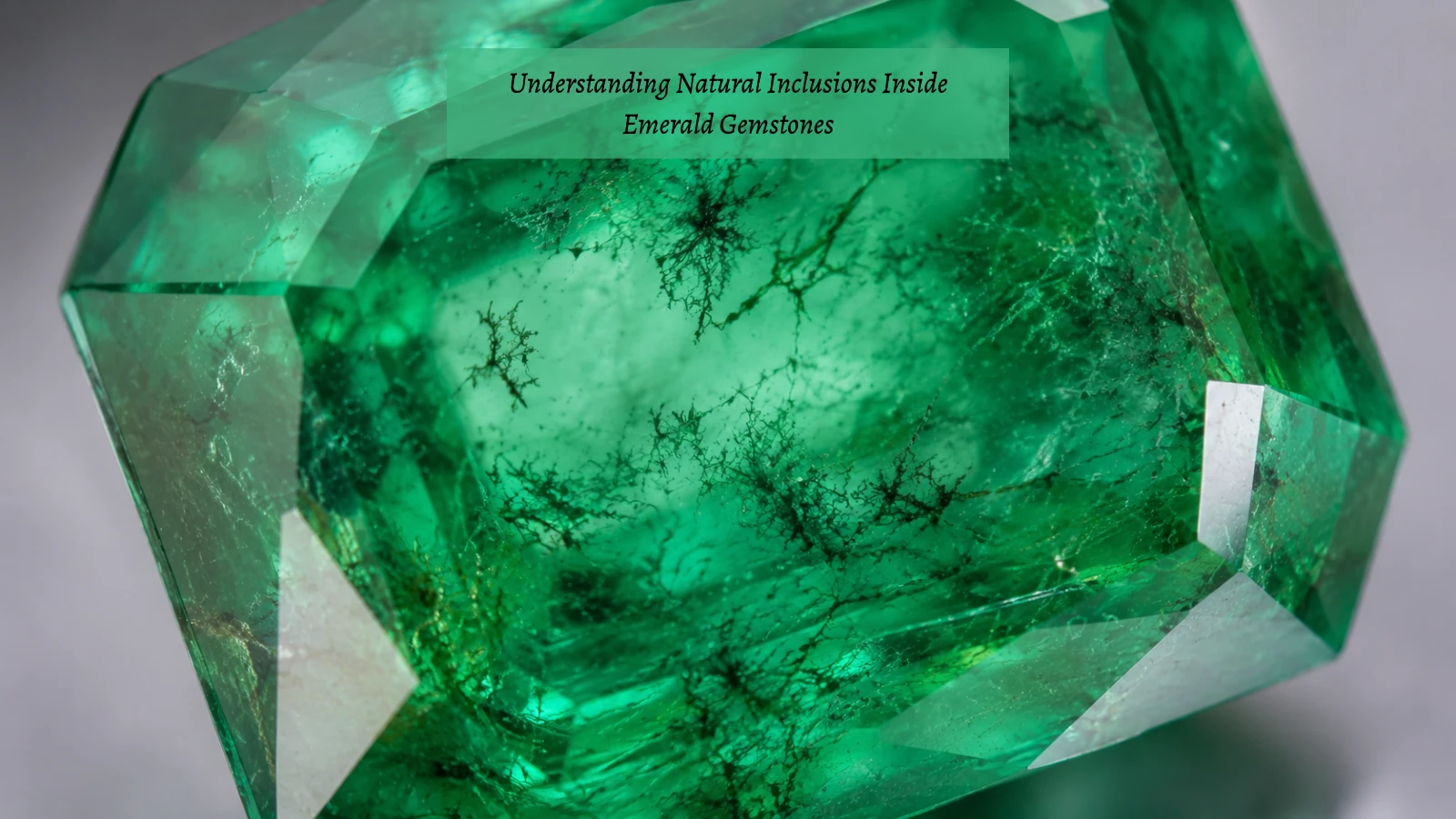
Natural emeralds commonly contain internal characteristics, including crystals, growth features, and tiny fissures. Their garden-like appearance is often called jardin, the French word for garden.
So, if you notice small natural-looking features inside an emerald, don't immediately assume something is wrong.
Some inclusions are part of what makes each natural emerald visually distinctive.
However, not every inclusion is desirable.
Which emerald clarity features should concern you?
Be especially careful when an emerald has:
-
Large, highly visible fractures reaching the surface.
-
Heavy cloudiness that reduces transparency.
-
Damage around its corners or edges.
-
Obvious cracks close to the gemstone setting.
-
Internal features that strongly interfere with its appearance.
An attractive natural emerald does not need to be internally flawless.
In fact, an unusually clear, inexpensive emerald deserves additional questions about whether it is natural, laboratory-grown, or an imitation.
Remember: Inclusions alone cannot establish authenticity. Some lab-created emeralds have inclusions, too.
What should you ask the jeweler?
Try this:
"Can you show me the emerald in normal lighting and explain whether its inclusions affect durability?"
A knowledgeable seller should be able to discuss the stone's visible characteristics and explain when professional examination may be needed.
For more help comparing green gemstones, read Huzurr's Emerald vs Peridot Guide.
3. Choose the Right Emerald Cut: Beauty Is More Than Shape
 Now comes one of the most enjoyable parts of the showroom visit: trying different designs.
Perhaps you love traditional rectangular emeralds. Perhaps a round emerald suits your style. Or maybe a heart-shaped gemstone is already making your romantic decisions for you.
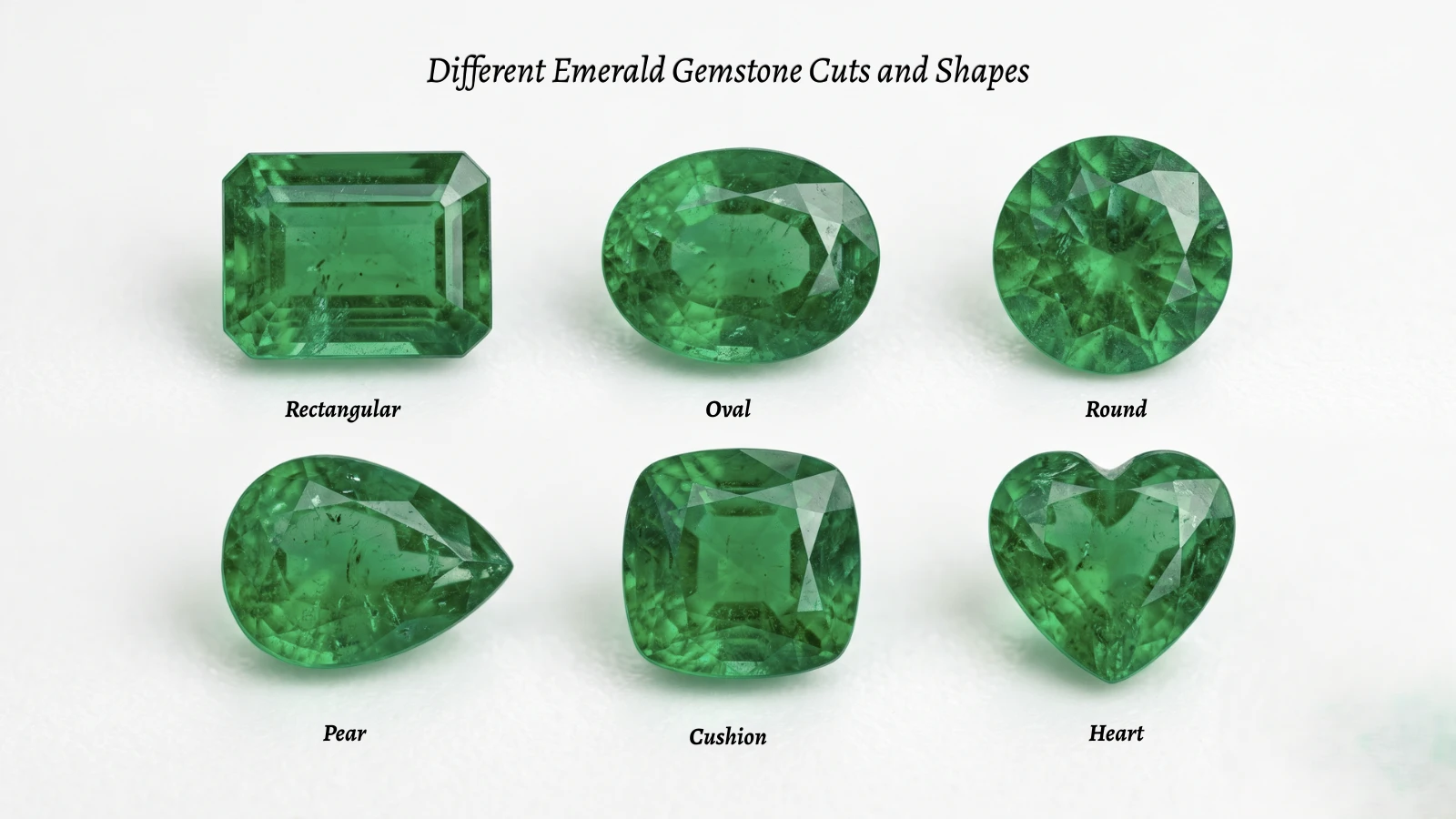
Emeralds can be cut into many shapes, including:
- Rectangular emerald cut
- Oval
- Round
- Pear
- Cushion
- Heart
The classic rectangular emerald cut is especially associated with this gemstone. Its beveled corners can help reduce vulnerability at the corners while showing off the emerald's color.
But a good cut is not simply a fashionable shape.
It should help the emerald display its color, maintain attractive proportions, and avoid unnecessary dark or transparent-looking areas.
How to inspect the cut
Look at the gemstone face-up.
Does the color appear attractive and reasonably balanced? Does the stone look lively when moved? Is there a distracting dark area in the center? Does the shape look symmetrical?
These questions matter more than selecting a shape because someone declared it "the best."
Try these Huzurr designs
For vintage romance: The Emerald Diamond Victorian Emerald Silver Ring features a round emerald in a Victorian-inspired design.
For a modern gold-toned look: Explore the Sparkling Emerald Bypass Yellow Gold Plated Diamond Ring, with its distinctive bypass-style design.
Both offer different styles, so the choice comes down to your preferred aesthetic, setting, and product specifications.
And if you're still deciding between ring styles, Huzurr's Complete Ring Guide is a useful next stop.
4. How to Identify a Real Emerald Gemstone Before Buying
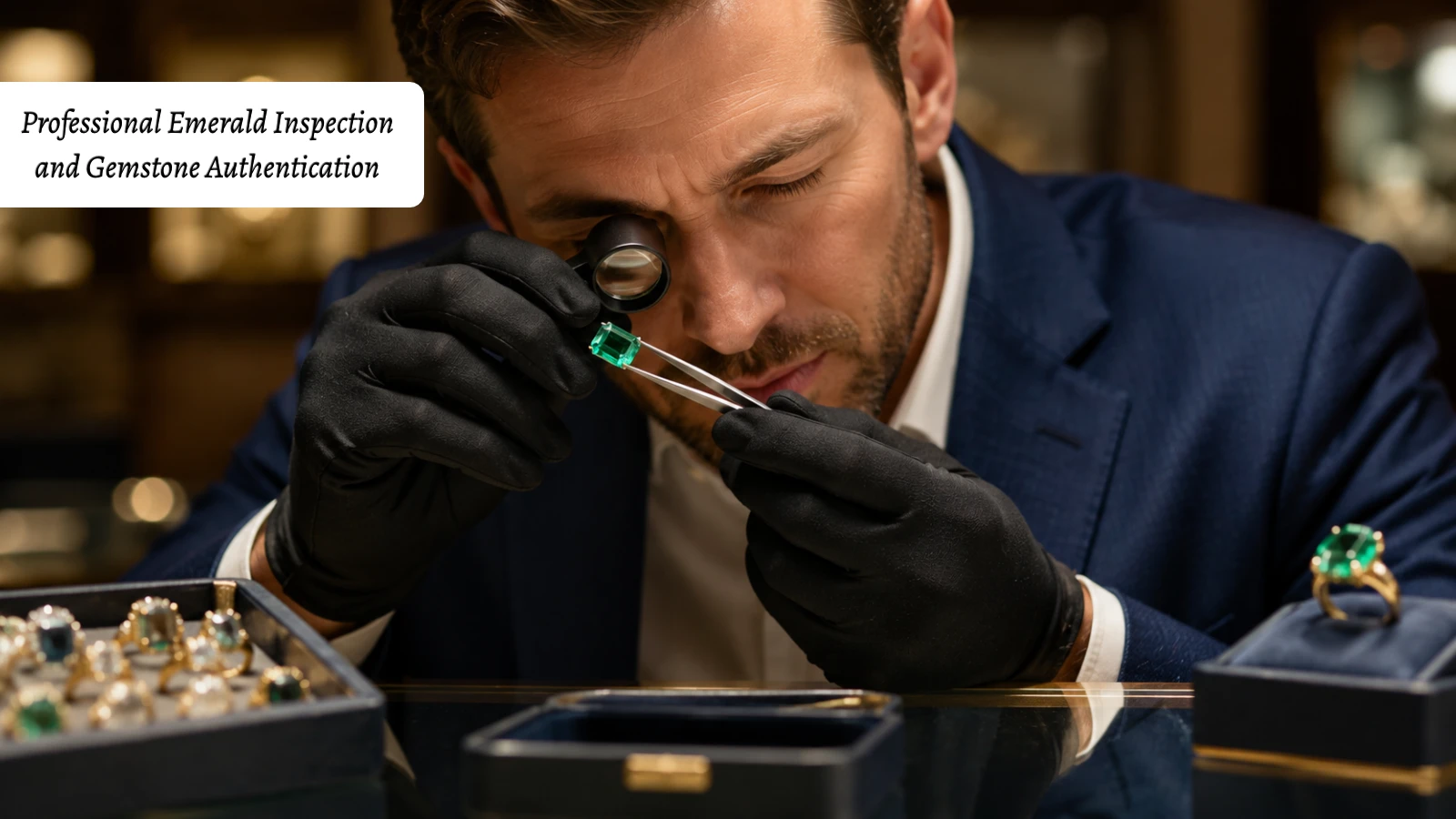 Let's address the question many shoppers are quietly thinking.
"How do I know this emerald is actually real?"
First, understand an important distinction.
A natural emerald, a lab-created emerald, and an emerald imitation are not the same thing.
|
Gemstone type |
What it means |
Buying consideration |
|
Natural emerald |
An emerald formed naturally within the Earth |
Ask about identity, treatments, and documentation |
|
Lab-created emerald |
Genuine emerald material grown under controlled laboratory conditions |
Understand that it is lab-created, not mined |
|
Imitation emerald |
Another material made to resemble emerald, such as glass or a different gemstone |
Confirm exactly what material is being sold |
Laboratory-grown emeralds are genuine emerald material, but their origin is different from natural emeralds.
That difference should be clearly explained before purchase.
Can you identify a genuine emerald at home?
You can examine color, transparency, workmanship, and visible characteristics. You can also review the product description and seller's disclosures.
But these observations cannot conclusively determine an emerald's natural or laboratory-grown origin.
Skip unreliable home tests involving scratching, flames, chemicals, or other potentially damaging methods.
Your emerald isn't applying for an extreme-sports competition.
For a meaningful purchase, consider independent gemological identification.
A useful example from Huzurr
Huzurr also offers jewelry explicitly described as lab-created emerald, including the Infinity Rose Gold Plated Heart-Cut Lab Created Emerald Necklace.
It's a useful reminder to read the gemstone specification rather than judging origin from appearance alone.
Smart buying rule: Choose natural or lab-created emerald intentionally, based on your preferences and budget. Never let the distinction remain unclear.
5. Ask About Emerald Treatments Before You Pay
Here's a question that experienced gemstone buyers ask—and first-time shoppers often forget.
"Has this emerald been treated?"
Many emeralds undergo clarity enhancement, commonly involving oil or other filling substances introduced into surface-reaching fissures to make them less noticeable.
This is a recognized practice within the gemstone trade, but the treatment matters when evaluating price, maintenance, and long-term appearance.
Some enhancements may change in appearance over time or require additional care.
What to ask
Before making your decision, ask:
- Has the emerald undergone clarity enhancement?
- What treatment information is available?
- Is there an independent laboratory report?
- Does the treatment affect cleaning or maintenance?
- Is the treatment disclosure included in the purchase documentation?
For higher-value natural emeralds, treatment information can make a meaningful difference to the purchase decision.
A beautiful emerald can still be a worthwhile purchase when treated. The important part is understanding what you're buying.
Showroom rule: A clearly disclosed treatment is better than a mysterious claim of perfection.
6. Don't Let Carat Weight Make Every Decision
Now imagine this.
You're comparing two emeralds.
One is larger but looks pale and cloudy. The other is smaller, with richer color and a more attractive appearance.
Which one deserves your attention?
Very often, the smaller stone may be the more appealing choice.
Carat measures gemstone weight, not visual quality. A larger emerald is not automatically more beautiful or more valuable than a smaller one.
Also, gemstone weight and visible dimensions are different considerations.
Two emeralds with the same carat weight can look different in size because of their proportions.
How to buy according to your budget
If you're shopping for an everyday ring: Prioritize a pleasing color, secure setting, and wearable proportions.
If you're shopping for a statement piece: Consider a larger stone, but don't sacrifice transparency and overall appearance just for extra size.
If you're choosing a special gift: Think about the recipient's style before focusing on impressive specifications.
No one wants a giant gemstone that spends its entire life sitting in a jewelry box because it's too uncomfortable to wear.
7. Choose Jewelry That Protects Your Emerald
Emeralds are approximately 7.5–8 on the Mohs hardness scale.
That sounds reassuring, but there's a catch.
Mohs hardness measures resistance to scratching. It does not tell you how resistant a gemstone is to chips, fractures, or impact damage.
Emeralds can be vulnerable to damage, especially when they contain fractures or have exposed edges.
That's why the setting matters.
What makes a good emerald jewelry setting?
For rings, inspect the prongs, the position of the emerald, and whether vulnerable edges are sufficiently protected.
Bezel or partially protective settings can be useful options, depending on the gemstone and design.
For earrings and necklaces, the stone may experience fewer everyday knocks than a ring, although secure construction and proper care remain important.
Match the emerald to your lifestyle
|
Your lifestyle |
What to consider |
|
Everyday jewelry wearer |
A secure, reasonably protected design |
|
Special-occasion shopper |
More freedom to choose elaborate statement styles |
|
Romantic gift buyer |
Heart-shaped pendants, rings, or birthstone jewelry |
|
Vintage-style lover |
Victorian-inspired emerald rings |
|
Minimalist jewelry lover |
Simple silhouettes and comfortable proportions |
You can browse Huzurr's emerald rings, emerald bracelets, and May birthstone jewelry to see how different settings suit different tastes.
8. Should You Buy a Certified Emerald?
If you're spending a substantial amount on a natural emerald, an independent gemological report may be particularly valuable.
A reputable laboratory report can provide important information about the stone's identity, natural or laboratory-grown origin, detectable treatments, and other characteristics.
Depending on the laboratory and report type, an opinion about geographic origin may also be available.
However, a gemstone identification report isn't automatically a quality grade or a financial appraisal.
Before purchasing, ask:
- Is the stone natural or laboratory-grown?
- Is there independent identification documentation?
- Are detected treatments disclosed?
- Can the report number be verified with the issuing laboratory?
- What is the return policy if the gemstone differs from its description?
Not every affordable piece of emerald jewelry will come with an individual laboratory report. In those cases, clear product information and transparent seller answers become especially important.
For more information about gemstone evaluation, you can consult the Gemological Institute of America emerald buying guide.
9. Our Emerald Showroom: Find the Style That Feels Like You
 We've examined the gemstones. We've talked about color, authenticity, cut, and craftsmanship.
Now for the fun part.
Which piece would you actually love wearing?
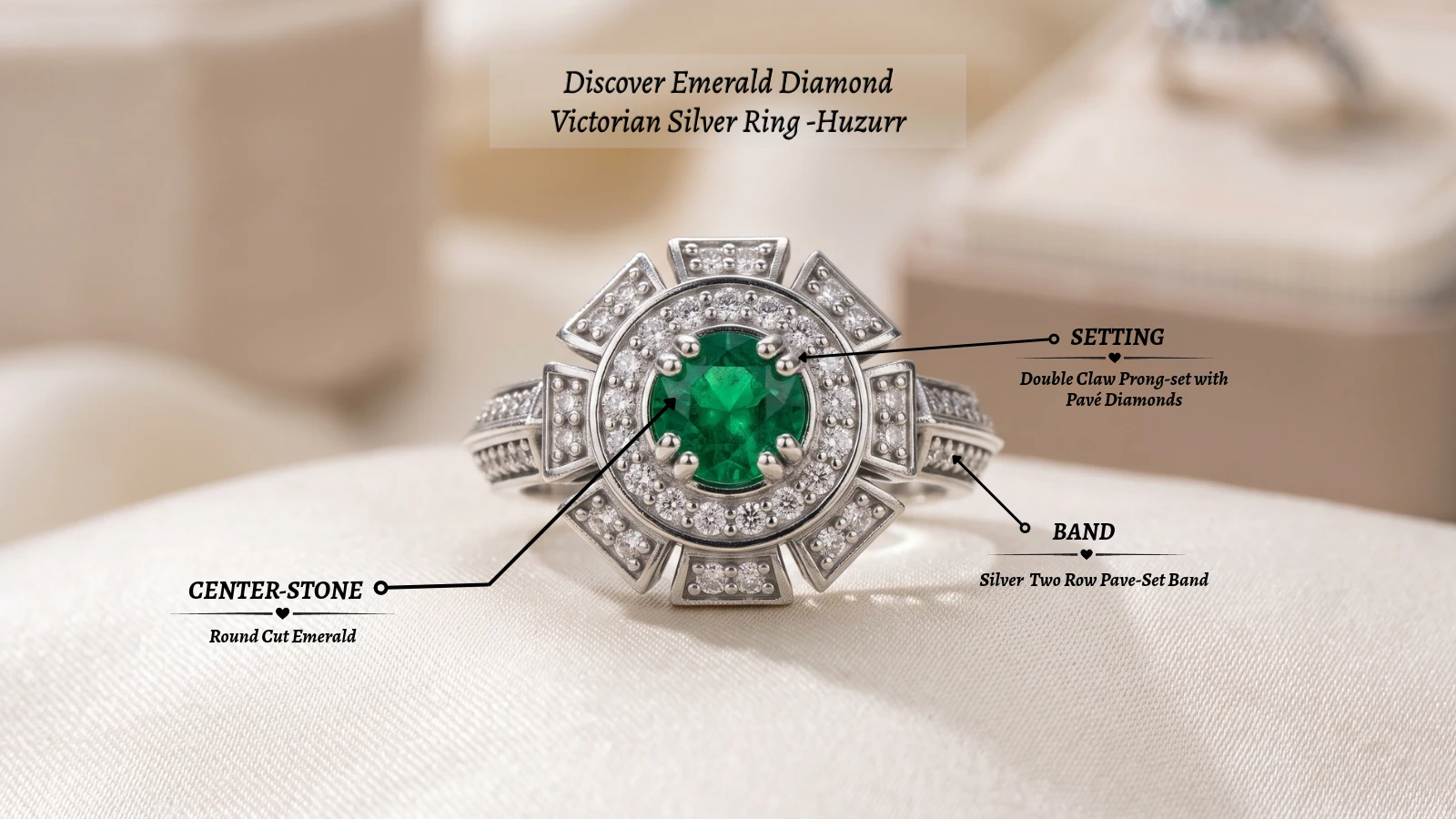
The vintage romantic: Emerald Diamond Victorian Silver Ring
If you adore classic detail, vintage-inspired design, and a touch of old-world romance, this is a lovely style to explore.
The round emerald and silver setting create an elegant appearance that works well for someone who prefers jewelry with personality.
Explore the Emerald Diamond Victorian Silver Ring at Huzurr.
The modern statement lover: Emerald Bypass Gold Plated Ring
Prefer something distinctive?
A bypass-style ring brings visual movement and a contemporary twist to traditional gemstone jewelry.
Huzurr's yellow gold-plated emerald bypass design is worth comparing if you enjoy warm metal tones and a more expressive silhouette.
View the Sparkling Emerald Bypass Gold Plated Ring.
The sentimental gift shopper: Lab-Created Emerald Heart Necklace
If you're shopping for someone special, a heart-shaped emerald necklace brings its message without needing an elaborate speech.
Huzurr's rose gold-plated infinity necklace features a heart-cut lab-created emerald and a romantic design.
See the Lab-Created Emerald Heart Necklace.
A note from your virtual showroom assistant: These are style suggestions, not independent quality grades. Always review the current product details, gemstone origin, metal specifications, sizes, and availability before buying.
10. Seven Emerald Buying Mistakes to Avoid
Before you head toward checkout, let's make sure none of these common mistakes follows you home.
Mistake 1: Choosing only by color. Attractive green is important, but clarity, treatments, condition, and craftsmanship matter too.
Mistake 2: Assuming every inclusion means a fake gemstone. Natural emeralds commonly have inclusions.
Mistake 3: Assuming a flawless-looking emerald must be natural. Appearance alone cannot establish origin.
Mistake 4: Buying the largest stone your budget allows. Size cannot compensate for a gemstone you don't find beautiful.
Mistake 5: Forgetting to ask about treatments. Enhancement disclosure can influence value and care.
Mistake 6: Ignoring the jewelry setting. Even a beautiful emerald may be a poor everyday choice if its setting leaves it vulnerable.
Mistake 7: Buying without reading the product specifications. Check gemstone type, metal, dimensions, seller policies, and other important details.
A little research before checkout can save a great deal of disappointment afterward.
And yes, it's considerably more enjoyable than explaining why your "once-in-a-lifetime emerald deal" turned out to be green glass.
11. Your Final Emerald Buying Checklist
Let's make this simple.
Before choosing an emerald gemstone or emerald jewelry, confirm:
- I genuinely like the emerald's color in realistic lighting.
- I've checked the stone's clarity and visible condition.
- The cut looks attractive and proportionate.
- I understand whether the emerald is natural or laboratory-grown.
- I've asked about any gemstone treatments.
- The size and setting suit my intended use.
- I've reviewed the metal and product specifications.
- I understand what documentation is included.
- I've checked the seller's return and care policies.
- The piece fits my budget and personal style.
If you can check these boxes confidently, you're making a much more informed decision.
12. How to Care for Your New Emerald Jewelry
Once you've found your perfect emerald, proper care will help keep it looking its best.
Avoid harsh chemicals, abrasive cleaning, and unnecessary impact.
Because emeralds are often fracture-filled, ultrasonic or steam cleaning can be unsuitable. Ask a qualified jeweler about the safest cleaning method for your particular piece.
Store emerald jewelry separately from harder gemstones and inspect ring settings periodically.
For more detailed cleaning and storage advice, visit Huzurr's Jewelry Care Guide.
After all, a beautiful emerald deserves better than being tossed into a drawer with keys, coins, and that mystery earring you lost three years ago.
Frequently Asked Questions About Choosing an Emerald Gemstone
What is the best color for an emerald?
Highly desirable emeralds commonly display a vivid green to slightly bluish-green color, with an appealing tone and saturation. However, your ideal emerald should also match your personal taste.
How do I identify a real emerald gemstone?
Start by reviewing gemstone specifications, checking seller disclosures, and examining the stone's visual characteristics. For reliable confirmation of its identity and origin, seek professional gemological testing.
Are darker emeralds always better?
No. An emerald that is excessively dark may lose brightness and transparency. Look for an appealing balance of color intensity and liveliness.
Are emeralds with inclusions valuable?
Yes. Natural emeralds commonly contain inclusions. Their value depends on the combined effect of color, transparency, cut, treatments, size, and other characteristics.
Is a lab-created emerald a real emerald?
Yes. A properly identified lab-created emerald has the essential properties of emerald, but it was grown in a laboratory rather than formed naturally underground.
Which emerald cut is best for a ring?
The rectangular emerald cut is traditional, but oval, round, and other shapes can also be beautiful. Prioritize attractive cutting and a setting that suits your lifestyle.
Can I wear emerald jewelry every day?
Yes, with appropriate care and sensible precautions. Emerald rings are more exposed to knocks than many necklaces and earrings, so setting design and wearing habits matter.
Is an emerald certificate necessary?
Not every emerald jewelry purchase requires an individual laboratory report. However, independent identification is particularly useful when paying a premium for a natural stone, a specific origin, or particular treatment characteristics.
Should I choose natural or lab-created emerald jewelry?
Choose natural emerald if geological origin is important to you, or consider lab-created emerald if you prefer its particular appearance and price. Compare verified specifications rather than assuming one is automatically the better choice for everyone.
Final Thoughts: Choose the Emerald You'll Love, Not Just the One That Looks Expensive
The best emerald isn't necessarily the biggest, darkest, or most expensive.
It's the one that brings together beautiful color, appealing craftsmanship, clear gemstone information, and a design you'll enjoy wearing.
Take your time. Compare your options. Ask questions.
A good jewelry-buying experience should leave you feeling excited about your choice—not confused about what you just purchased.
And when you're ready to find a little green magic of your own, explore Huzurr's emerald jewelry collection.
Find your green. Choose your style. Make it yours with Huzurr.
Shop Emerald Rings at Huzurr | Explore May Birthstone Jewelry