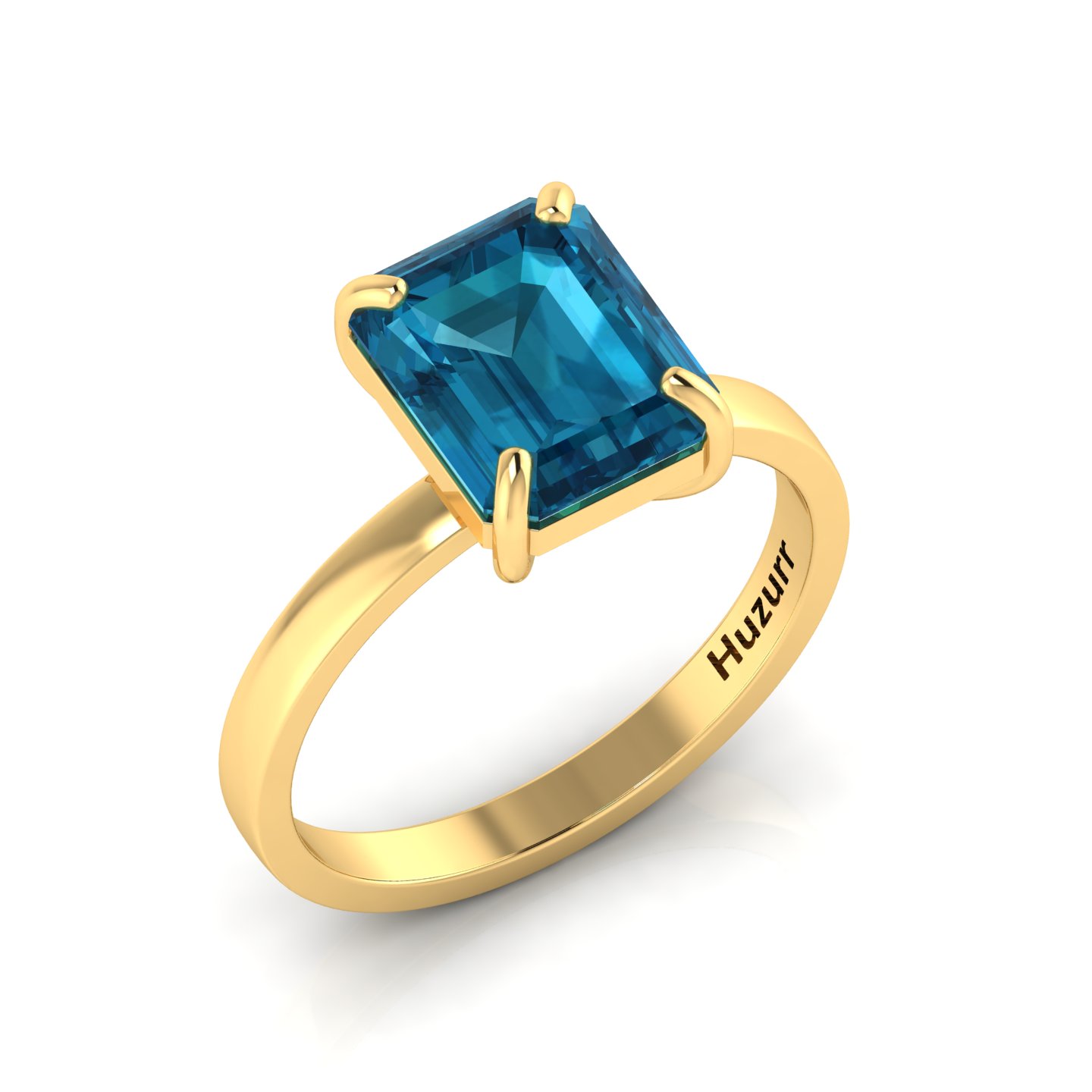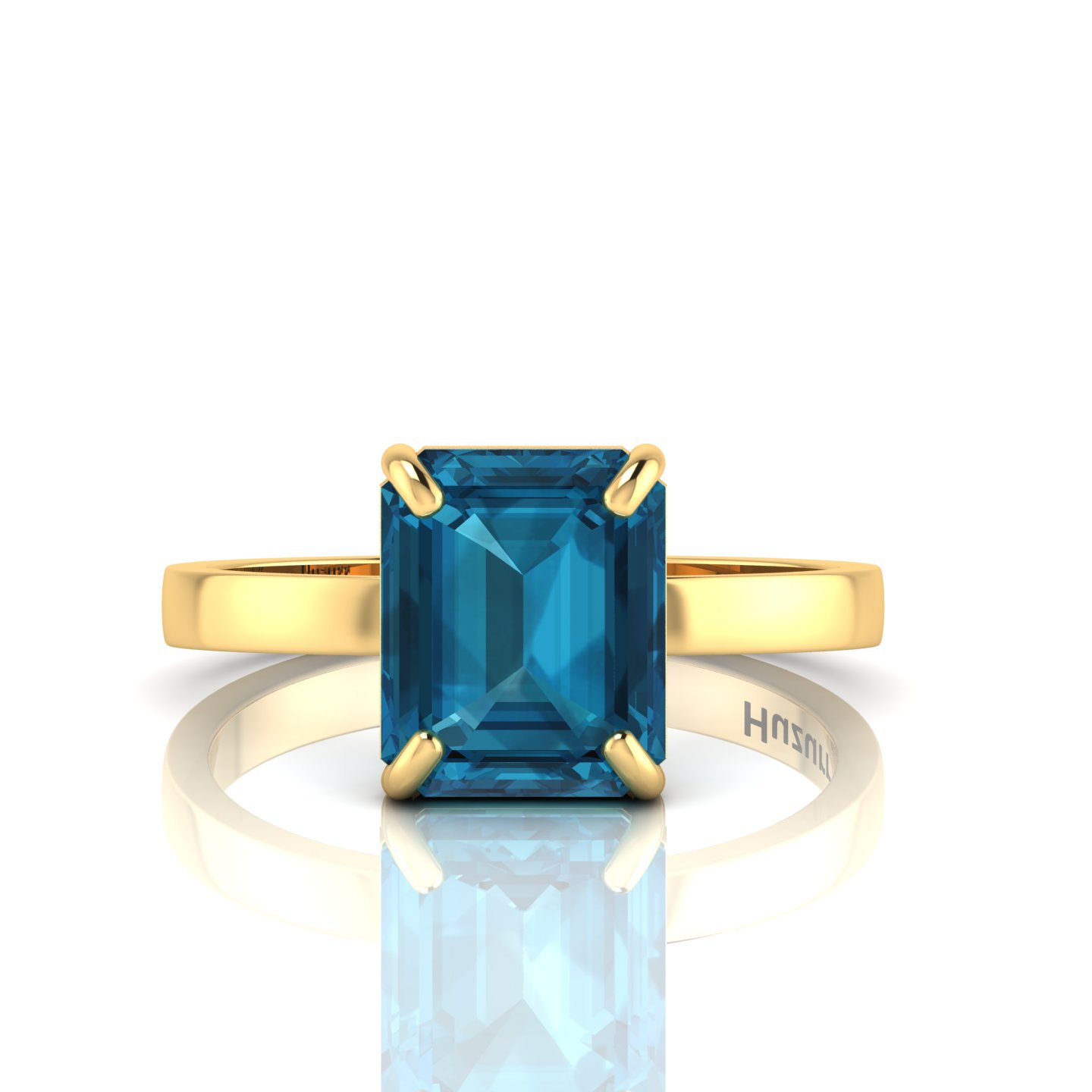
Two green gemstones can look similar in a photo—and feel completely different once you put them on.
Imagine walking into a jewelry showroom.
On one side is a deep green emerald ring with a rich, almost royal appearance. On the other is a bright peridot ring glowing with a fresh yellow-green color.
Both are green gemstones.
But choosing between emerald and peridot is not simply about picking your favorite shade of green.
The better choice depends on how you plan to wear the jewelry, how much care you are comfortable giving it, your budget, your personal style, and even whether you are buying the piece for yourself or as a gift.
Before choosing your green gemstone jewelry, here is what actually separates emerald from peridot—and what those differences mean when you are ready to buy.
Emerald vs Peridot at a Glance
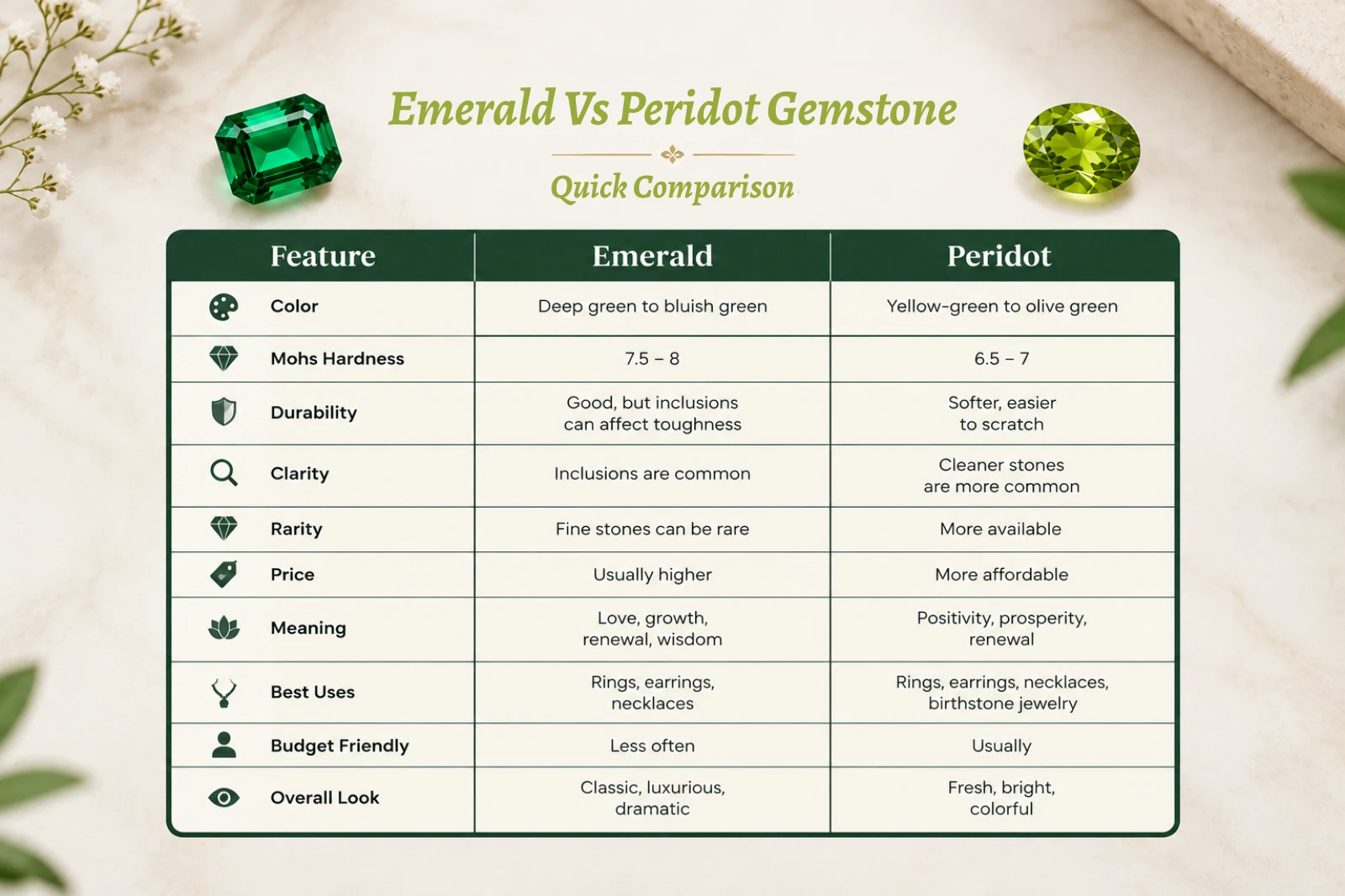
|
Feature |
Emerald |
Peridot |
|
Color |
Deep green to bluish green |
Yellow-green to olive green |
|
Mohs Hardness |
About 7.5–8 |
About 6.5–7 |
|
Durability |
Good scratch resistance, but inclusions can affect toughness |
Softer and easier to scratch |
|
Clarity |
Natural inclusions are common |
Cleaner-looking stones are more common |
|
Rarity |
Fine-quality stones can be rare |
Generally more available |
|
Price Positioning |
Usually higher |
Generally more accessible |
|
Traditional Meaning |
Love, renewal, growth, and wisdom |
Positivity, prosperity, and renewal |
|
Best Jewelry Uses |
Statement rings, earrings, necklaces |
Rings, earrings, necklaces, birthstone jewelry |
|
Best for Budget Buyers |
Less often |
Usually |
|
Overall Look |
Classic, luxurious, dramatic |
Fresh, bright, colorful |
If you already know you love the traditional deep-green appearance, exploring Huzurr's emerald jewelry can help you see how emerald looks across different designs.
If the brighter August-birthstone look appeals to you more, compare styles in the Huzurr peridot rings collection.
What Is an Emerald?
 Emerald is the green variety of the mineral beryl.
But that scientific definition does not explain why people are willing to choose emeralds for engagement rings, anniversary jewelry, statement earrings,s and meaningful gifts.
The attraction starts with color.
The classic emerald color can range from green to slightly bluish green. Fine examples can show strong saturation that immediately gives a piece of jewelry visual depth.
That deeper emerald green color is especially effective in designs where the gemstone is meant to become the focal point.
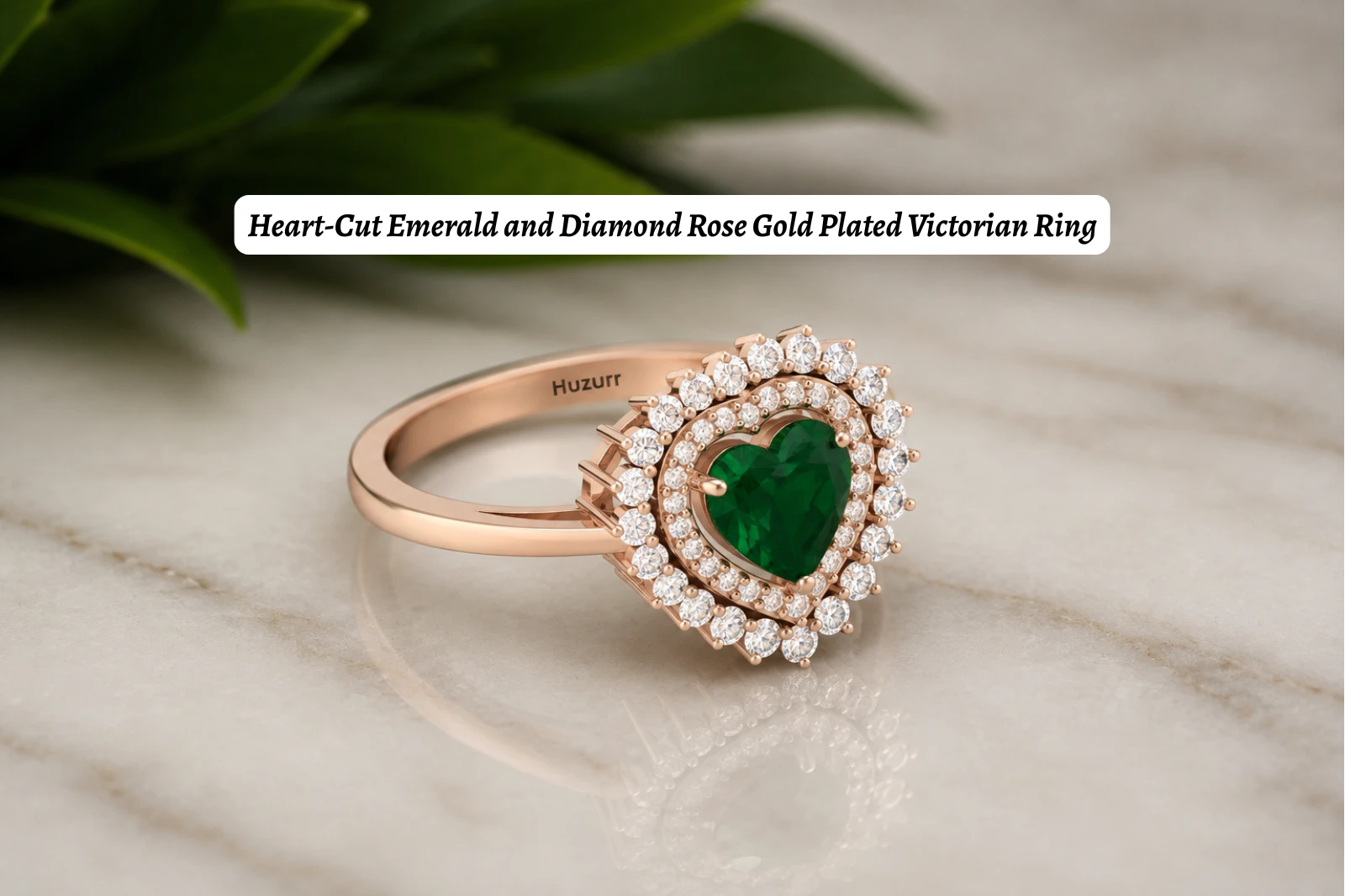
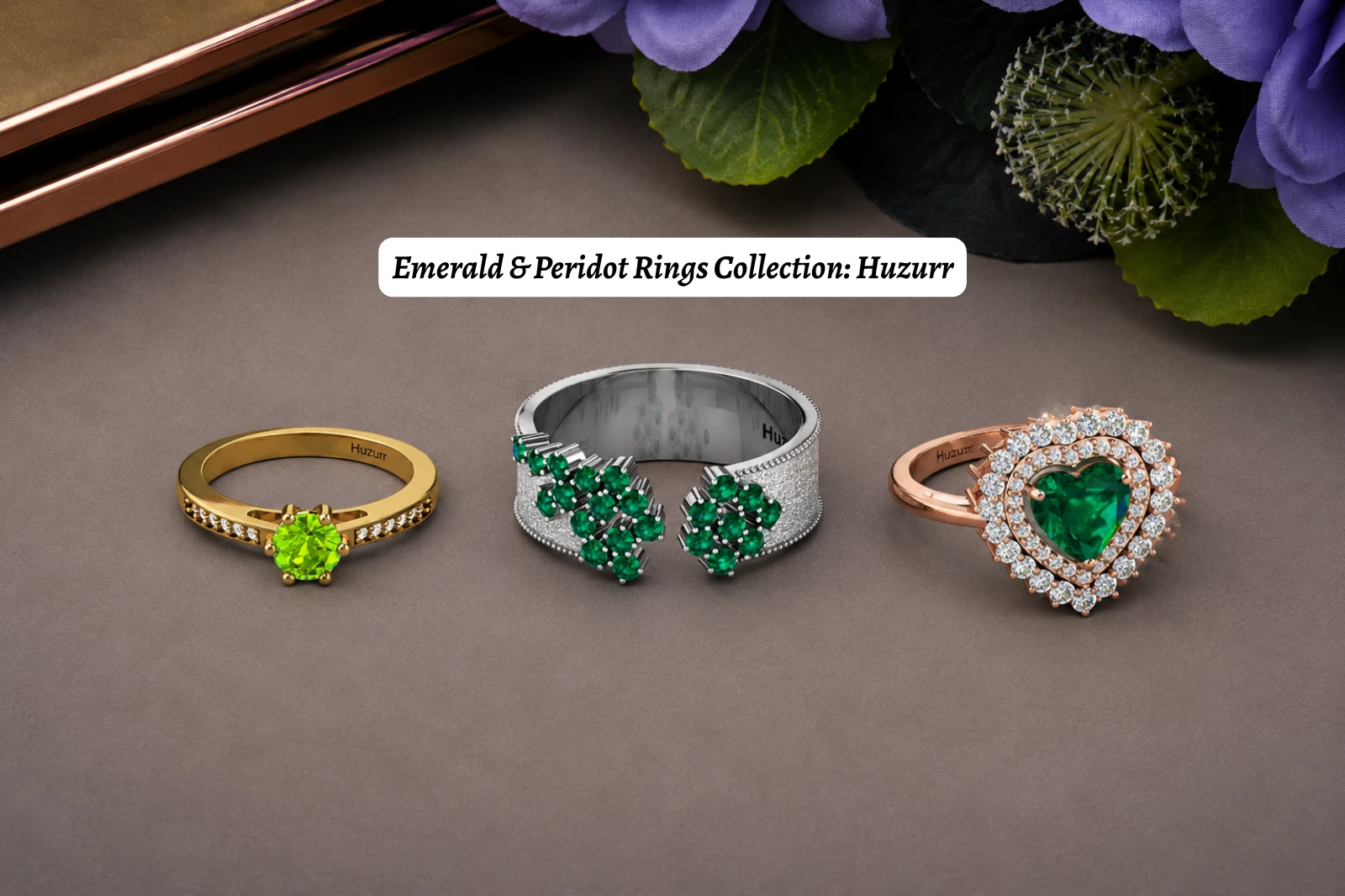
For example, the Huzurr Heart-Cut Emerald and Diamond Rose Gold Plated Victorian Ring combines an emerald center with a diamond halo and rose-gold-toned finish.
It is a good illustration of what emerald does particularly well: turning a green gemstone into a dramatic statement rather than simply adding color.
Emeralds also commonly contain natural inclusions.
That does not automatically make an emerald of poor quality. Visible internal characteristics are far more accepted in emerald than they would be in many other gemstones.
As a buyer, focus on the complete appearance:
- Is the green attractive?
- Does the gemstone still appear lively?
- Do the inclusions distract from its beauty?
- Does the design protect the stone?
- Does the style suit how frequently you plan to wear it?
For buyers who prefer something less dramatic, Huzurr also has designs such as the Floral Emerald Sterling Silver Open Cuff Band Ring, where smaller emerald accents create a completely different effect.
That difference is worth remembering:
Choosing emerald does not automatically mean choosing a large statement gemstone.
What Is Peridot?
 Peridot belongs to the olivine mineral family.
Its green is noticeably different from emerald.
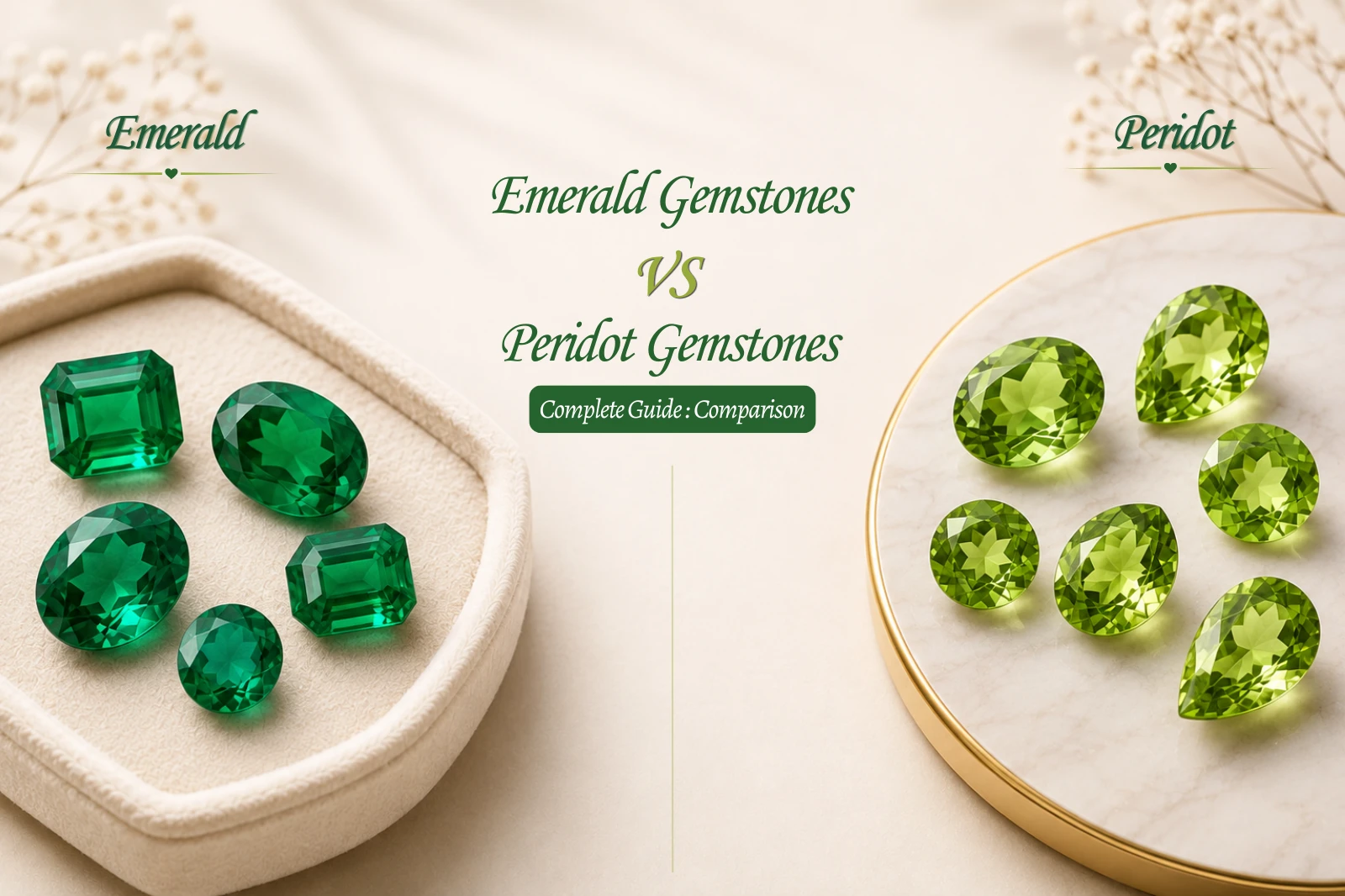
Instead of the deep or bluish green usually associated with emerald, peridot commonly appears yellow-green, lime green, grass green, or olive green.
That makes its personality much brighter.
If emerald feels like an evening gown, peridot feels more like sunlight through fresh leaves.
This makes peridot especially attractive for buyers who enjoy:
- warm gold tones,
- colorful jewelry,
- spring and summer styling,
- birthstone pieces,
- And gemstones that look distinctive without feeling overly formal.
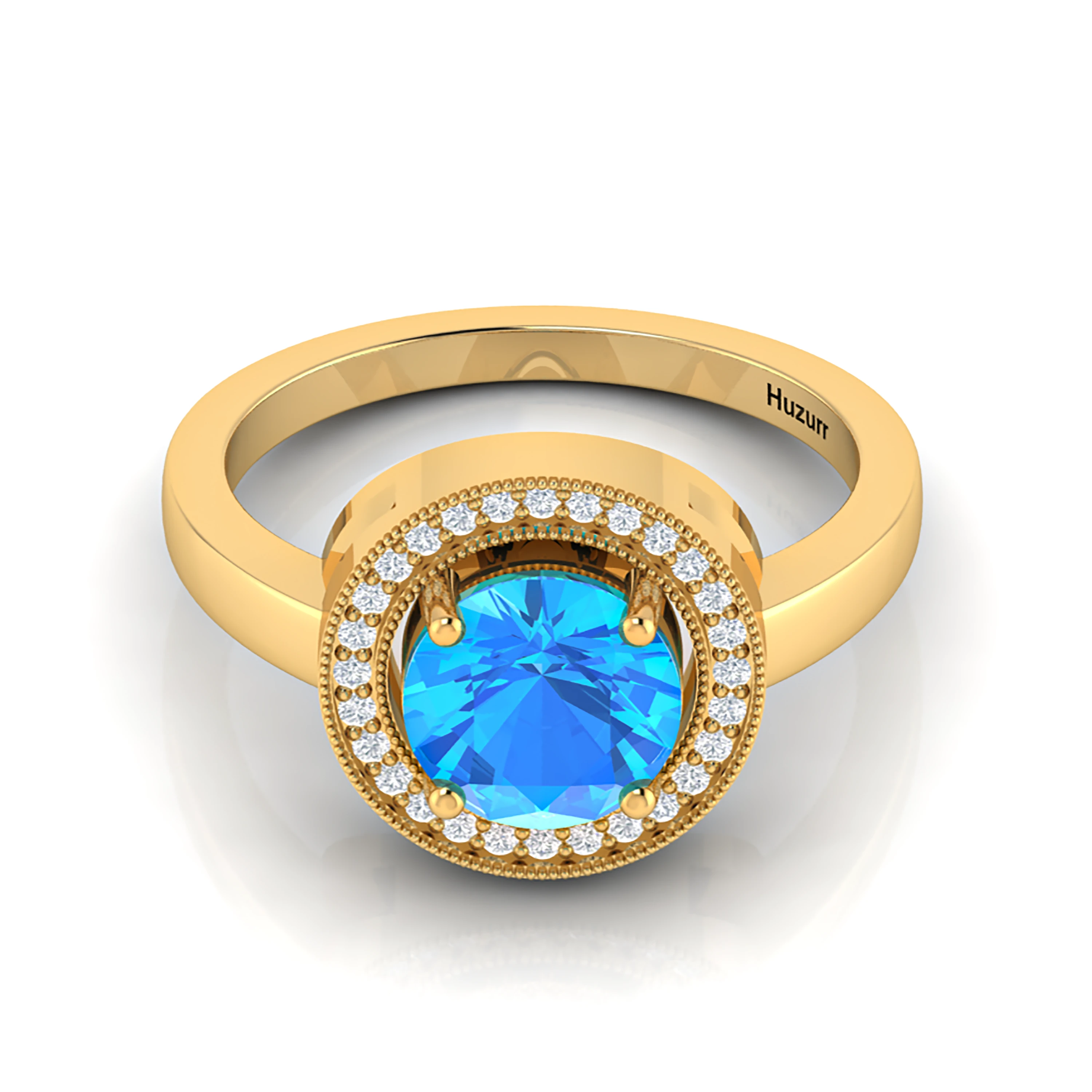
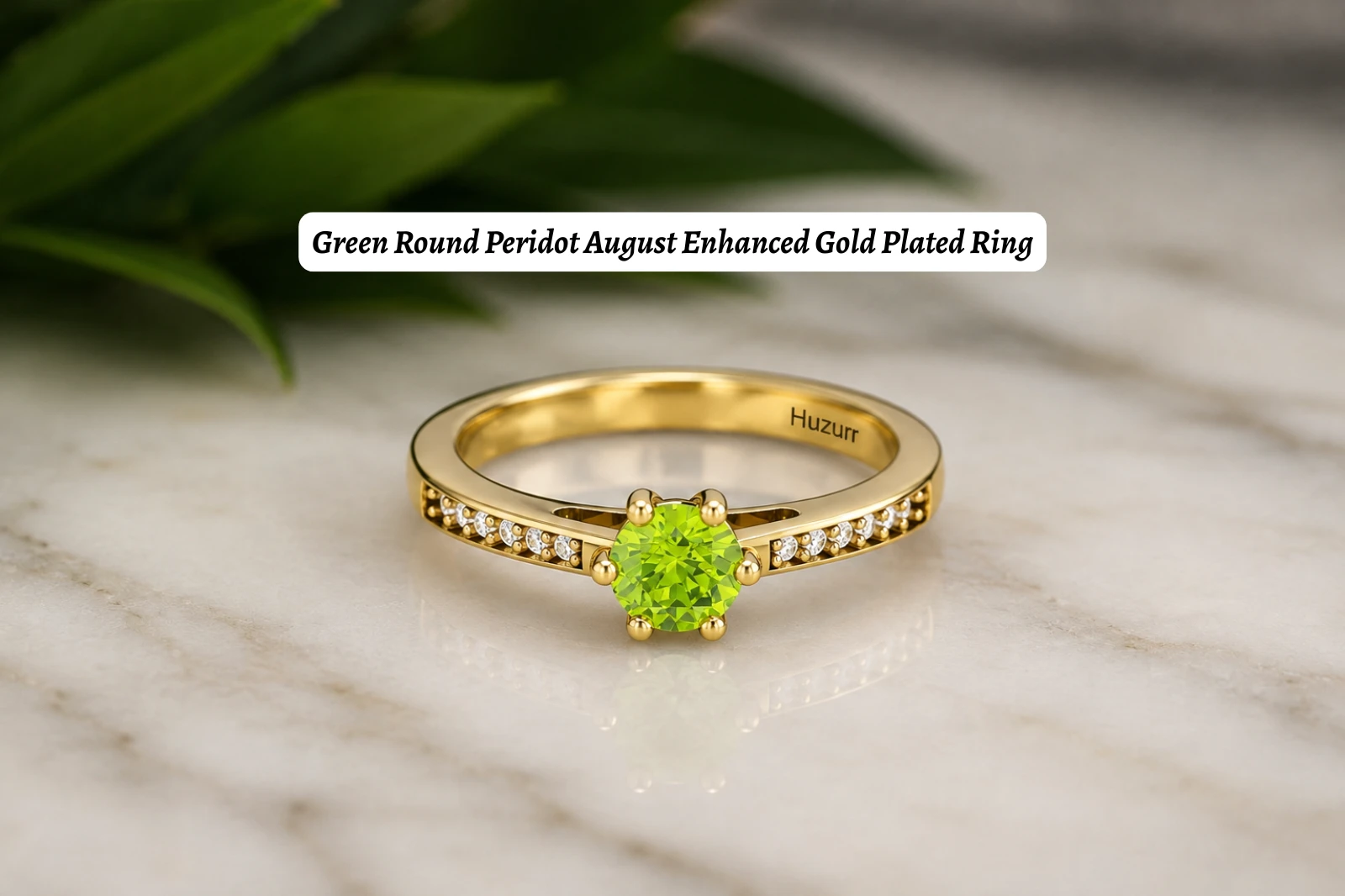
Take the Green Round Peridot August Enhanced Gold Plated Ring as an example.
Its yellowish-green round peridot creates a lighter visual effect than the richer green you normally associate with an emerald center stone.
It also demonstrates another important buying difference.
Peridot generally sits in a more accessible price category than fine natural emerald, which can give buyers greater freedom to prioritize design, gemstone size, or additional jewelry pieces.
If you want to see more variations rather than deciding from a single piece, browse the complete peridot rings collection.
Emerald vs Peridot: Key Differences
Emerald vs Peridot Color
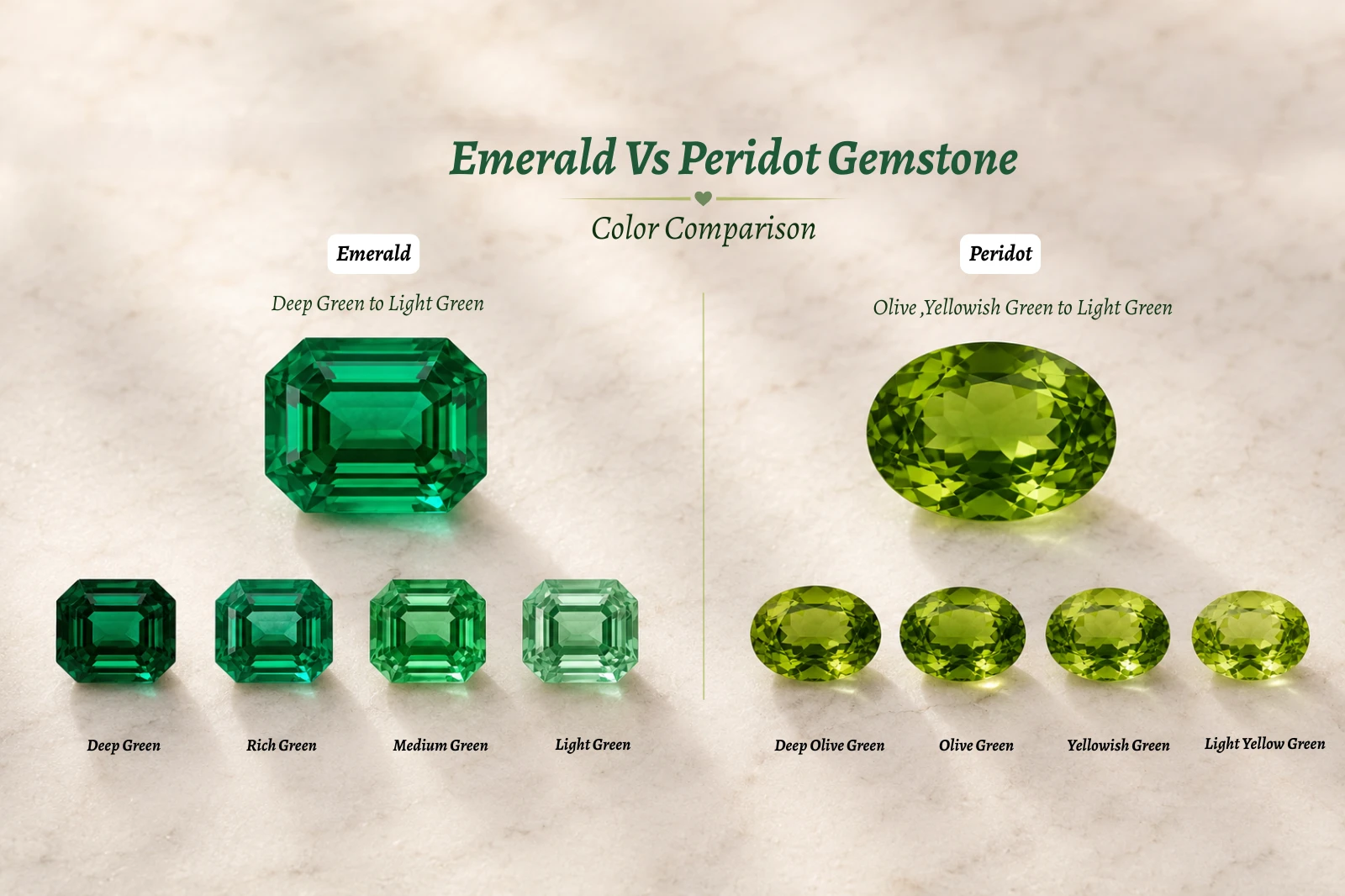 If you placed both stones beside each other at a jewelry counter, color would probably make your decision before anything else.
Emerald tends to offer a deeper green.
Peridot usually contains much more noticeable yellow.
Neither is automatically better.
They simply create different moods.
Emerald may suit you if you wear:
- black,
- deep navy,
- jewel tones,
- eveningwear,
- vintage-inspired outfits,
- or traditional jewelry.
Peridot may suit you if you wear:
- cream,
- beige,
- light pink,
- warm neutrals,
- Summer colors or layered gold-toned jewelry.
Think beyond the loose gemstone.
Ask:
Which green would actually look better with the clothes and jewelry already in my closet?
That is often a much more useful buying question than asking which gemstone is considered more prestigious.
Emerald vs Peridot Hardness and Durability
The emerald hardness rating is approximately 7.5–8 on the Mohs scale.
Peridot falls around 6.5–7.
That means emerald generally resists scratching better.
But there is an important catch.
The Mohs hardness scale measures resistance to scratching—not overall resistance to damage.
Emerald frequently contains inclusions and internal fissures. A heavily included stone can therefore require care even though its hardness rating looks strong.
Peridot is softer, which makes scratching a greater consideration.
So what does this mean when buying jewelry?
Rings
 Rings receive the most knocks.
If you are considering an emerald or peridot ring for regular wear, examine how exposed the gemstone is.
A high-set stone with exposed edges generally requires more attention than one surrounded or partially protected by the design.
Compare, for example:
Rather than simply choosing “emerald” or “peridot,” look at the entire construction of the ring.
Earrings
Both gemstones become easier choices in earrings because they experience much less physical impact.
Necklaces
Again, both work well because pendants usually face less contact with hard surfaces.
Bracelets
Use more caution. Bracelets regularly hit desks, tables, and other objects.
The lesson?
Do not buy jewelry based only on the emerald hardness scale. Buy the gemstone and setting together.
Emerald vs Peridot Clarity
Emerald and peridot should not be judged by exactly the same clarity standards.
Natural emeralds commonly contain visible internal characteristics.
Some are so characteristic that the garden-like internal appearance is traditionally referred to as a jardin.
For buyers, this means a completely flawless-looking emerald should not automatically become the benchmark.
Instead, ask whether the inclusions negatively affect:
- transparency,
- visual beauty,
- structural durability,
- Or the overall appearance of the jewelry.
Peridot is generally expected to appear cleaner to the naked eye.
A good peridot should look lively rather than cloudy.
Therefore:
Buying emeralds: prioritize beautiful color and acceptable transparency.
Buying peridot: prioritize attractive yellow-green color, brightness,s and an overall clean appearance.
Emerald vs Peridot Rarity
Emerald has the stronger rarity and traditional luxury association.
But saying “emerald is rare” without qualification oversimplifies gemstone buying.
Emeralds exist across a very broad range of qualities.
What becomes considerably rarer is finding desirable combinations of:
- excellent green color,
- good transparency,
- larger size,
- attractive clarity,
- and limited distracting inclusions.
Peridot is generally more available.
That is one reason buyers can often achieve a noticeable center-stone look without moving into the same price category as fine emerald.
Rarity matters for value.
It does not decide which gemstone will look better on you.
Emerald vs Peridot Price
This may be the deciding factor for many shoppers.
Fine natural emerald usually occupies a higher price category than peridot.
Several variables can influence emerald pricing:
- color,
- saturation,
- clarity,
- transparency,
- carat weight,
- origin,
- treatments,
- cut,
- and overall quality.
Peridot is generally more accessible.
That means the same jewelry budget may allow you to choose:
- a larger peridot,
- a more decorative setting,
- Another piece to create a set, or a design with additional details.
For example, someone primarily interested in getting a bright green ring may find the Huzurr peridot ring collection more suitable than paying extra simply to own an emerald.
Someone specifically drawn to the depth of emerald may find the premium worthwhile.
That is what the price should answer:
“What am I getting that matters to me?”
Not:
“Which gemstone costs more?”
Emerald vs Peridot Meaning
Traditional gemstone symbolism adds another dimension, especially when jewelry is being purchased as a gift.
The traditional emerald meaning is associated with ideas such as:
- love,
- renewal,
- growth,
- wisdom,
- and new beginnings.
Emerald is also traditionally associated with May.
The traditional peridot meaning includes:
- renewal,
- positivity,
- prosperity,
- and happiness.
Peridot is the traditional August birthstone.
This makes the peridot gemstone's meaning particularly relevant if you are shopping for an August birthday.
Huzurr also organizes jewelry around birthstones, so shoppers looking for meaningful gifts can browse its broader jewelry gift collection rather than choosing only by gemstone.
Remember that gemstone meanings come from cultural and historical traditions. They should not be treated as scientifically proven effects.
Which Is Better for Jewelry?
Emerald vs Peridot for Rings
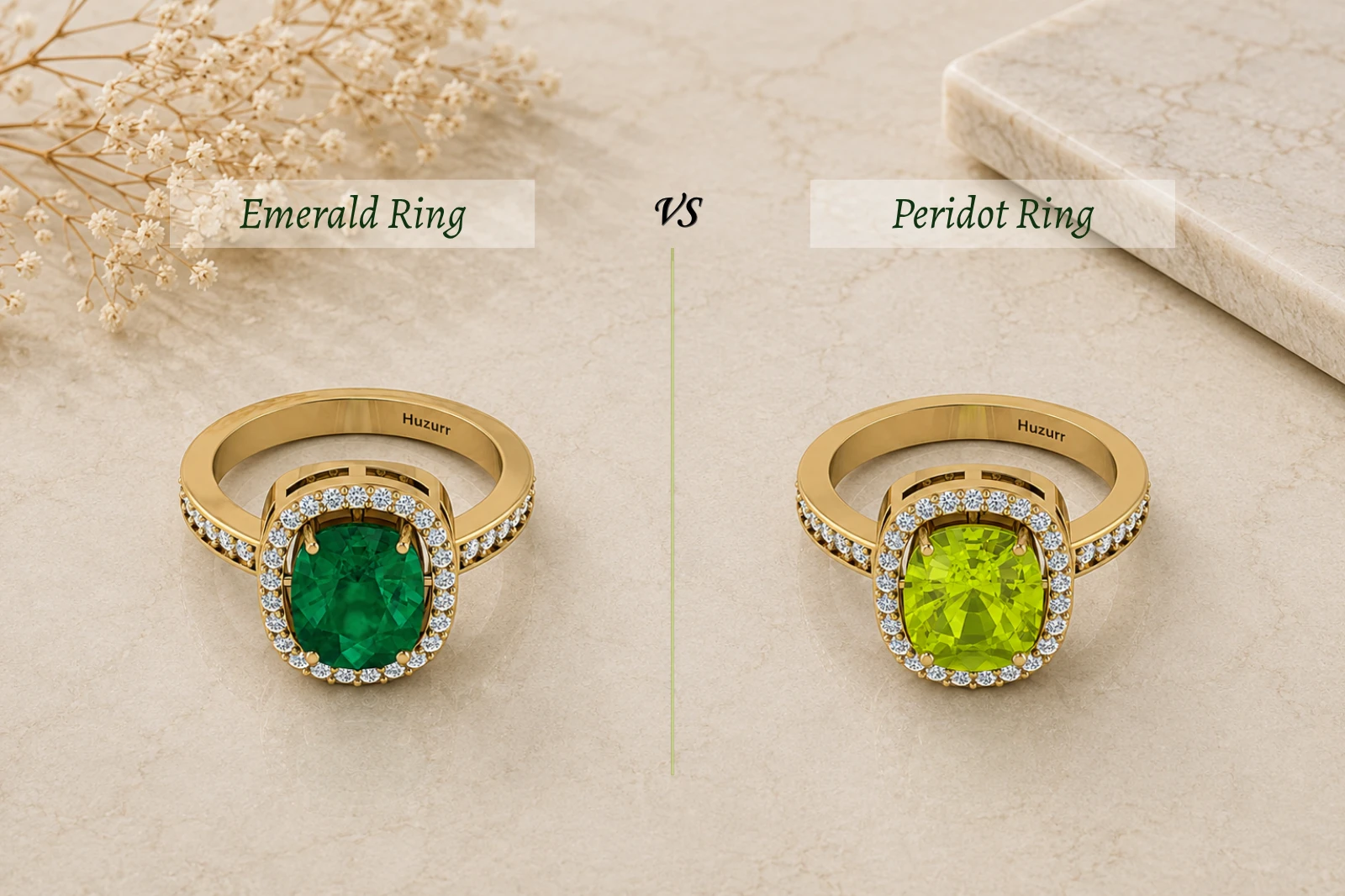 For a statement ring, emerald has a natural advantage if your goal is a rich and dramatic appearance.
The Heart-Cut Emerald and Diamond Victorian Ring is a useful example: the heart-shaped center, surrounding stones, and contrasting metal tone make the emerald the centerpiece.
For a less formal green gemstone ring, peridot works beautifully.
The Round Peridot Gold-Plated Ring keeps the design simpler and lets the yellow-green color carry the piece.
Choose emerald for deeper color, romantic pieces, statement jewelry, and more traditional luxury styling.
Choose peridot for fresh color, birthstone rings, easier budgets, and less formal styling.
Emerald vs Peridot for Earrings
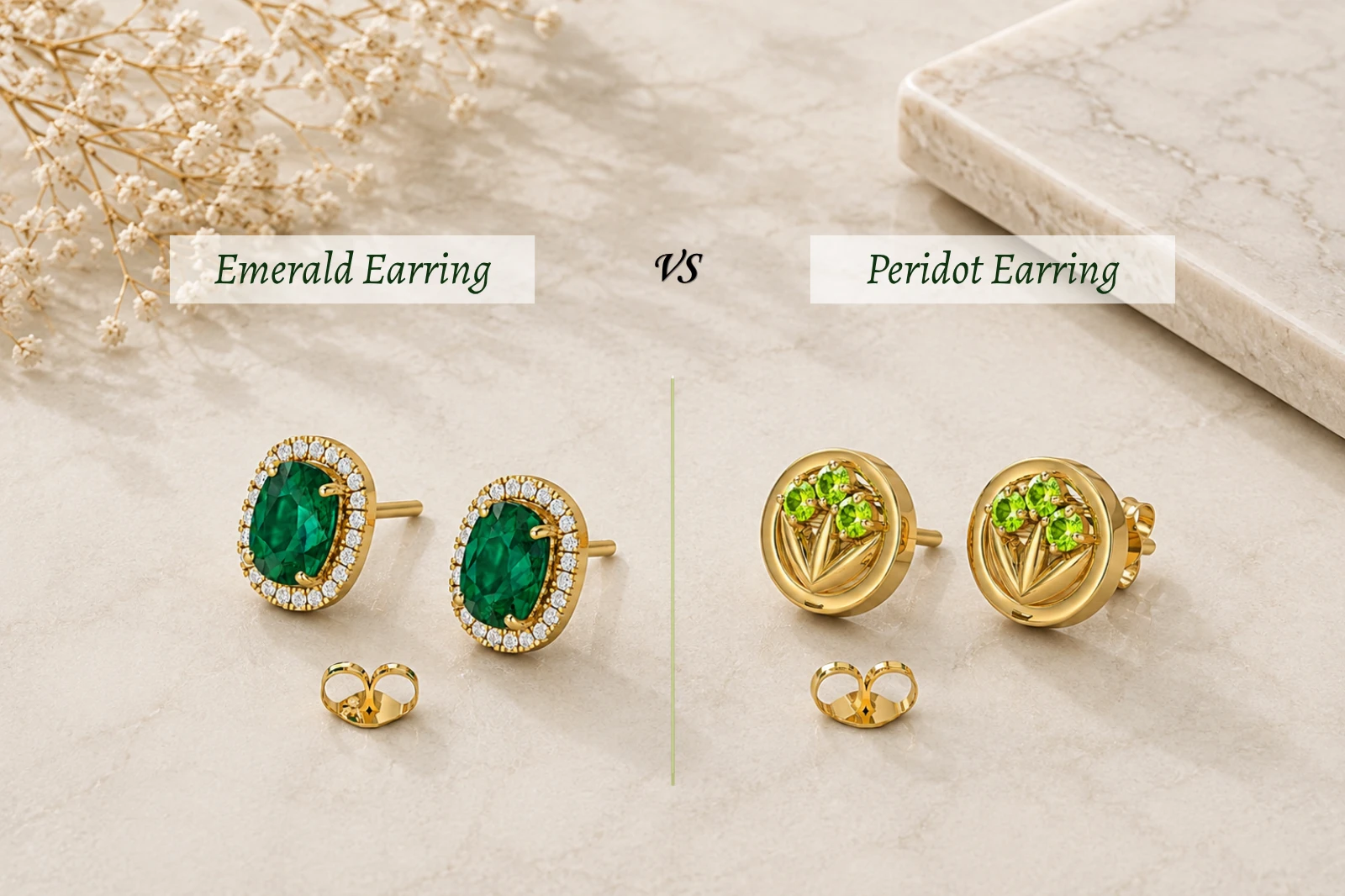 Earrings may be one of the smartest categories for either gemstone because they do not receive the same knocks as rings.
Emerald creates a sophisticated contrast against the skin.
Peridot can brighten the face because of its warmer yellow-green tone.
If emerald is your preference, the Sterling Silver Lotus Flower Emerald Stud Earrings show how smaller emeralds can be incorporated into a wearable floral design rather than relying on a large center gemstone.
You can also compare more styles through Huzurr's earrings collection, which currently includes both emerald and peridot among its gemstone options.
Emerald vs Peridot for Necklaces
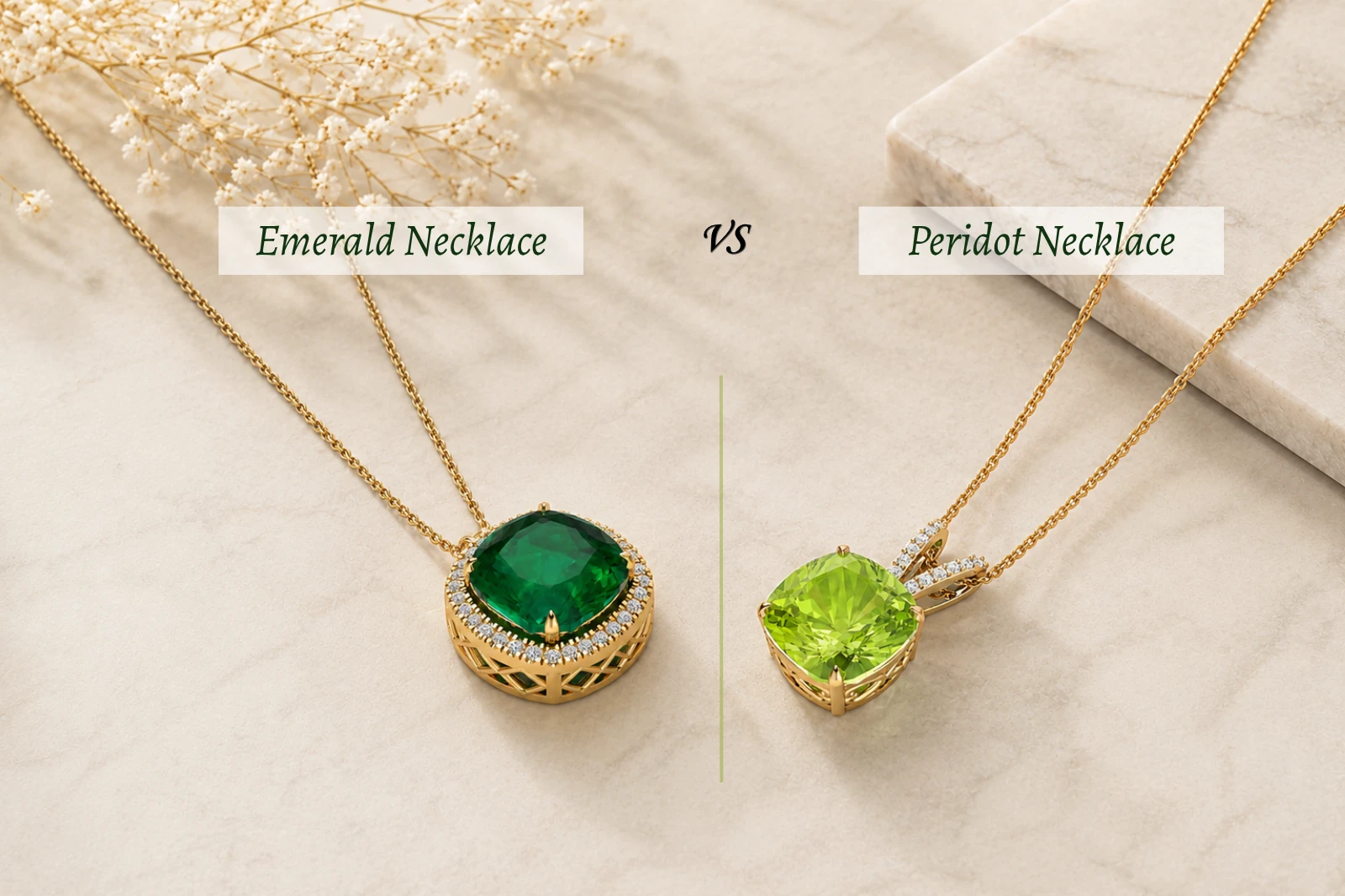 A necklace lets color become the main attraction without exposing the gemstone to the level of impact experienced by a ring.
Choose emerald if you want your necklace to feel:
- richer,
- more dramatic,
- formal,
- or vintage-inspired.
Choose peridot if you want:
- bright color,
- warm-weather styling,
- a lighter feel,
- Or something that complements gold tones.
Huzurr's necklace collection can be internally linked here so buyers can compare how different green gemstones translate into pendant and necklace designs.
Emerald vs Peridot for Bracelets
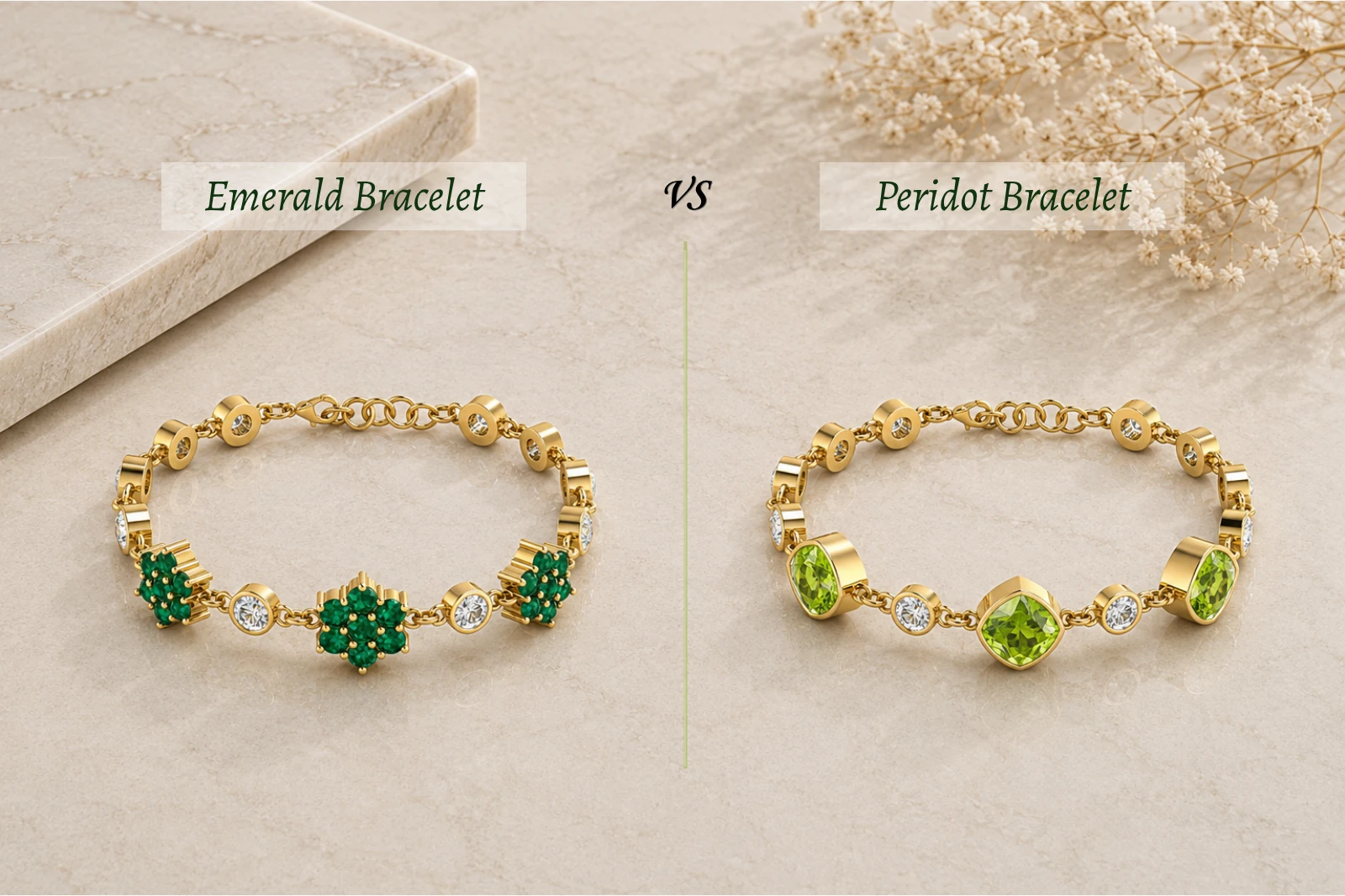 Bracelets require a little more thought.
Your wrist repeatedly comes into contact with:
- tables,
- laptop surfaces,
- doors,
- bags,
- countertops,
- and other jewelry.
That makes a low-profile or more protected gemstone arrangement helpful.
If you are shopping specifically for wrist jewelry, browse Huzurr's bracelet collection and pay attention to how exposed the gemstones are—not simply which color you prefer.
Emerald vs Peridot for Everyday Wear
If you want jewelry that will be worn frequently, your lifestyle needs to be part of the buying decision.
Emerald offers better scratch resistance than peridot but may contain inclusions and fractures that require care.
Peridot is softer and can show scratching or wear more easily if treated roughly.
A practical approach is:
Earrings: Excellent choice for either gemstone.
Necklaces: Excellent for both.
Occasional rings: Both can work.
Daily rings: Choose the setting very carefully.
Bracelets: Be more cautious with both.
Someone who spends most of the day working at a laptop may have very different jewelry needs from someone who regularly works with machinery, tools, or heavy equipment.
The gemstone does not know your lifestyle.
Your jewelry choice should.
Emerald vs Peridot: Which One Should You Choose?
Forget which stone the internet tells you is “better.”
Use this instead.
Choose Emerald If:
- You prefer deep green rather than yellow-green.
- You like classic or romantic jewelry.
- You want a gemstone with a traditional luxury reputation.
- You are buying a milestone or statement piece.
- You appreciate the individual character of natural inclusions.
- You are comfortable giving the jewelry appropriate care.
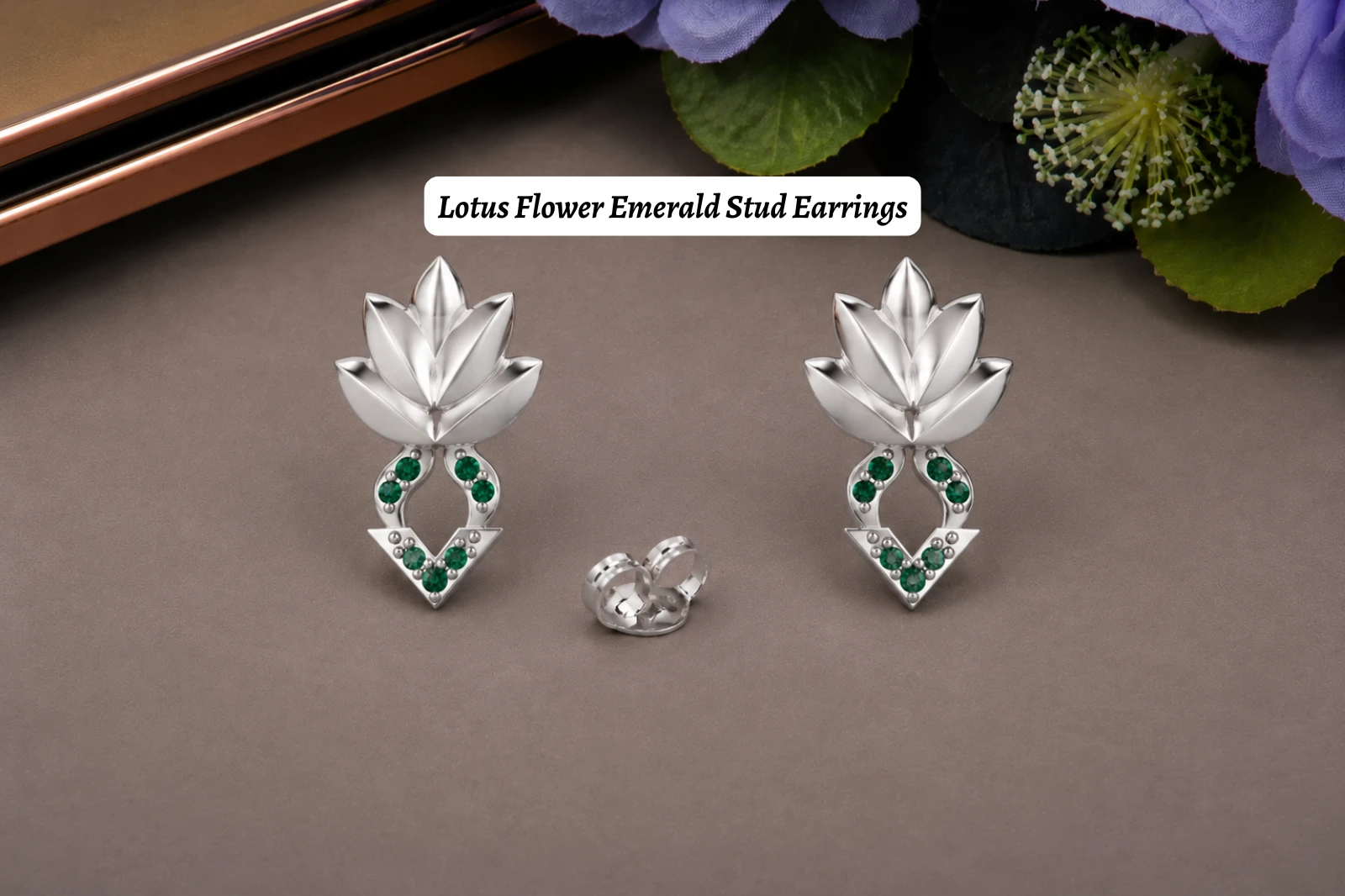 Start by comparing emerald looks such as the Heart-Cut Emerald Victorian Ring, Floral Emerald Cuff Ring, and Lotus Flower Emerald Stud Earrings.
Choose Peridot If:
- You prefer brighter yellow-green.
- You want your jewelry to feel fresh rather than formal.
- You are working with a more controlled budget.
- You need an August birthstone gift.
- You like warm metal tones.
- You want a noticeable green gemstone without paying primarily for rarity.
Start with the Green Round Peridot August Ring or compare more options through Huzurr peridot rings.
How to Choose the Right Emerald or Peridot Jewelry
Before adding either gemstone to your cart, go through this checklist.
1. Start With Color
Do not buy emerald because it is more famous if you actually prefer peridot's brighter green.
Likewise, do not choose peridot just to spend less if the deep emerald green color is what you really want.
2. Examine the Cut
A good cut should help the gemstone look lively and balanced.
Different shapes also create different personalities.
A heart-cut emerald feels romantic.
A round peridot feels classic and simple.
A floral arrangement feels more decorative.
3. Look at Clarity
Do not expect emerald and peridot to look equally clean.
Judge each gemstone according to its natural characteristics.
4. Study the Setting
This becomes especially important for rings.
Ask:
- Are the corners exposed?
- Does the stone sit very high?
- Is there a halo around it?
- Do the prongs look secure?
- Will this design fit your lifestyle?
5. Match the Metal
Emerald can look striking with:
- yellow gold tones,
- rose gold tones,
- and silver tones.
Peridot works particularly well with warmer gold shades, although silver tones can make its fresh green appear even brighter.
6. Decide Where You Will Wear It
A cocktail ring bought for dinners has different durability requirements from a ring worn seven days a week.
7. Set Your Budget First
Then compare designs within it.
Do not let gemstone reputation push you far beyond what you intended to spend.
8. Check Product Information
Understand:
- gemstone type,
- metal,
- plating,
- stone size,
- setting,
- and any disclosed treatment information.
Shop Emerald and Peridot Jewelry by What You Actually Need
The easiest way to make your final decision is to shop by purpose rather than gemstone name alone.
For a Romantic Gift
Consider the Heart-Cut Emerald and Diamond Rose Gold Plated Victorian Ring.
The heart-shaped center makes more sense here than simply choosing emerald because it is expensive or prestigious.
For an August Birthday
Start with Huzurr peridot rings or the Round Peridot August Ring.
The birthstone connection gives the jewelry a natural reason for being chosen.
For Someone Who Loves Floral Jewelry
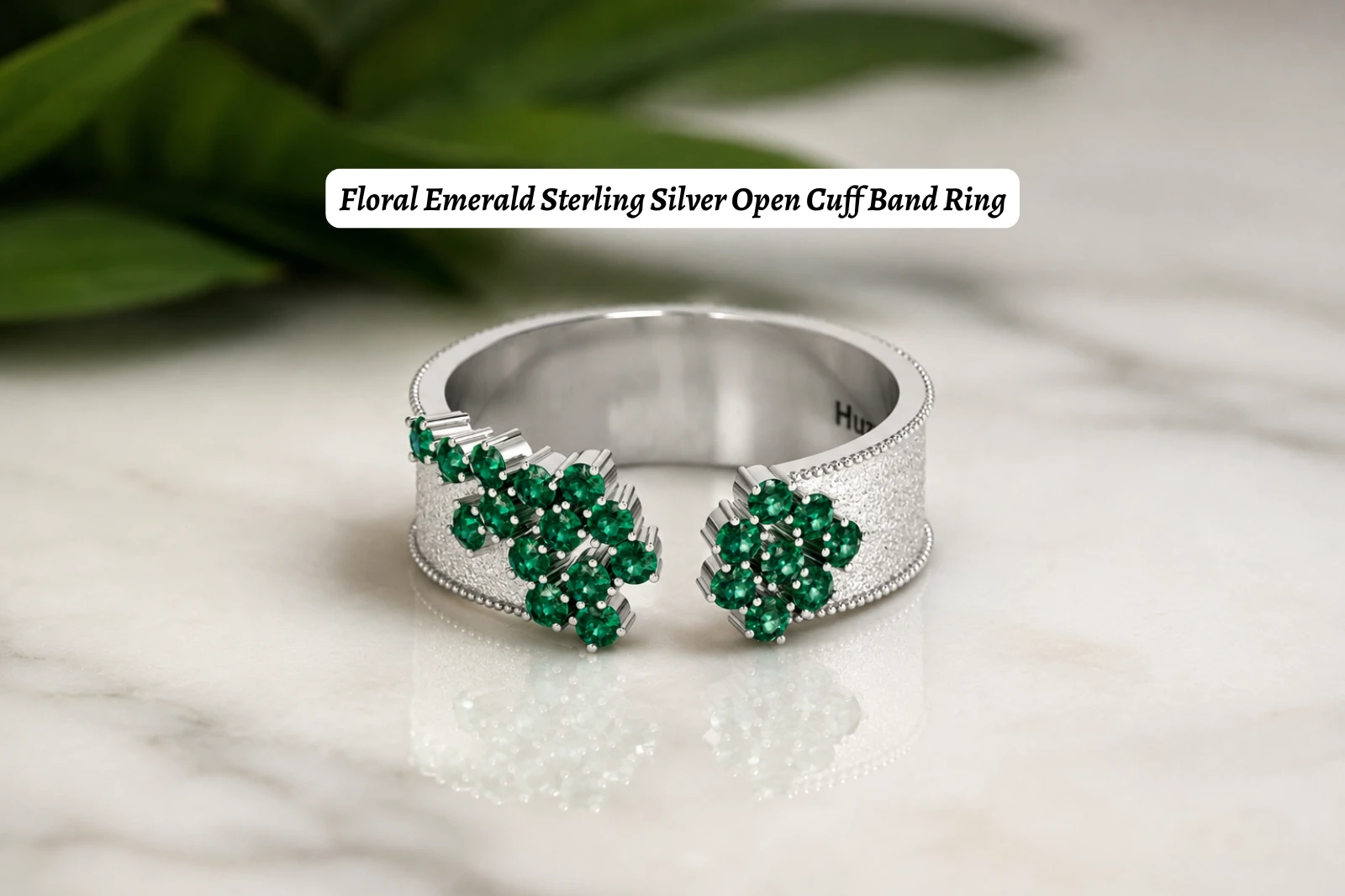 The Floral Emerald Sterling Silver Open Cuff Ring offers a different approach to emerald than the traditional solitaire.
For Someone Who Rarely Wears Rings
Consider earrings instead.
The Lotus Flower Emerald Stud Earrings let the wearer enjoy the emerald color without putting the gemstone through the same daily impact as a ring.
For Someone Still Exploring
Do not force a product decision.
Browse Huzurr's broader earrings, bracelets, and necklaces to understand which type of jewelry fits the recipient first.
Then choose the gemstone.
That order often leads to a much better purchase.
Final Verdict: Emerald or Peridot?
Emerald and peridot share one obvious characteristic.
They are green.
Beyond that, they satisfy very different jewelry buyers.
Choose emerald if you want a deep green color, a traditional luxury feel, meaningful statement jewelry, and a gemstone with a long history in fine jewelry.
Choose peridot if you want brighter yellow-green color, an approachable price point, August birthstone symbolism, and jewelry that feels fresh and distinctive.
But here is the most useful rule of all:
Do not choose the gemstone first. Imagine the finished piece on your hand, ears, neck, or wrist.
Then ask:
“Which one would I actually reach for tomorrow?”
If the answer is deep, elegant green, start with Huzurr's emerald styles.
If the answer is bright, lively green, explore peridot rings.
Because the best gemstone is not the one with the strongest reputation.
It is the one you are excited to wear.
FAQs About Emerald vs Peridot
Is emerald better than peridot?
Neither gemstone is universally better. Emerald is more suitable for buyers who prefer a deeper green color and a traditional luxury appearance. Peridot is often better for buyers who prefer brighter yellow-green shades and more accessible pricing.
Which is more expensive, emerald or peridot?
Fine natural emerald generally commands higher prices than peridot. However, gemstone value depends on factors such as color, size, clarity, treatments, cut, and overall quality.
Which is harder, emerald or peridot?
Emerald measures approximately 7.5–8 on the Mohs scale, while peridot measures around 6.5–7. Emerald therefore has greater scratch resistance, although inclusions can affect its overall toughness.
Is peridot a good alternative to emerald?
Yes, if your goal is green gemstone jewelry rather than recreating the exact appearance of emerald. Peridot has a much brighter yellow-green appearance, so it should be viewed as a different style rather than simply a cheaper emerald substitute.
Which gemstone is better for a ring?
Both can work in rings. Emerald offers better scratch resistance but can contain inclusions and fractures. Peridot is softer. For either gemstone, setting protection becomes especially important if you plan to wear the ring frequently.
Can emerald and peridot be worn every day?
Both can be worn regularly with appropriate care. Earrings and necklaces generally present fewer durability concerns than rings and bracelets because they are less exposed to impact.