A bracelet can look perfectly fine when you first put it on and gradually lose its shine after weeks of regular wear, especially when you're caring for pieces in a bracelet collection. Sweat, skin oils, sunscreen, perfume, lotion, dust, and everyday contact with surfaces can all leave residue behind.
But how to clean bracelets properly depends on what the bracelet is made from.
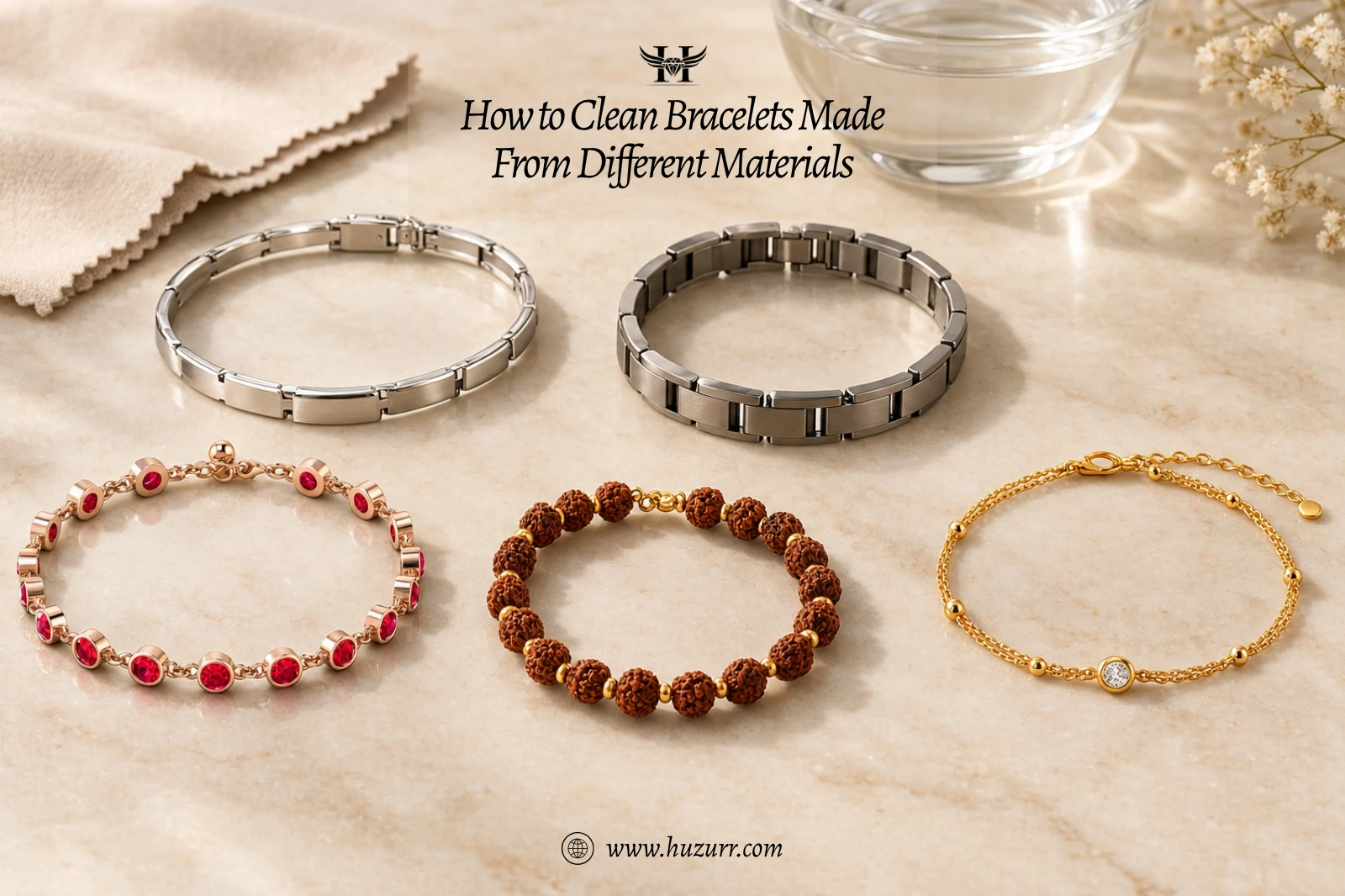
A stainless steel bracelet can usually handle a different cleaning routine than a natural stone bracelet. Titanium may need gentle surface care, while gold-plated jewelry requires extra attention because excessive rubbing can wear down its finish. Natural beads such as Rudraksha also need a more careful approach to moisture.
The good news is that proper bracelet care doesn't require complicated equipment. Once you know the material, a gentle cleaning method and good storage habits can go a long way toward keeping your bracelet looking its best.
Why Bracelet Care Matters
Jewelry is exposed to more than we usually realize.
A bracelet may come into contact with:
- Sweat and body oils
- Hand cream and moisturizer
- Sunscreen
- Perfume
- Hair products
- Dust and dirt
- Water and humidity
- Household chemicals
Over time, this buildup can make a bracelet appear dull or dirty.
However, cleaning isn't simply about removing dirt. The cleaning method itself needs to be appropriate for the material.
For example, aggressive polishing may be unnecessary for stainless steel and potentially harmful to plated jewelry. Likewise, soaking a bracelet containing natural stones or beads isn't automatically safe.
A useful rule is:
Identify the material → clean gently → remove residue → dry thoroughly → store properly.
How to Clean Bracelets by Material
Before cleaning any bracelet, check its material and follow the manufacturer's care instructions when available.
How to Clean Stainless Steel Bracelets
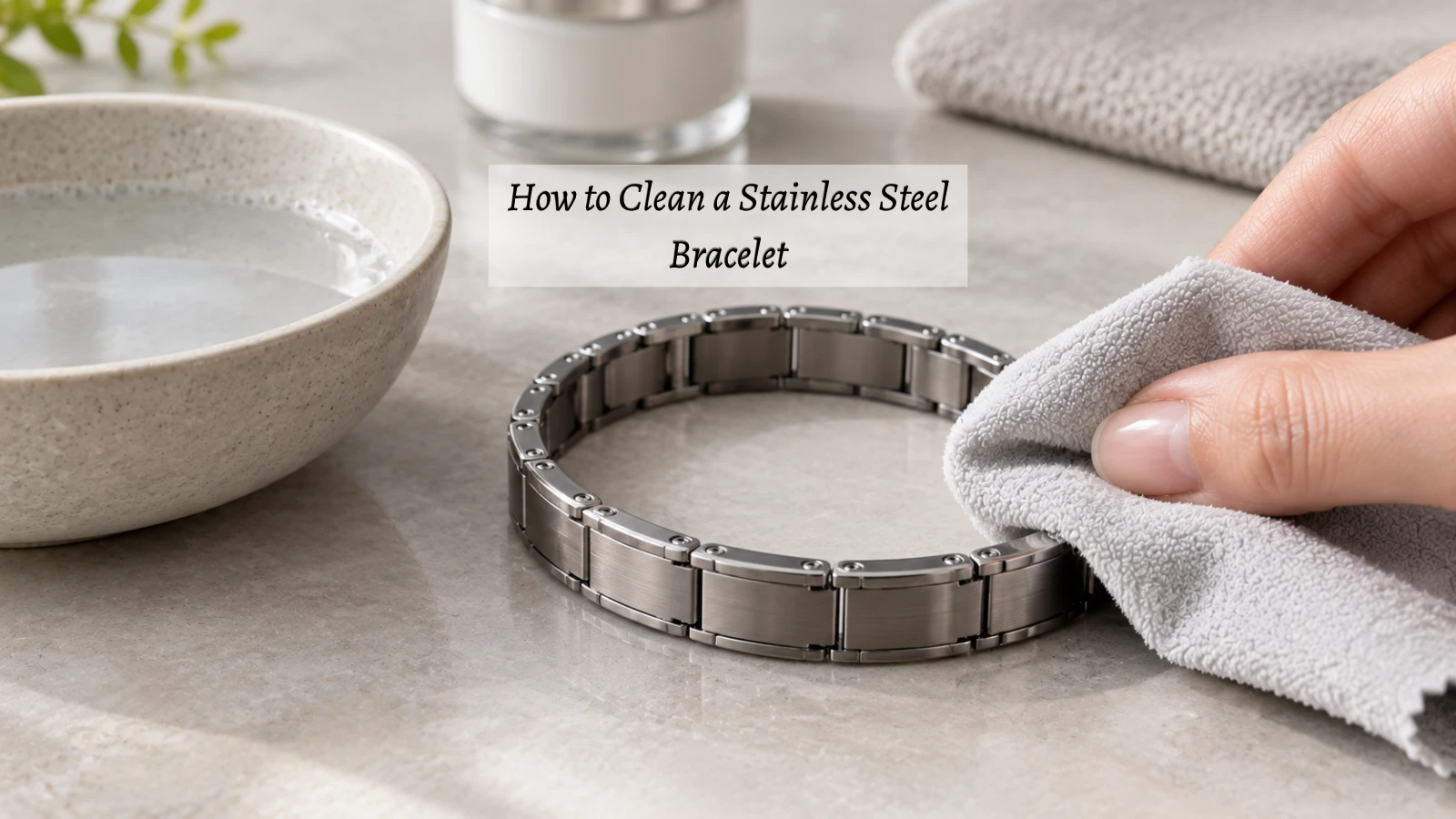 Stainless steel bracelets are often chosen for everyday wear because the material is durable and relatively easy to maintain.
Even so, fingerprints, sweat, lotion, and dust can collect on the surface.
Simple cleaning method
- Add a small amount of mild soap to lukewarm water.
- Dip a soft microfiber cloth into the solution.
- Wring the cloth so it is damp rather than soaking wet.
- Gently wipe the bracelet.
- Use another clean, damp cloth to remove soap residue.
- Dry the bracelet completely with a soft towel.
If the bracelet has small links or grooves, a very soft brush can help reach areas that a cloth cannot. Use light pressure rather than vigorous scrubbing.
Avoid
- Bleach
- Steel wool
- Abrasive powders
- Rough sponges
- Strong household cleaners
If your stainless steel bracelet has a colored, coated, or brushed finish, check its specific care instructions before using any cleaning product.
How to Clean Titanium Bracelets
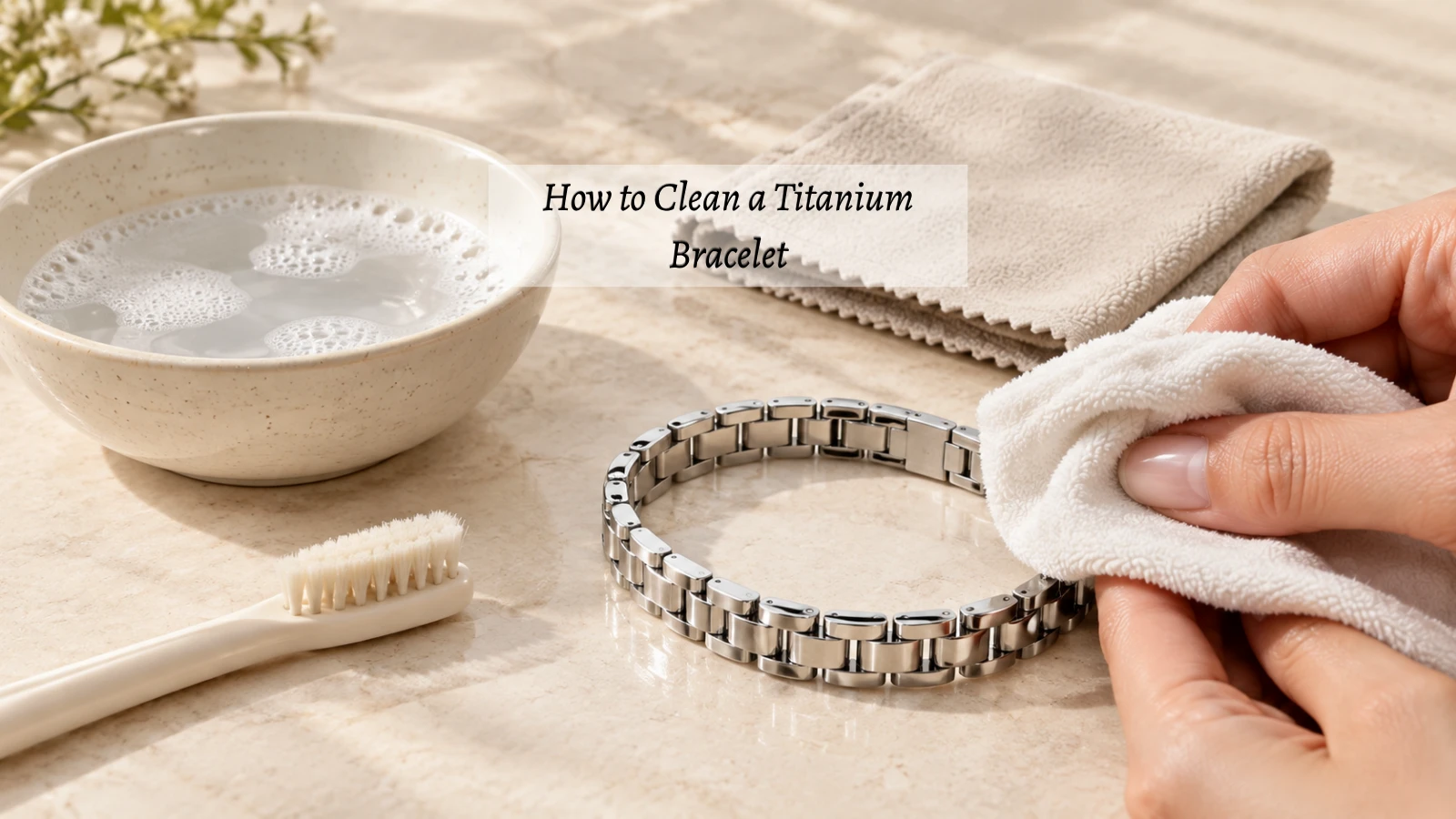 Titanium is lightweight and durable, making it suitable for bracelets designed for regular use.
For ordinary surface dirt, start with a soft cloth dampened with lukewarm water. If necessary, add a small amount of mild soap and gently wipe the bracelet.
After cleaning, remove any residue with a clean, damp cloth and dry the bracelet completely.
The main thing to remember is that titanium jewelry can have different surface finishes.
A polished titanium bracelet and a colored or coated titanium bracelet may not respond to cleaning in the same way.
Avoid abrasive polishing products unless the manufacturer specifically recommends them.
How to Clean Natural Stone Bracelets
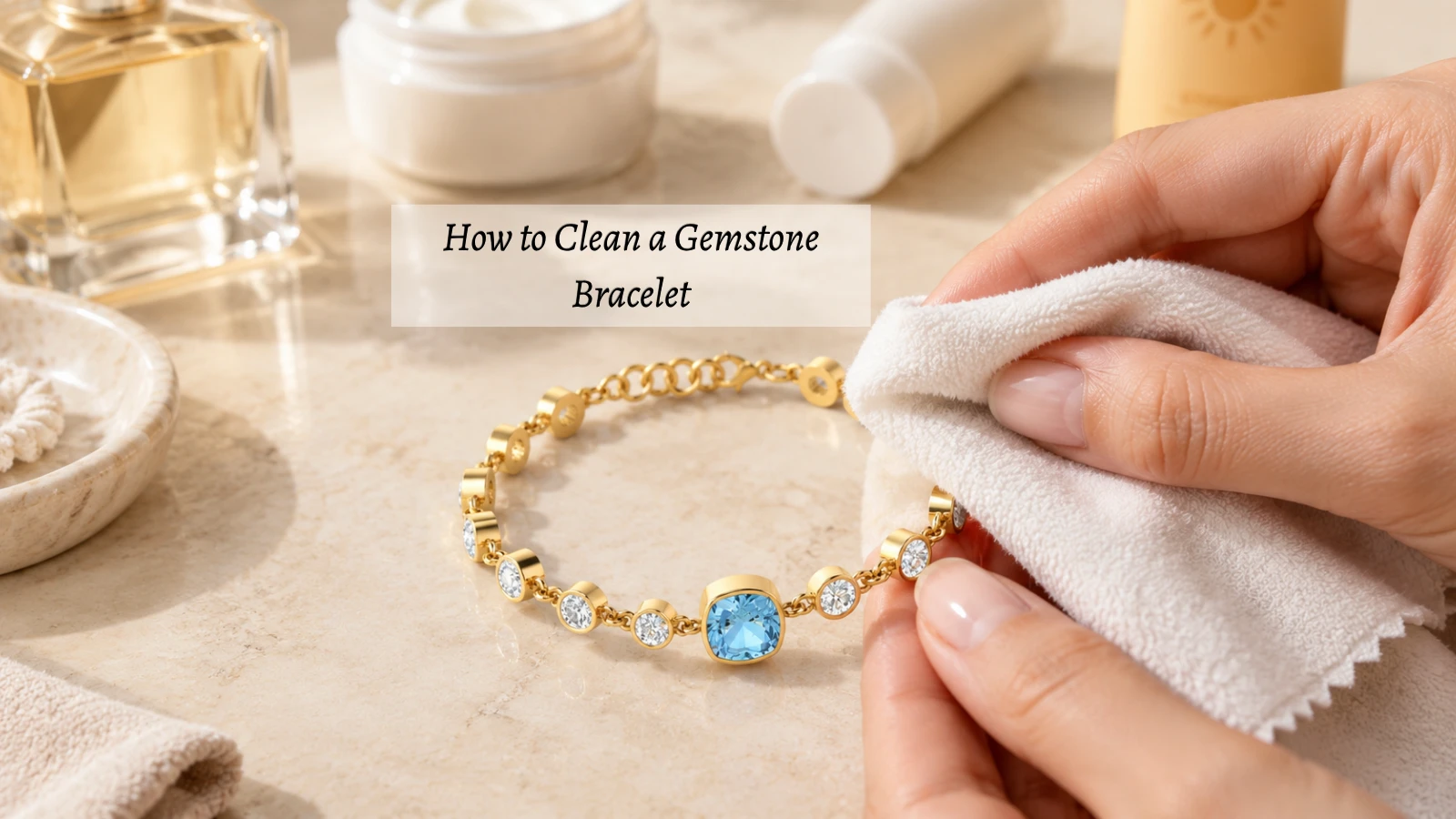 Natural stone bracelets require more attention because “natural stone” includes many different materials.
Some stones are relatively durable, while others can be more porous, softer, treated, or dyed. Because of this, there isn't one universal cleaning method for every gemstone bracelet.
For routine cleaning, a soft, slightly damp cloth is a sensible starting point.
Gently wipe the stones and surrounding areas, then dry the bracelet.
Avoid unnecessary exposure to:
- Perfume
- Hair spray
- Lotions
- Harsh chemicals
- Prolonged water exposure
If the bracelet contains a gemstone you're unfamiliar with, check the recommended care method for that particular stone rather than assuming that water is safe.
Should you use an ultrasonic cleaner?
Not automatically.
Some gemstones, treatments, settings, and materials may not be suitable for ultrasonic cleaning. If you don't know the stone or its treatment history, professional advice is safer than experimenting with an ultrasonic device at home.
How to Clean Rudraksha Bracelets
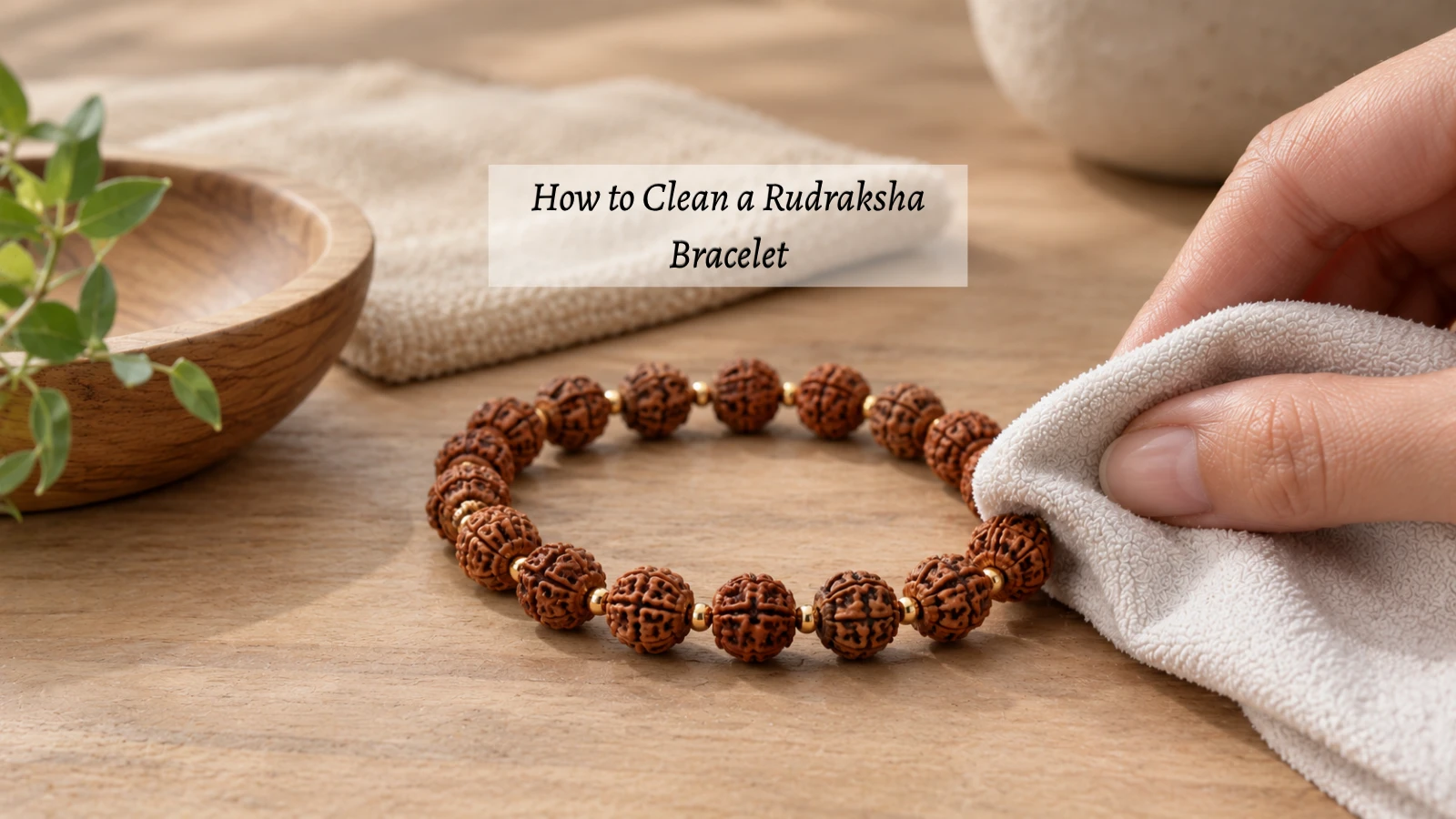 Rudraksha bracelets require a different approach because the beads are a natural material.
For everyday dust, begin with a soft, dry cloth.
If additional cleaning is necessary, use minimal moisture rather than soaking the beads. Once cleaned, allow the bracelet to dry completely before putting it away.
Avoid:
- Harsh detergents
- Bleach
- Strong chemicals
- Prolonged soaking
- Excessive heat
- Aggressive brushing
People who wear Rudraksha for traditional or spiritual reasons may also follow particular care practices. Those practices can vary, so follow the relevant traditional guidance if the bracelet has personal spiritual significance.
How to Clean Gold-Plated Bracelets
Gold-plated jewelry needs particularly gentle treatment.
Unlike a solid gold bracelet, a gold-plated bracelet has a decorative gold layer over another material. Repeated aggressive polishing or rubbing can gradually affect that surface.
For routine cleaning:
- Use a soft microfiber or jewelry cloth.
- Gently wipe the surface.
- If water-based cleaning is recommended by the manufacturer, use a small amount of mild soapy water.
- Avoid prolonged soaking.
- Dry thoroughly with a soft cloth.
Most importantly, don't vigorously polish plated jewelry.
It's also smart to apply perfume, lotion, sunscreen, and other personal-care products before putting on the bracelet.
What Should You Avoid When Cleaning Bracelets?
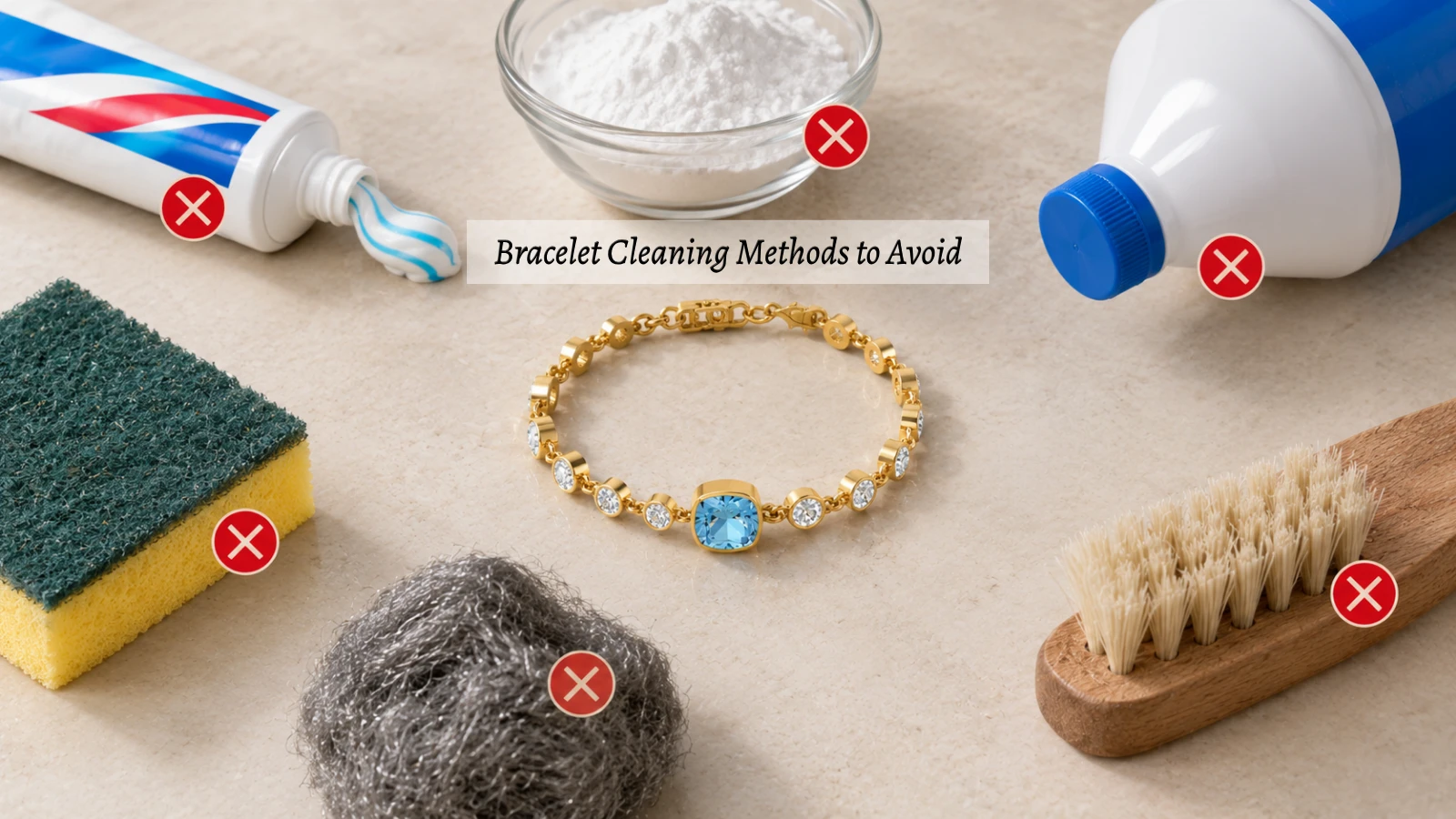 A quick internet search will produce plenty of DIY jewelry-cleaning tricks. The problem is that a method suitable for one material may be completely inappropriate for another.
Toothpaste
Toothpaste can contain abrasive ingredients. Scrubbing jewelry with it may create fine scratches or affect certain finishes.
Baking Soda
Baking soda is mildly abrasive. It should not automatically be treated as a universal jewelry cleaner.
Bleach
Bleach is a strong chemical and can damage certain jewelry materials, finishes, and components.
Rough Brushes
Hard bristles can scratch surfaces and may damage delicate stones, beads, or finishes.
Excessive Soaking
Some bracelets tolerate water, while others contain materials or components that shouldn't be exposed to prolonged moisture.
When you're unsure, choose the gentlest reasonable cleaning method first.
How Often Should You Clean Bracelets?
There isn't a fixed schedule that works for every bracelet.
How frequently you need to clean yours depends on:
- How often you wear it
- How much you sweat
- Your climate and humidity
- Exposure to cosmetics
- The bracelet's material
- How visibly dirty it becomes
|
Bracelet Material |
General Care |
|
Stainless steel |
Gentle cleaning when needed |
|
Titanium |
Soft wiping and occasional gentle cleaning |
|
Natural stone |
Material-specific gentle cleaning |
|
Rudraksha |
Mostly dry, minimal-moisture care |
|
Gold-plated |
Gentle wiping with minimal friction |
For everyday bracelets, a quick wipe after heavy wear can be more useful than repeatedly giving the piece a deep clean.
How to Store Bracelets Properly
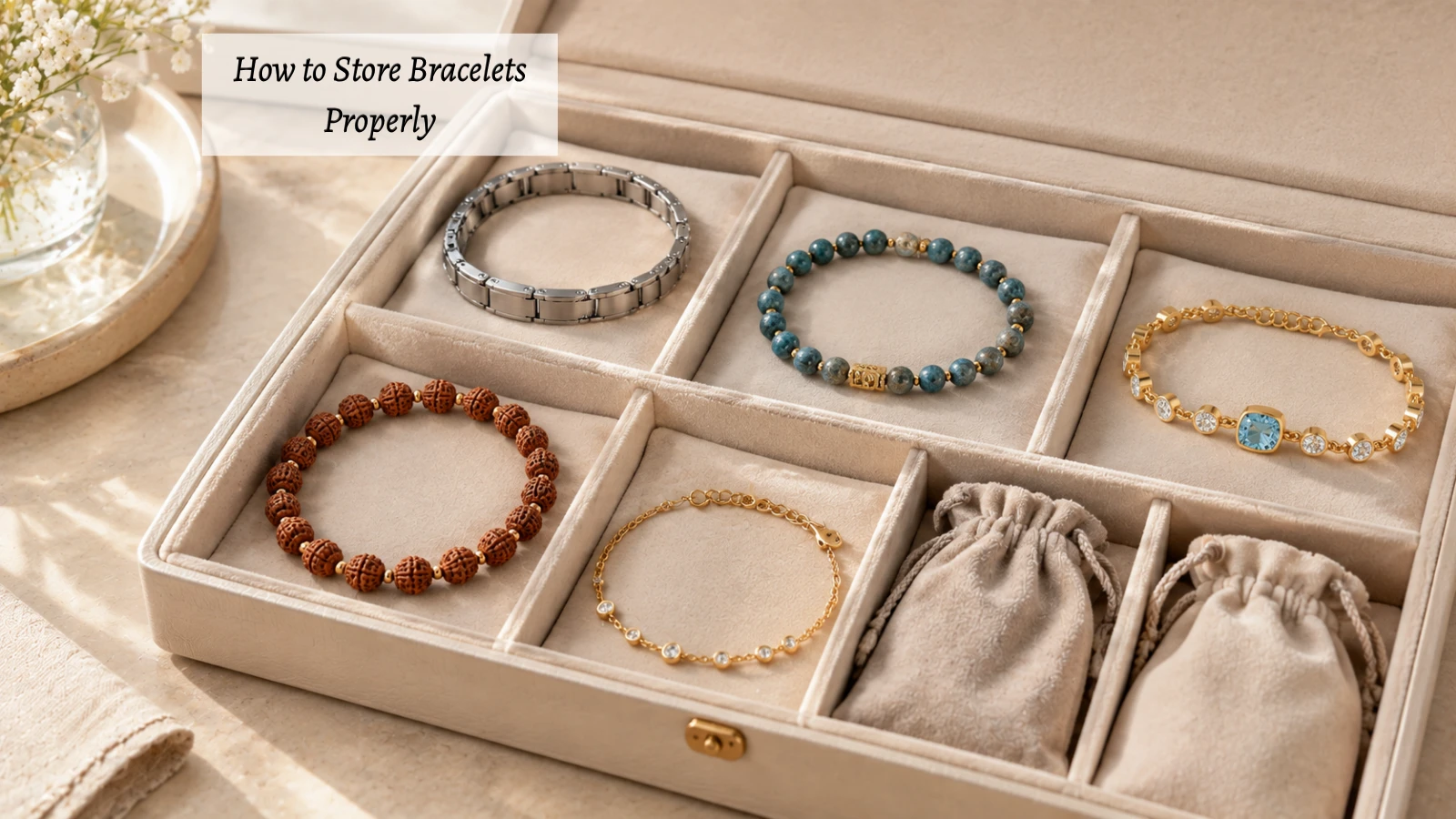 Cleaning your jewelry is only part of good bracelet maintenance.
Storage matters because bracelets can scratch, tangle, or become damaged when they are thrown together.
Store bracelets separately
Individual compartments or soft pouches reduce unnecessary contact between pieces.
Keep them dry
Always make sure a bracelet is completely dry before placing it into a closed jewelry box.
Use soft-lined storage
A lined jewelry organizer or soft pouch can help reduce friction.
Separate harder and softer materials.
Different materials have different levels of hardness. Keeping them apart can reduce the possibility of scratches.
Avoid excessive humidity
Natural materials and some beads may benefit from storage in a dry environment rather than somewhere consistently humid.
Everyday Habits That Protect Your Bracelets
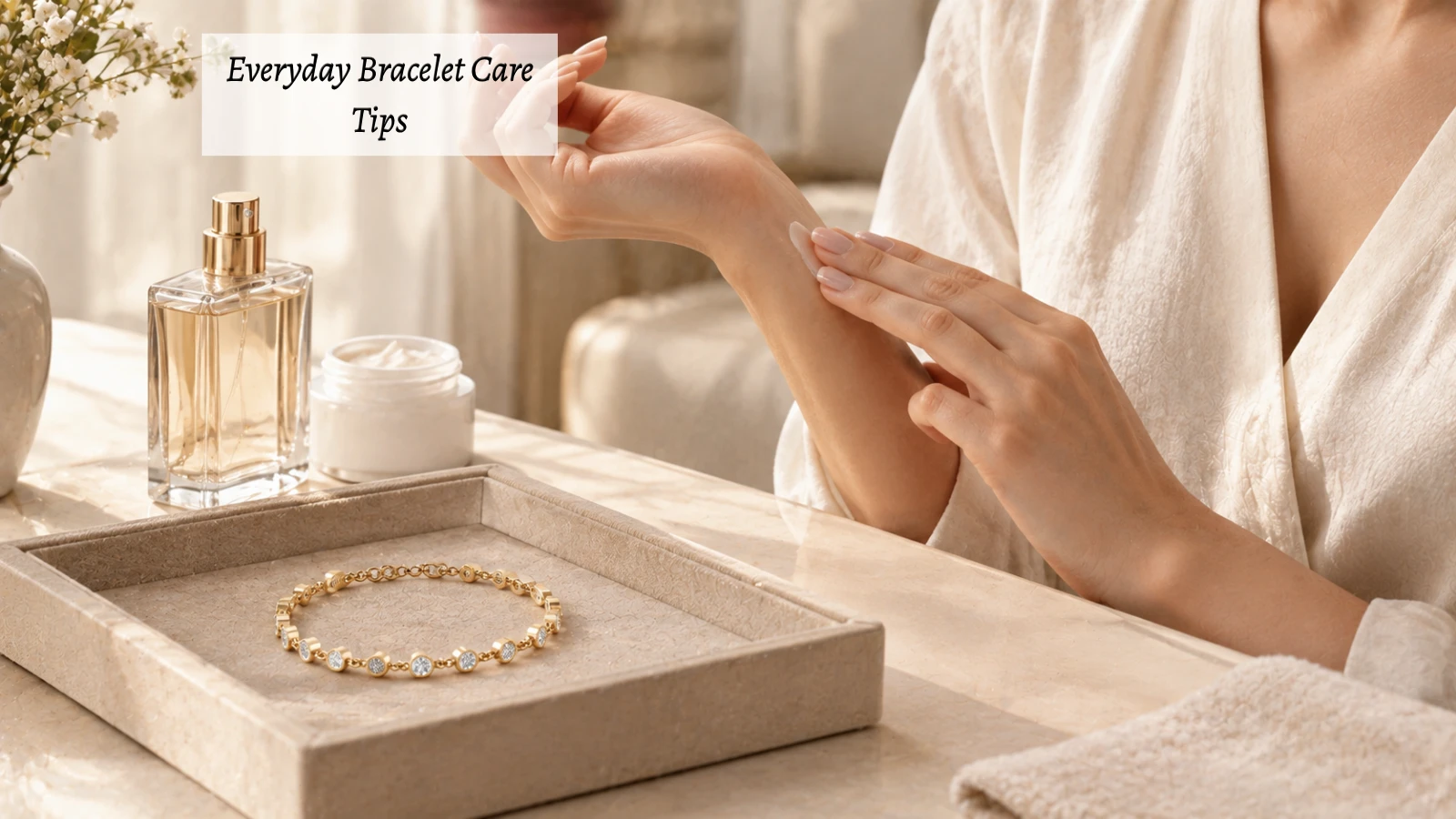 Good jewelry care begins before the bracelet needs cleaning.
Put your bracelet on last.
Apply moisturizer, sunscreen, perfume, and other personal-care products before putting on jewelry.
Remove bracelets before swimming.
Pool chemicals and prolonged water exposure can affect some jewelry materials and finishes.
Take them off during workouts
Sweat and repeated friction can increase wear.
Remove jewelry before cleaning the house.
Household cleaning products can contain chemicals that aren't suitable for jewelry.
Wipe after heavy wear.
If you've worn your bracelet throughout a hot day or during physical activity, gently wiping it afterward can remove surface residue.
How to Clean a Bracelet With Multiple Materials
Some bracelets aren't made from just one material.
You might have a bracelet with:
- Metal links
- Gemstones
- Beads
- Plated components
- Decorative coatings
In this situation, clean according to the most delicate component.
For example, a metal bracelet containing a sensitive gemstone shouldn't automatically be treated like plain metal.
Before cleaning:
- Identify all major materials.
- Check whether the stones are natural, treated, or synthetic.
- Look at the clasp and decorative components.
- Choose the gentlest method that is appropriate for all of them.
- Avoid soaking if one component may be sensitive to moisture.
This is one of the easiest ways to prevent accidental damage.
When Should You Stop Cleaning a Bracelet Yourself?
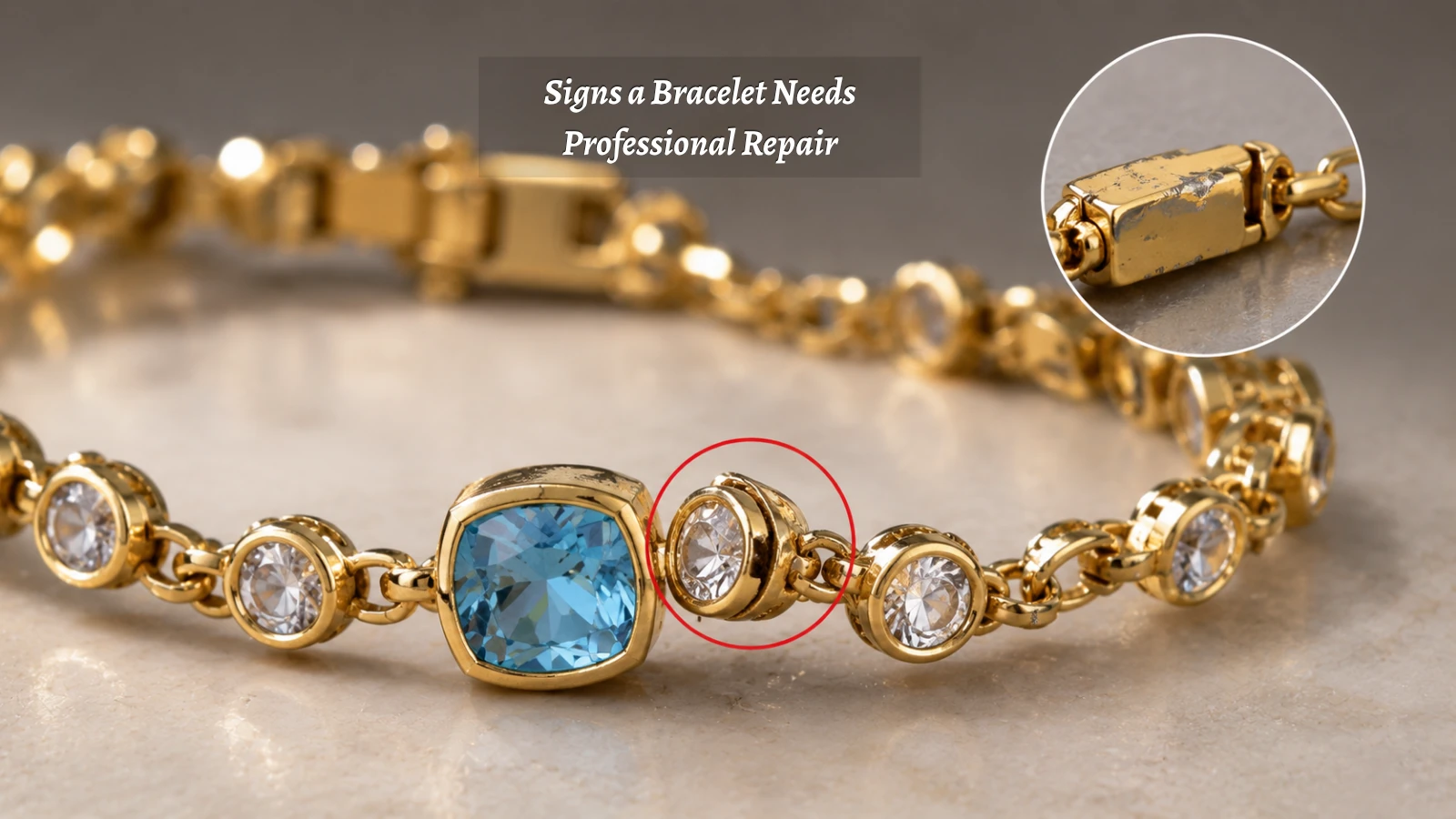 Sometimes what looks like dirt is actually damage.
Stop trying different cleaning methods if you notice:
- A loose gemstone
- A damaged clasp
- Cracked beads
- Peeling plating
- A bent component
- A loose setting
- Deep scratches
- Structural damage
At that point, professional inspection or repair is more appropriate.
No cleaning solution can fix a loose stone or broken clasp, and aggressive cleaning could make the problem worse.
A Simple Bracelet-Care Routine
 If you want an easy routine to remember, use these five steps:
1. Identify the material
Know whether you're dealing with stainless steel, titanium, natural stone, Rudraksha, plated jewelry, or another material.
2. Remove surface dirt
Use a soft cloth to remove dust, oils, and everyday residue.
3. Use minimal moisture
Only use water or mild soap when the material is suitable for it.
4. Dry completely
Don't store jewelry while it is damp.
5. Store separately
Use a soft pouch or individual compartment to reduce scratches and tangling.
This routine is simple enough to follow regularly without turning jewelry maintenance into a major chore.
Frequently Asked Questions
What is the safest way to clean bracelets?
The safest approach depends on the material. For many bracelets, starting with a soft cloth and gentle cleaning is appropriate. Always consider the specific material and finish before using water or cleaning products.
Can I use soap and water to clean every bracelet?
No. Mild soap and water may be suitable for some metals, but certain natural stones, beads, plated surfaces, and treated materials require more careful handling.
How do I clean bracelets without damaging them?
Use the least aggressive cleaning method appropriate for the material. Avoid abrasive products, rough brushes, harsh chemicals, and excessive polishing.
Can I clean natural stone bracelets with water?
It depends on the specific stone and any treatments it has received. If you're unsure, avoid soaking the bracelet and use a lightly damp cloth for surface cleaning.
How should I store bracelets?
Store them clean and completely dry in separate soft pouches or compartments. This helps reduce scratching, tangling, and unnecessary contact.
Can perfume damage bracelets?
Perfume and other personal-care products can affect some materials and finishes. Applying perfume before putting on your bracelet can reduce direct exposure.
Final Thoughts
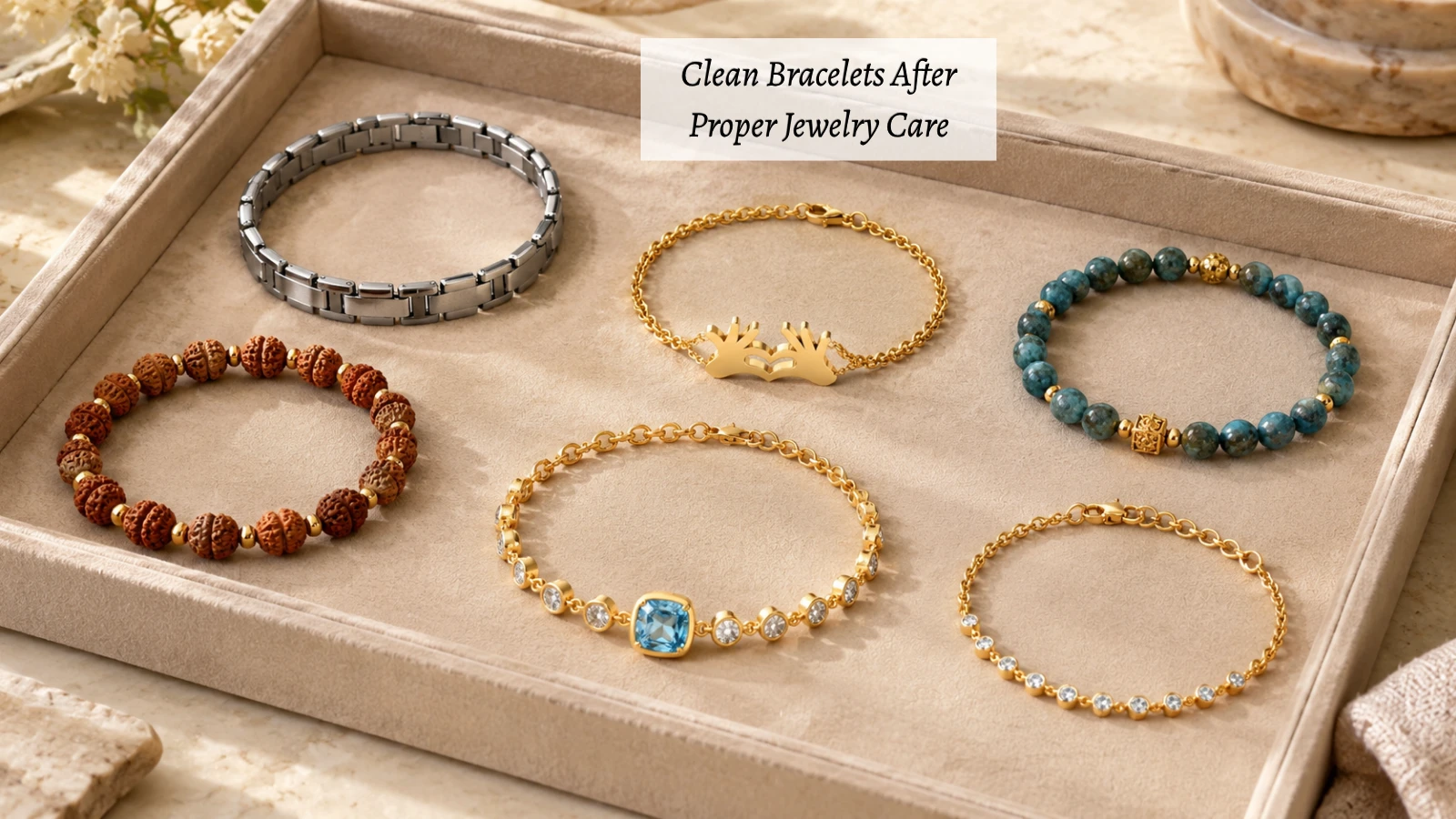 Learning how to clean bracelets isn't about finding one cleaning solution that works for everything.
The better approach is to understand the material first. Stainless steel, titanium, natural stones, Rudraksha, and plated jewelry all have different care requirements.
Keep the process simple: clean gently, avoid unnecessary chemicals, limit prolonged moisture, dry thoroughly, and store bracelets separately.
These small habits can help prevent avoidable wear and keep your favorite bracelets in your bracelet collection looking their best for longer.