Most jewelry doesn’t fail because it was cheap or badly made. It fails because of small, daily habits: a spritz of perfume on a chain, a shower with a plated bracelet, a ring worn through a gym session. The good news is that jewelry maintenance is simple once you know what each material actually needs.
This jewelry care guide covers everything in one place: the habits that matter most, a ready-to-use maintenance schedule, material-by-material care instructions, and the signs that tell you it’s time to see a jeweler.
The 5 Habits That Do Most of the Work
Before we get into gold, silver, pearls and gemstones, these five habits protect almost every piece you own.
- Put jewelry on last and take it off first. Perfume, hairspray, lotion, makeup and sunscreen all leave residue or react with metal and plating. Let products dry fully, then put your jewelry on. When you get home, it comes off first.
- Keep it away from water and chemicals. Chlorine, bleach, cleaning sprays and hand sanitizer can dull stones, discolor metal and weaken settings. Take rings and bracelets off before swimming, showering, washing dishes or cleaning the house.
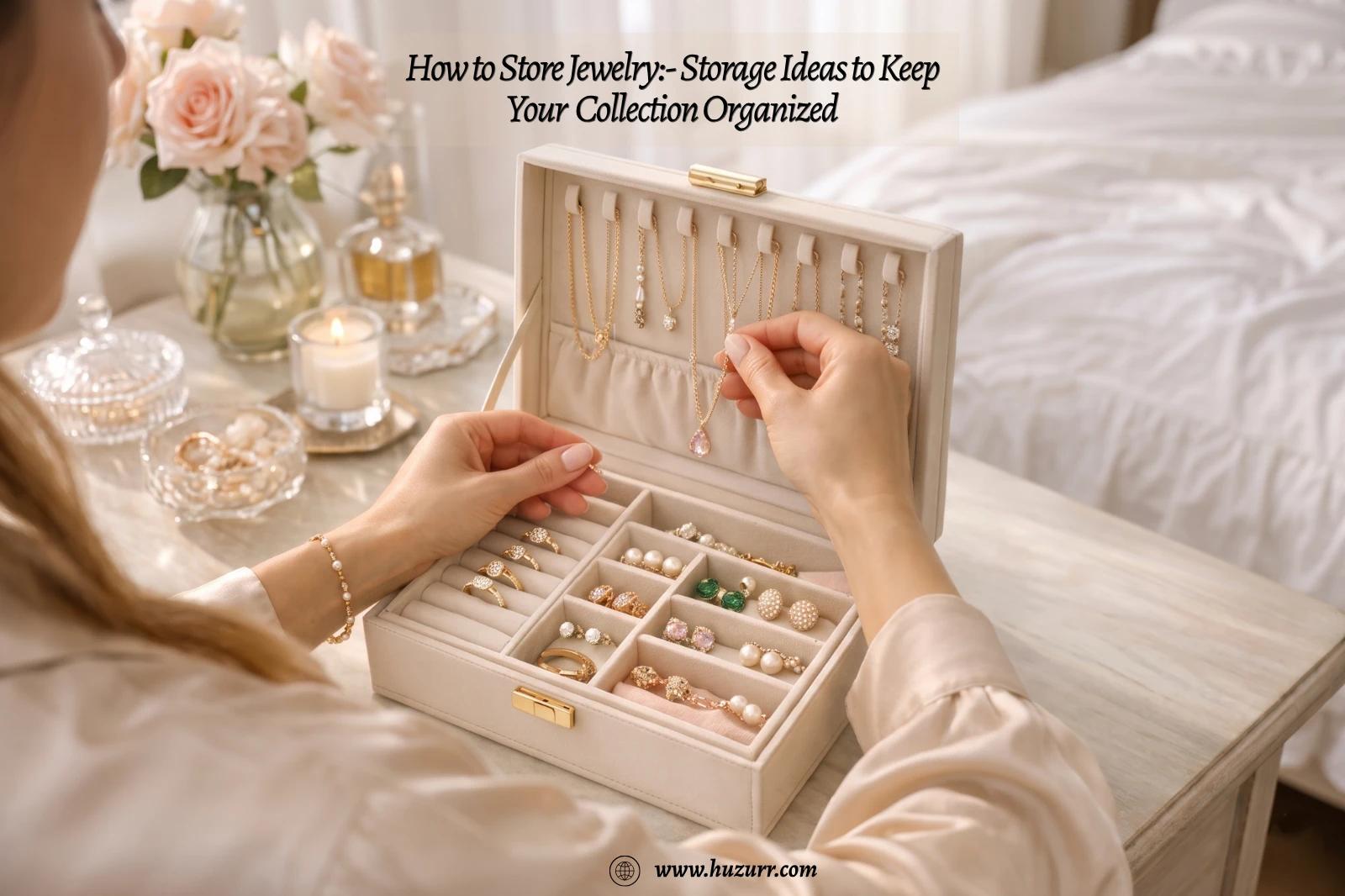
- Store every piece separately. Diamonds scratch other jewelry, and chains tangle and kink. Use a lined box with compartments, or small soft pouches, and keep everything dry.
- Clean on a schedule, not only when it looks dull. Skin oils, soap film and lotion build up slowly. A quick, gentle clean keeps stones bright and lets you spot loose prongs early.
- Get it checked once or twice a year. GIA, the world’s best-known gemological institute, recommends having jewelry checked by a professional about every six months, especially rings worn daily. A jeweler can see wear that you can’t.
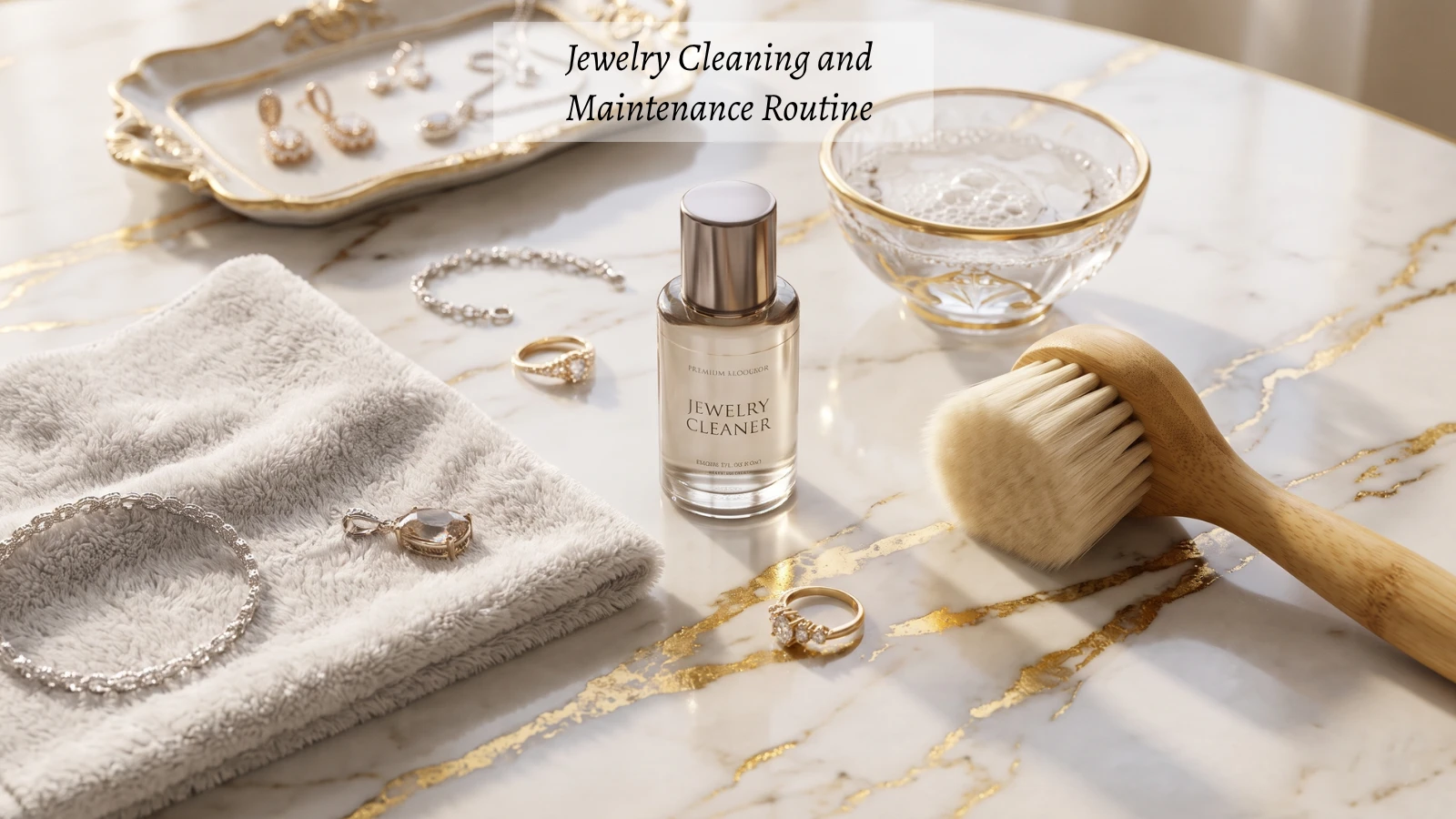
Your Jewelry Maintenance Schedule
Use this as a starting point and adjust it for how often you wear each piece.
|
How often |
What to do |
|
After every wear |
Wipe with a soft, dry cloth to remove oils and sweat. Store dry and separate. |
|
Weekly (daily-wear rings and earrings) |
Soak in warm water with a drop of mild dish soap, brush gently with a soft toothbrush, rinse, pat dry. |
|
Monthly |
Clean necklaces, bracelets and pieces you wear regularly. Check clasps, and look over prongs and settings. |
|
Every 6 months |
Professional inspection for loose stones, thin prongs, worn clasps and worn rhodium or gold plating. |
|
Once a year |
Professional deep clean for solid gold and platinum pieces. Re-plate plated pieces if the finish is wearing through. |
 How Often Should You Clean Your Engagement Ring?
This is one of the most searched jewelry care questions, and the honest answer is: more often than most people think. A ring that’s worn every day constantly meets hand soap, lotion and natural skin oils, and that thin film blocks light from entering the diamond, which is why a “dirty” diamond looks dull even though the stone itself is fine.
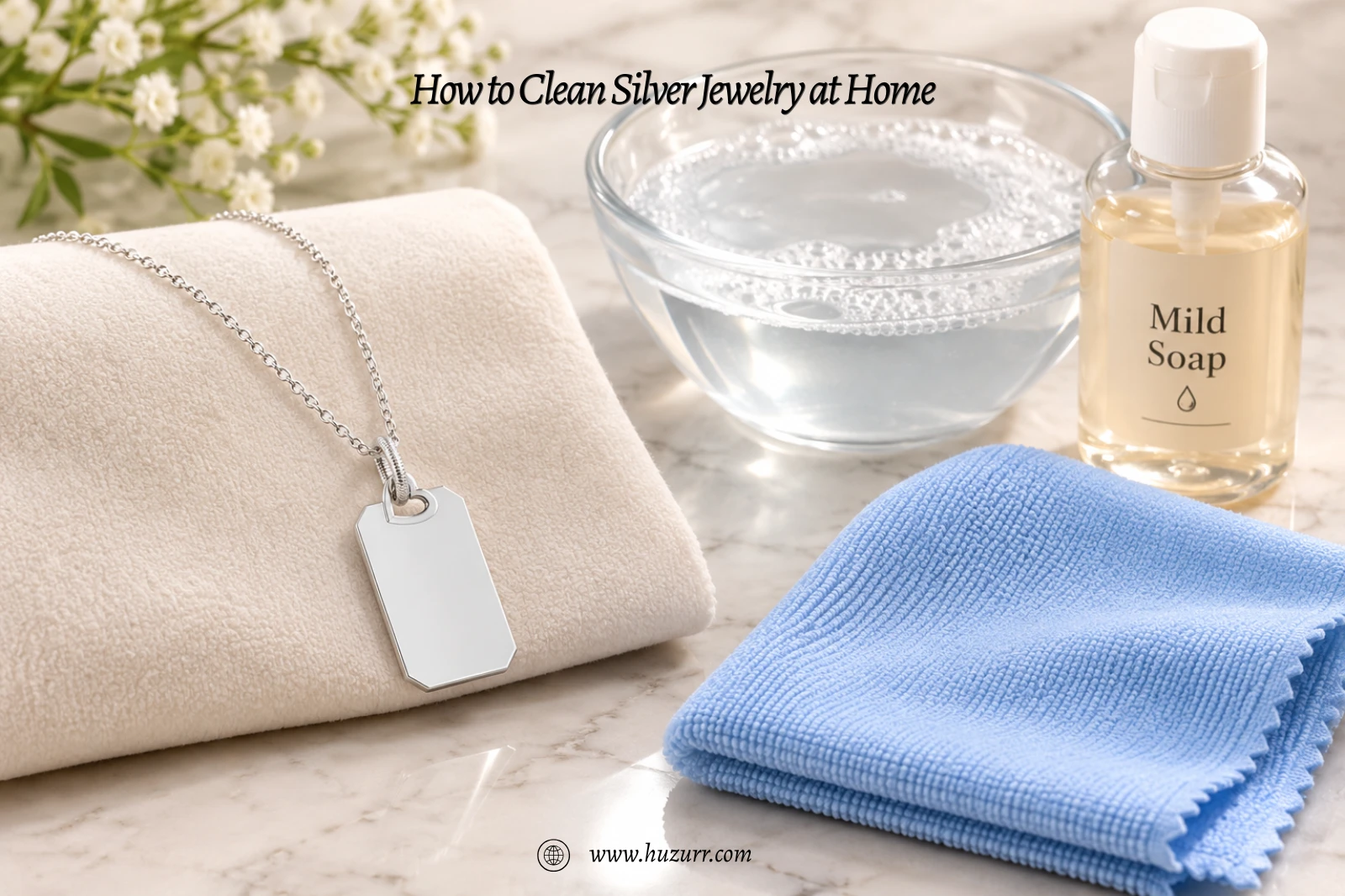
For a ring you wear daily, a gentle home clean about once a week keeps it bright, and a professional check every six months keeps it safe. If you wear it less often, a clean every month or two is plenty.
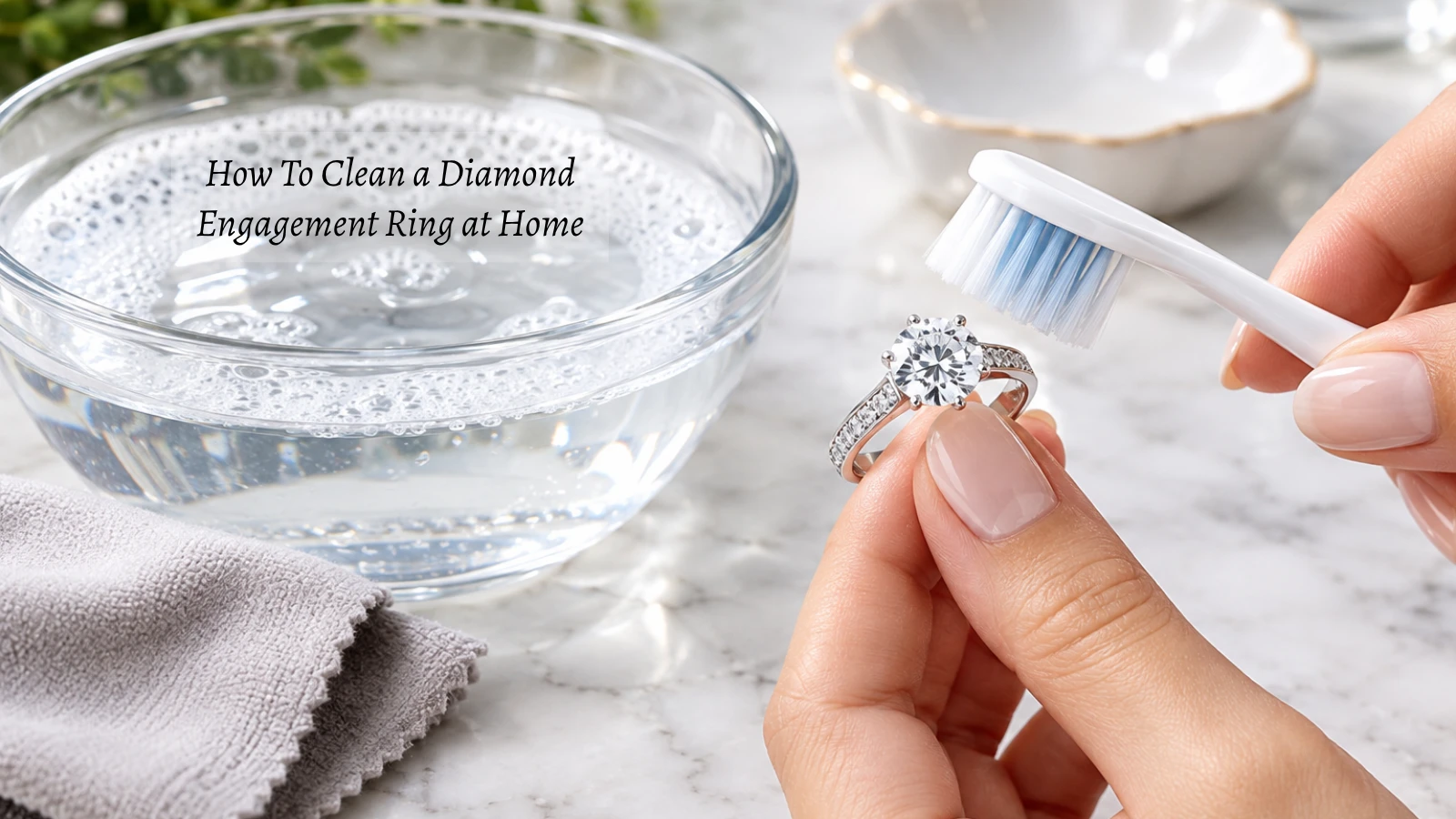
A simple method:
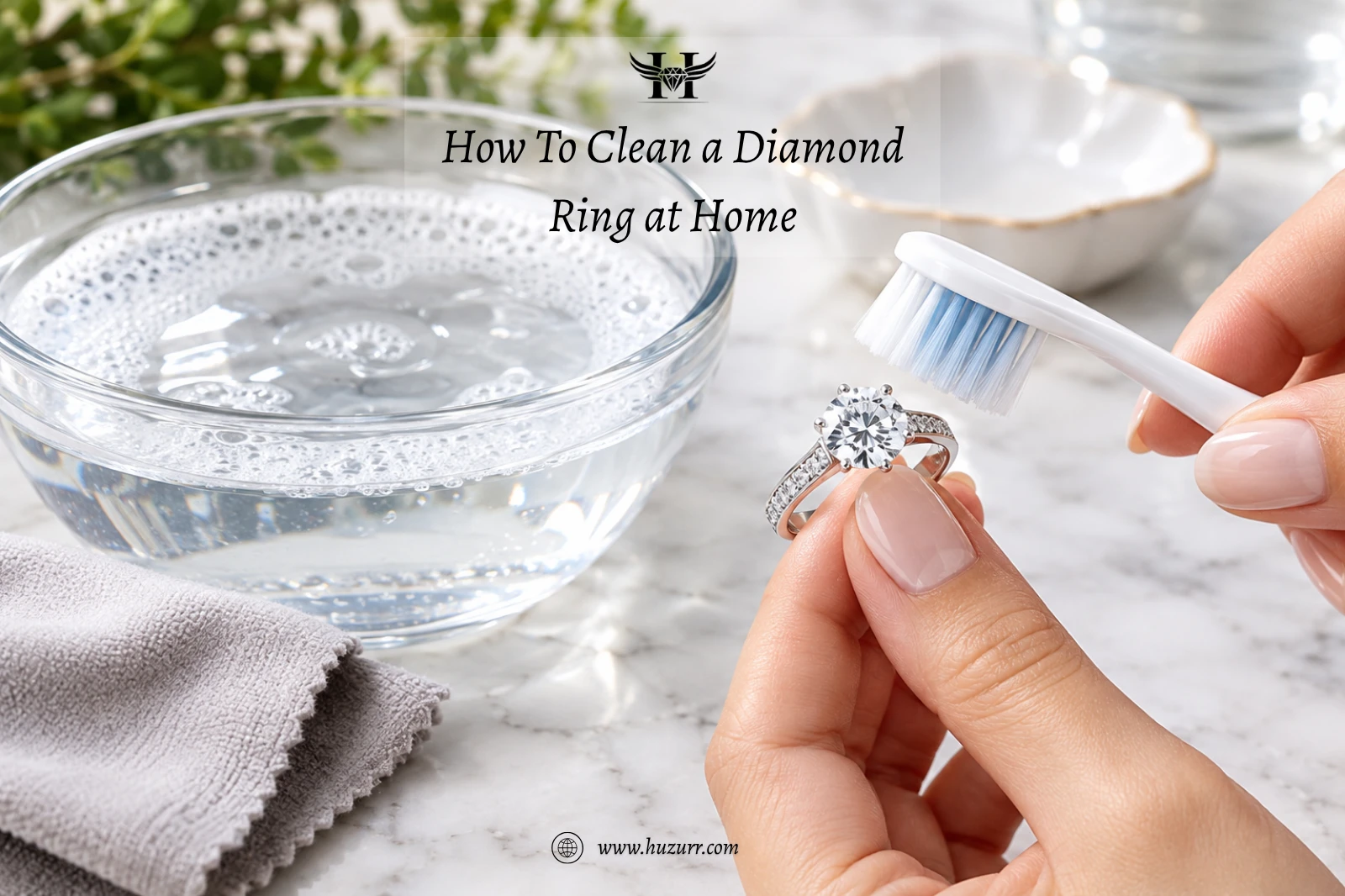
- Mix warm (not hot) water with a few drops of mild, ammonia-free dish soap.
- Soak the ring for 15 to 20 minutes.
- Brush gently around the stone and underneath it with a soft toothbrush kept only for jewelry.
- Rinse in a glass of clean water or in a bowl with the drain closed, never directly under a running tap, so a loose stone can’t disappear.
- Pat dry with a lint-free cloth.
Skip bleach, harsh household cleaners and abrasives like toothpaste. For a step-by-step version, see our guide on how to clean a diamond ring at home.
 How to Care for Jewelry by Material
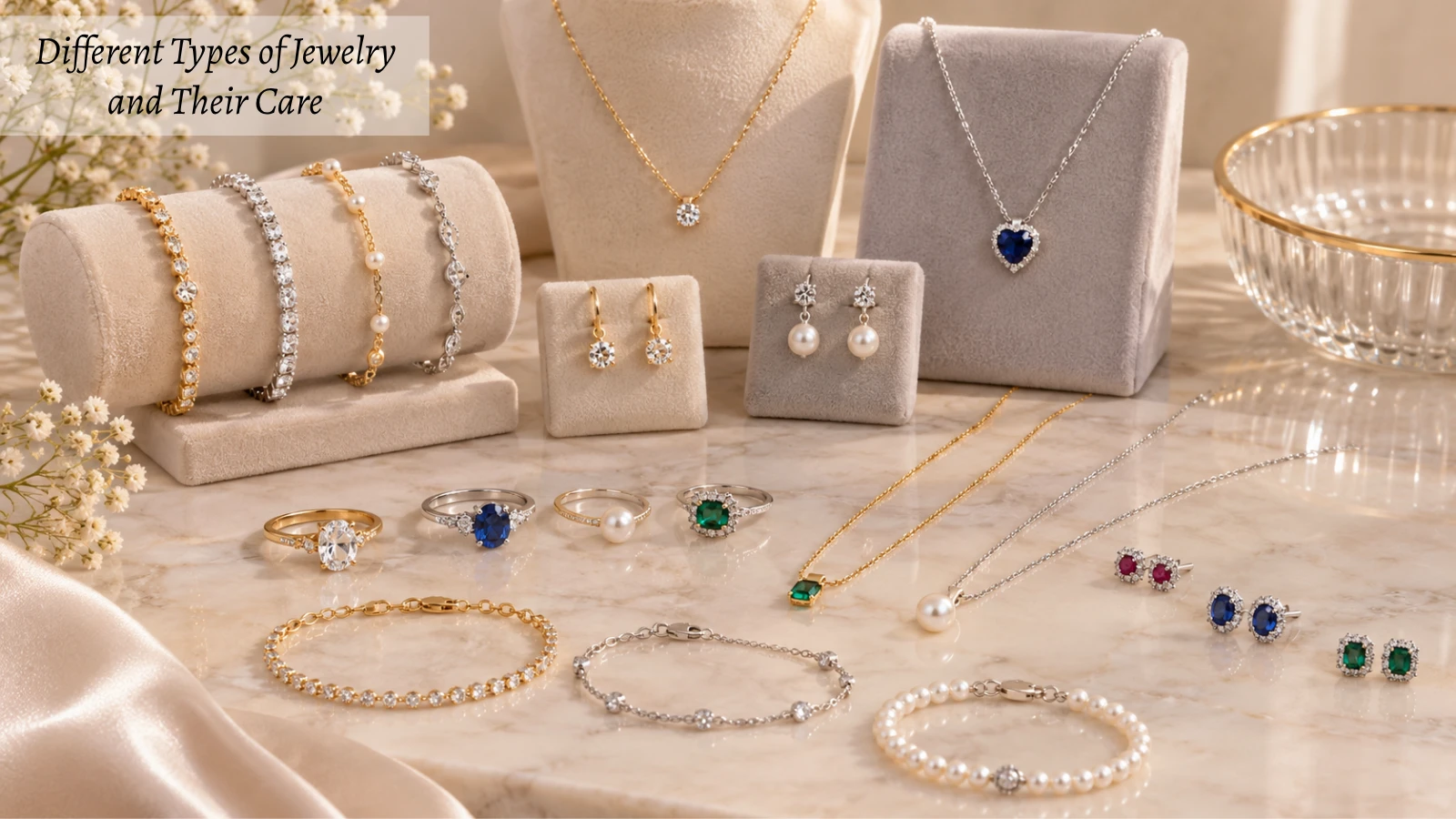
Different materials fail in different ways. Here is what each one needs.
Solid Gold (10K, 14K, 18K)
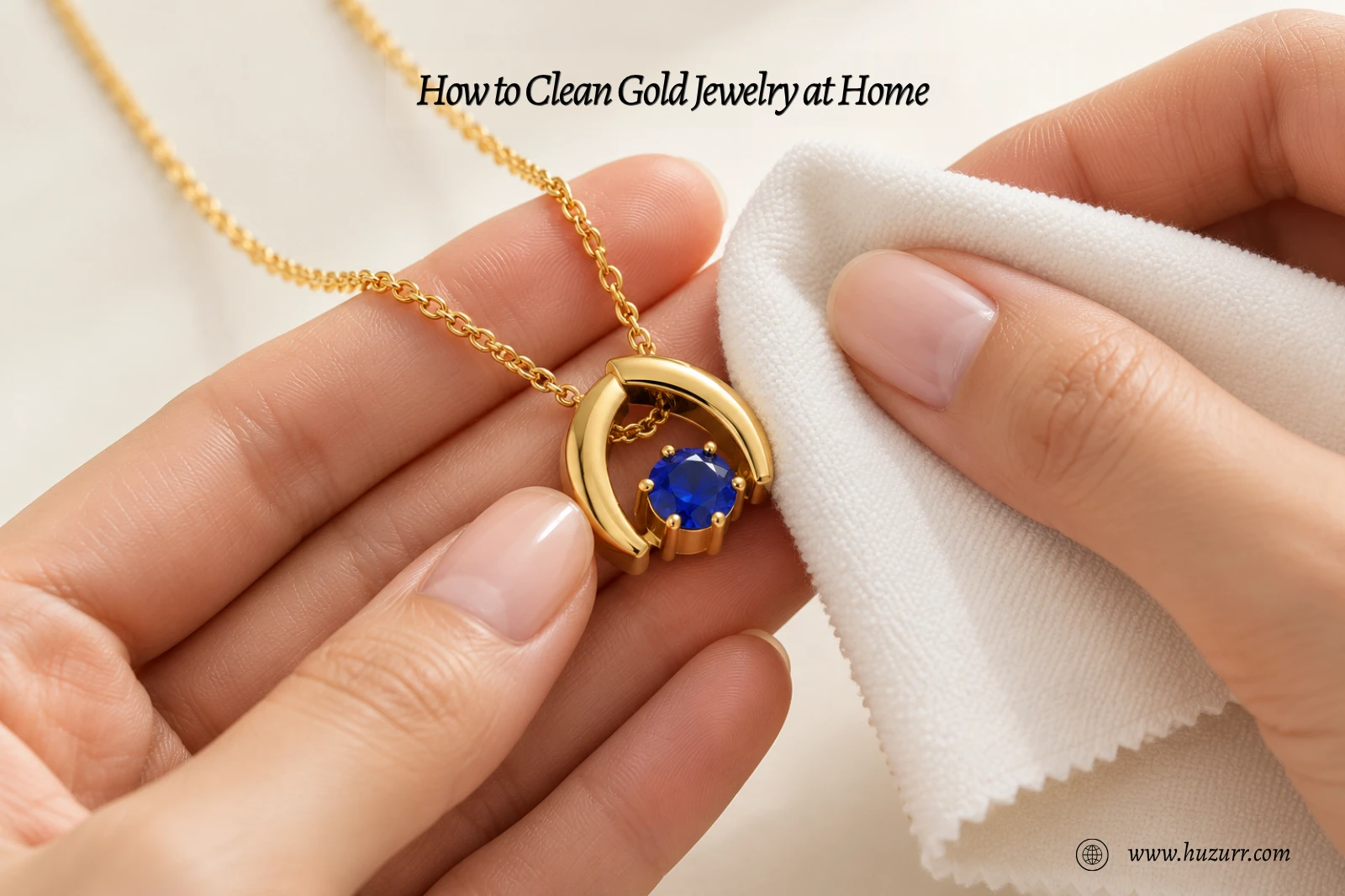
Solid gold is durable and doesn’t tarnish, but it scratches and collects grime. Clean it with warm soapy water and a soft brush, then dry it well. Keep it out of chlorinated pools and hot tubs, since chlorine can damage gold alloys over time. Higher karat gold (18K and above) is softer, so it dents and scratches more easily than 14K. A professional polish once a year restores the surface in a way home cleaning can’t.
Gold-Plated and Vermeil Jewelry
Plating is a thin layer of gold over another metal, so the care rules are stricter. Water, sweat, perfume and friction wear the layer down, and once it thins, the base metal shows through and can even leave marks on skin.
- Don’t wear plated pieces in the shower, pool, sea or while exercising.
- Apply perfume, lotion and hairspray first, jewelry last.
- Clean only with a soft, dry cloth, or a damp cloth and a very mild soap if needed. Avoid antibacterial soaps, bleach and ammonia.
- Store dry and separated, ideally in a pouch.
How long plating lasts depends heavily on thickness and wear. Brands commonly quote roughly one to three years of regular wear for standard plating, and longer with thicker layers, careful use and occasional re-plating. Gold vermeil (a thicker gold layer over sterling silver) is generally more durable than light plating, but it still isn’t waterproof.
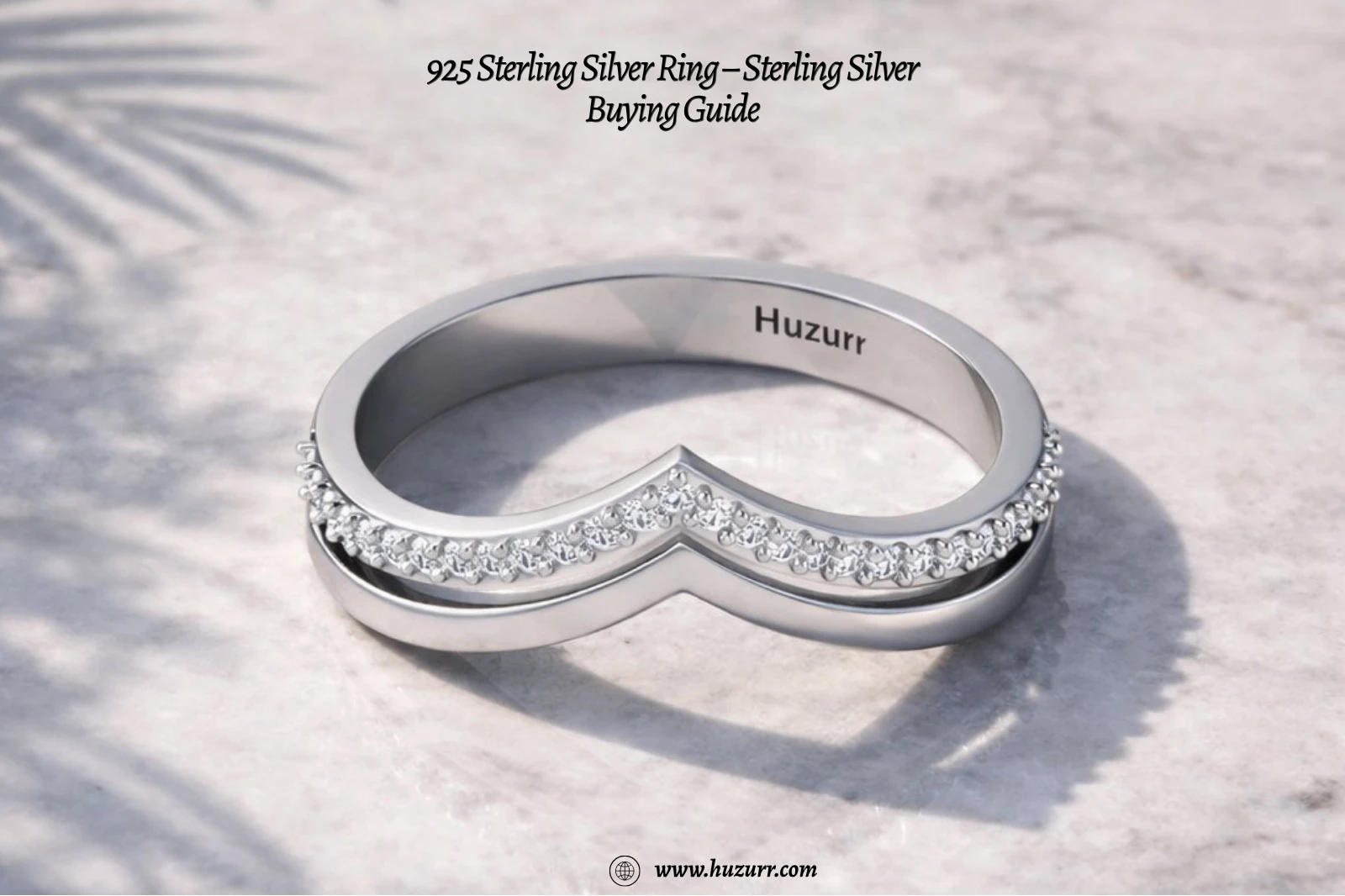
Sterling Silver
Sterling silver tarnishes because silver reacts with sulfur and moisture in the air. Tarnish is a surface change, not damage, and it’s easy to prevent.
- Wear it often. Skin contact and regular wiping slow tarnish.
- Store it in an airtight bag or pouch with an anti-tarnish strip.
- Polish gently with a silver polishing cloth.
- Keep it away from rubber, wool, latex and sulfur-rich environments.
For heavier tarnish, use a proper silver cleaner rather than scrubbing, which can scratch the finish.
 Platinum and White Gold
Platinum doesn’t lose metal when it’s scratched. The surface just develops a soft patina, which many people like. Rinse it in warm water and dry it with a lint-free cloth, and have a jeweler re-polish it if you want the mirror to finish back.
White gold is usually coated with rhodium plating for its bright white color. Over time that plating wears, and the slightly warmer gold tone underneath shows. This is normal and fixable: a jeweler can re-plate it with rhodium every few years.
Diamonds and Moissanite
Both are very hard, but hardness doesn’t mean indestructible. A diamond can still chip if it takes a sharp knock on its edge, and the setting that holds it can bend or loosen. Clean on the weekly schedule above, and avoid handling the stone itself, since fingers leave oil on the facets. Moissanite is cleaned the same way as diamond.
Pearls
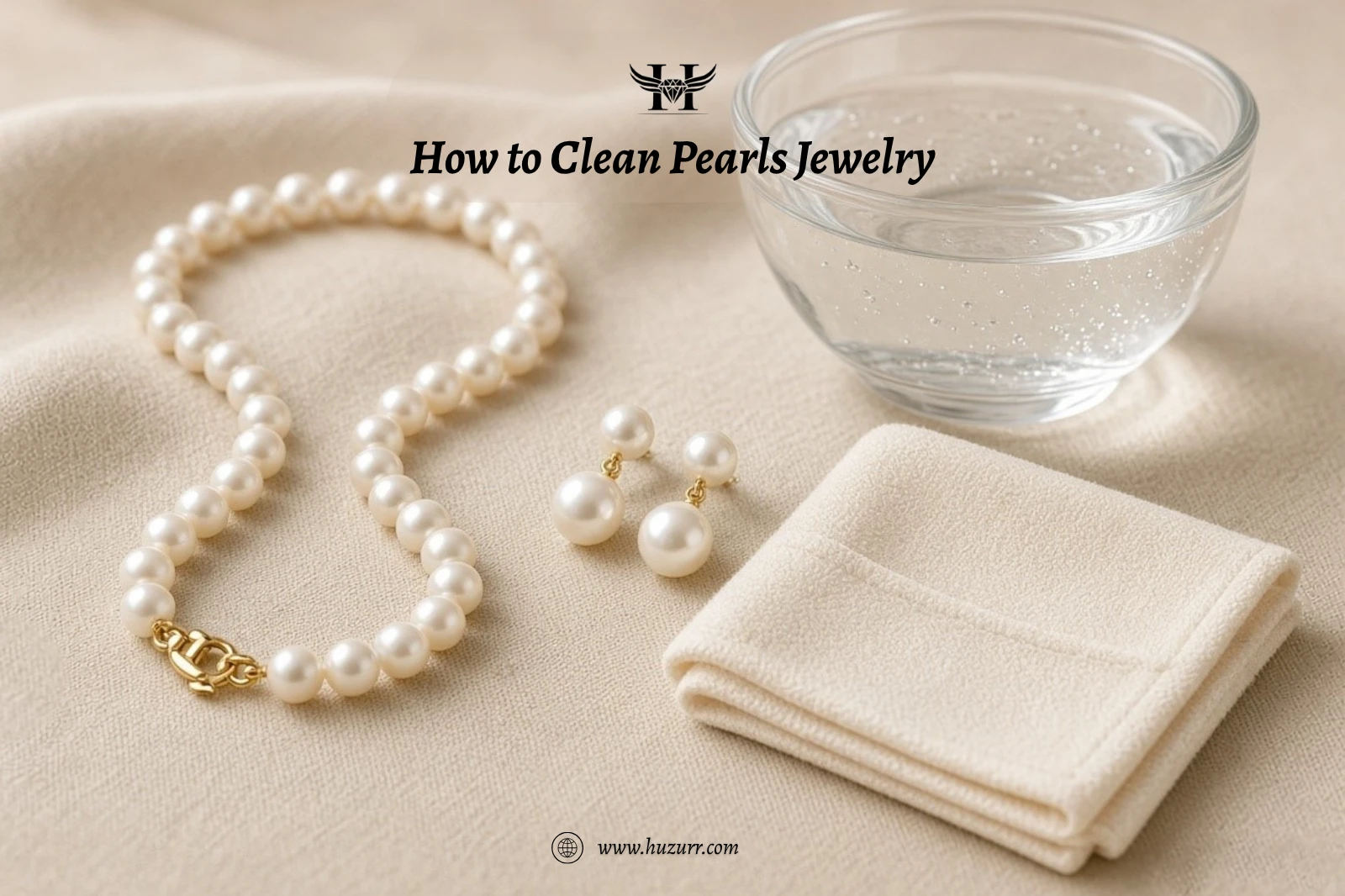
Pearls are organic and far softer than gemstones, so they need the gentlest routine of all.
- Always put pearls on last and take them off first.
- After wearing, wipe with a soft, slightly damp cloth.
- Never soak them or use ultrasonic cleaners, harsh soaps, or chemicals.
- Store flat, in a soft pouch, away from other jewelry. Hanging a strung necklace can stretch the silk.
- If the necklace is worn often, have the strand checked and restrung when the thread looks stretched or dirty.
Our full walkthrough is in how to clean pearls.
Opal, Emerald and Other Delicate Gemstones
Some stones need extra caution:
- Opal holds water and is sensitive to heat and dryness. Doublet and triplet opals are layered with adhesive that can loosen if soaked, so wipe them with a damp cloth instead.
- Emerald often has natural fractures, and many are treated with oil or resin. Avoid ultrasonic and steam cleaners, hot water and solvents.
- Soft or porous stones such as turquoise, lapis and amber should be wiped, not soaked.
When you’re not sure what a stone is, stay with the gentlest method: a soft cloth, a little mild soap, and lukewarm water. More in our guide to caring for gemstone jewelry.
A Note on Ultrasonic and Steam Cleaners
Ultrasonic and steam cleaners are popular, but they aren’t safe for every piece. They can shake loose stones that are already slightly loose, and they can damage pearls, opals, emeralds and other treated or fragile stones. Older and vintage settings are at higher risk. If you want this kind of cleaning, a jeweler who knows how to judge each piece is the safest option.
7 Jewelry Maintenance Mistakes to Avoid
- Sleeping in your jewelry. Chains snag and rings get squeezed and bent.
- Cleaning with toothpaste or baking soda scrubs. They’re abrasive and leave fine scratches.
- Wearing rings to the gym. Weights and bars bend metal, and sweat speeds up wear on plated pieces.
- Rinsing over an open drain. Close it or use a bowl.
- Piling jewelry together in one pouch. Hard stones scratch softer metals and gems.
- Using hand sanitizer with rings on. It can leave a film on stones and affect plating.
- Ignoring a loose stone. A slight rattle or a snagging prong is your cue to stop wearing the piece until a jeweler has looked at it.
Storage and Travel Tips
- Choose a cool, dry spot, since heat and humidity speed up tarnish.
- Use a box with soft lining and separate compartments, or individual pouches.
- Fasten necklaces and bracelets before storing so they don’t tangle.
- For travel, use a small roll or case with separate slots. Keep valuable pieces in your carry-on, not checked luggage.
- Take photos of valuable pieces and keep receipts and certificates together, which also helps with insurance.
When to See a Professional Jeweler
Book an appointment if you notice any of these:
- A stone that rattles, wobbles or looks lower in the setting than before.
- Prongs that are worn thin, bent, or catching on clothes.
- A ring band that looks thin, flat or out of shape.
- Clasps that open by themselves, or chains with stretched links.
- Plating that’s worn through, or white gold that looks yellow.
- Dullness that doesn’t come off with a normal clean.
For valuable or sentimental pieces, also consider insurance, and keep it updated with current valuations.
Jewelry Care FAQs
What are the basic jewelry care instructions?
Put jewelry on last and take it off first, keep it dry and away from chemicals, store each piece separately, clean it gently on a regular schedule, and have it checked by a jeweler about every six months.
How do I take care of my jewelry every day?
Wipe each piece with a soft, dry cloth after wearing it, then store it in a dry, padded spot. Avoid sleeping, showering or exercising in it.
How often should you clean your jewelry?
Daily-wear rings and earrings benefit from a gentle weekly clean. Pieces you wear occasionally need cleaning every month or two, or after a heavy wear.
Can I shower with my jewelry?
It’s best not to. Solid gold and platinum will survive occasional contact, but soap film dulls stones, and water breaks down plating and speeds up tarnish on silver.
How do I care for gold-plated jewelry?
Keep it away from water, perfume and sweat, apply products before putting it on, store it dry, and clean it with a soft cloth. Expect to have it re-plated eventually.
How do I take care of sterling silver?
Wear it regularly, store it in an airtight pouch with an anti-tarnish strip, and polish it with a silver cloth.
The Bottom Line
Good jewelry maintenance isn’t complicated: protect it from water and chemicals, store it properly, clean it on a schedule, and let a jeweler inspect it twice a year. A few minutes of care keeps your pieces bright and secure, and keeps the memories attached to them intact.
Looking for something new to look after? Browse the latest collections at Huzurr, and use this guide to keep every piece looking its best.