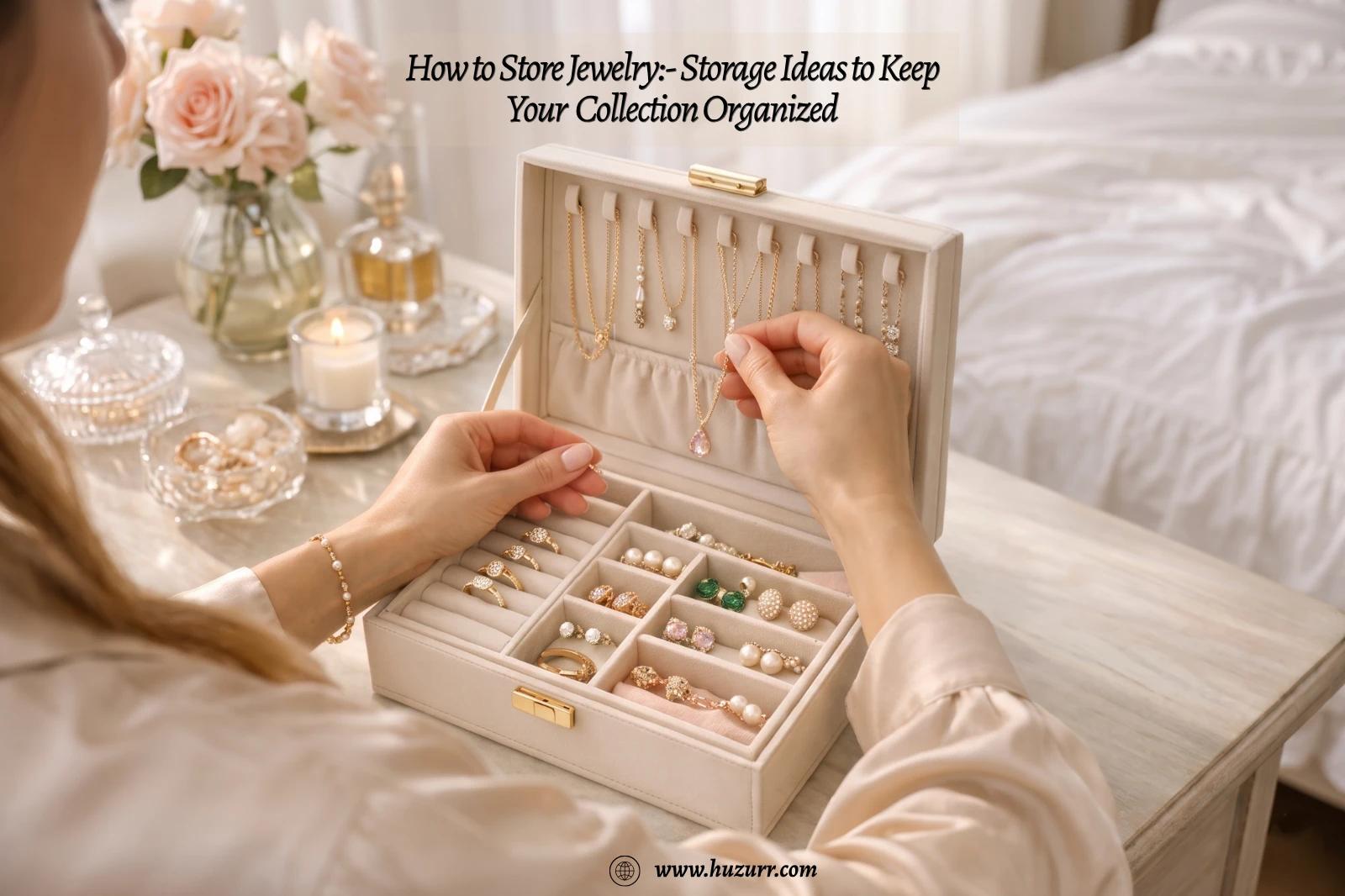
Jewelry can look beautiful for years, but the way you store it between wears makes a real difference to its appearance and condition. If you have ever opened your jewelry box to find tangled necklaces, scratched rings, missing earrings, or silver pieces that have started to tarnish, your storage habits may need a little attention.
Knowing how to store jewelry properly is not simply about buying an expensive jewelry organizer. It is about understanding what different materials need, keeping pieces separated, controlling exposure to moisture and chemicals, and choosing storage that protects each item.
As a jewelry retailer, one of the most useful habits to encourage is treating every piece according to its material and construction. Sterling silver, gold-plated jewelry, pearls, and gemstone pieces do not all require exactly the same care.
In this guide, you will discover 12 practical jewelry storage ideas, learn how to prevent common storage problems, and understand how to keep your collection organized and ready to wear.
Why Proper Jewelry Storage Matters
Jewelry is exposed to more than everyday wear. Even when a piece is not being worn, contact with other accessories, humidity, dust, cosmetics, and unsuitable storage materials can affect its appearance.
For example:
- Scratches: Rings, bracelets, and gemstone settings can scratch one another when stored together.
- Tangled chains: Fine necklaces can knot when several chains are placed in the same compartment.
- Tarnishing: Sterling silver can react with substances in its surroundings and gradually develop a darker surface.
- Plating wear: Gold-plated pieces can lose their finish faster when exposed to friction, chemicals, or rough handling.
- Gemstone damage: Some gemstones are sensitive to heat, sudden temperature changes, and contact with harder materials.
The goal of good storage is simple: reduce unnecessary contact, protect delicate surfaces, and make it easy to find the piece you want.
12 Practical Jewelry Storage Ideas to Protect Your Collection
1. Store Each Jewelry Piece Separately
One of the simplest ways to protect jewelry is to avoid storing multiple pieces in a single pile.
Different metals and gemstones have different levels of hardness. When pieces rub against one another, softer surfaces may become scratched. Chains can also catch on earring posts, clasps, and ring settings.
Use individual fabric pouches, small compartments, or a jewelry box with separate sections.
A practical example: Keep your everyday rings in individual ring slots, place bracelets in a separate compartment, and store delicate necklaces in their own pouches.
This small change makes your collection easier to organize and reduces unnecessary friction.
2. Use a Jewelry Organizer with Separate Compartments
A good jewelry organizer should do more than look attractive on your dresser. It should provide the right storage space for different types of jewelry.
Look for features such as:
- Padded ring rolls to hold rings securely.
- Small divided sections for earrings.
- Separate compartments for bracelets and watches.
- Necklace hooks or individual chain storage.
- Soft-lined interiors to reduce surface scratches.
If you own several types of jewelry, a multi-compartment organizer is usually more practical than one large open tray.
Choose an organizer based on the size and shape of your collection rather than its appearance alone.
3. Learn How to Store Necklaces Without Tangling
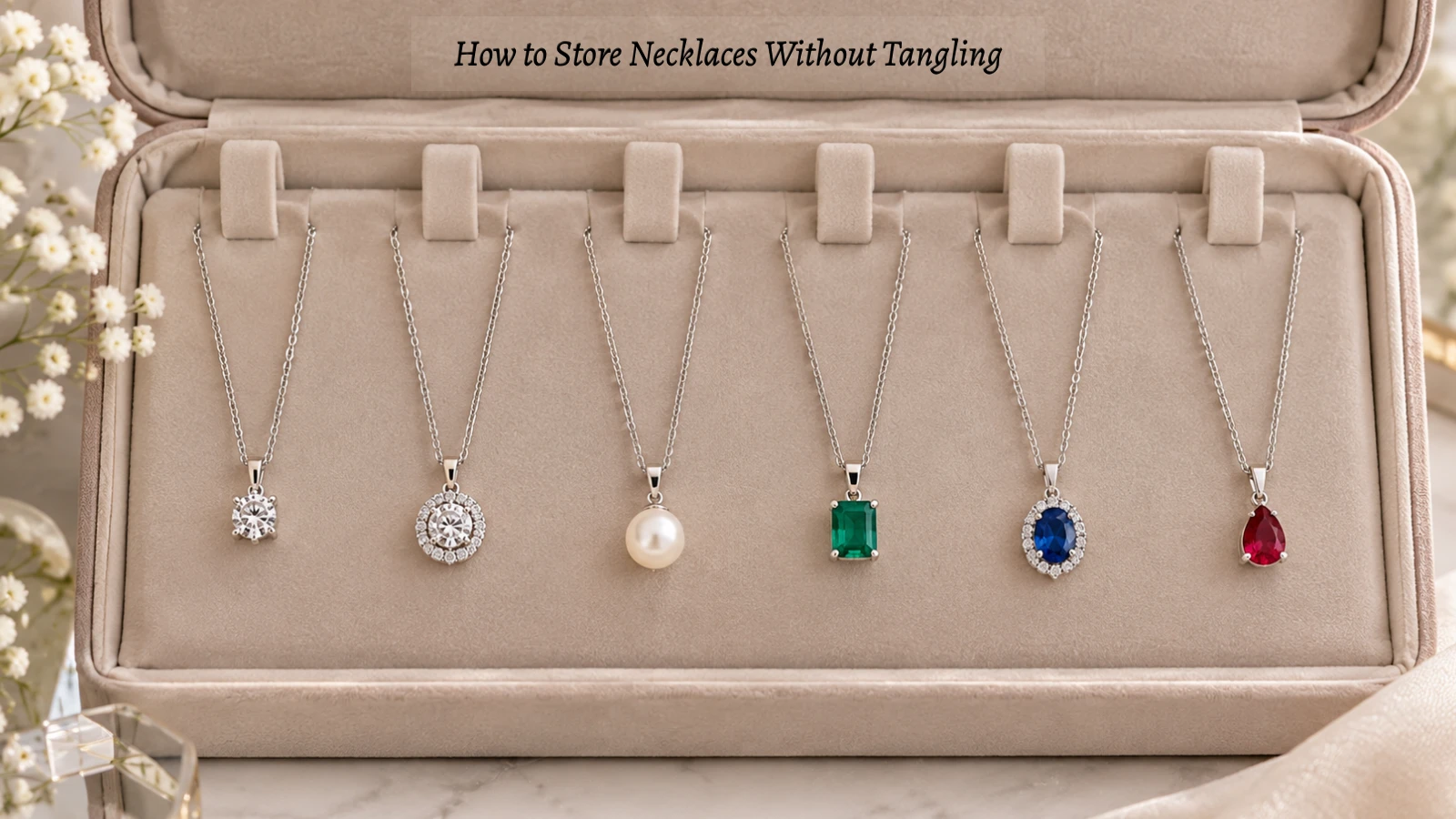 Necklaces are among the easiest jewelry pieces to tangle, particularly when they have fine chains or delicate pendants.
Putting several necklaces together in a drawer may seem convenient, but their chains can wrap around one another and become difficult to separate.
Try these methods:
- Hang individual necklaces on separate hooks.
- Close each necklace clasp before storing it.
- Keep delicate chains in individual soft pouches.
- Use a necklace organizer with enough space between hooks.
- Avoid placing heavy pendants on top of fine chains.
For travel, you can place each necklace in a separate small pouch or use a purpose-built travel organizer.
Professional storage tip: If you have a particularly fine chain, avoid hanging it where it can swing into other jewelry. A separate flat pouch can be a better choice.
4. Organize Earrings in Pairs
Earrings are small, easy to misplace, and often difficult to identify when stored loosely.
The best approach is to keep each pair together. Use an earring tray, a compartment organizer, or a dedicated earring holder.
For stud earrings, make sure the backs are secured before storage. For hoops and drop earrings, use compartments that prevent them from catching on other pieces.
If you have a large earring collection, organize it by style:
- Everyday studs
- Small hoops
- Statement earrings
- Drop and dangle earrings
This makes it easier to find a matching pair without searching through an entire jewelry box.
5. Use Ring Slots to Prevent Scratches and Damage
Rings often have raised settings, gemstones, or decorative details that can catch on other jewelry.
Instead of placing all your rings in one compartment, use a padded ring holder or individual slots.
Pay particular attention to rings with:
- Raised gemstone settings
- Delicate prongs
- Textured or decorative bands
- Larger statement stones
Keeping rings separate also makes it easier to inspect their settings before wearing them.
Avoid forcing a ring into a slot that is too tight. The holder should support the ring without putting pressure on its setting.
6. Store Sterling Silver Properly to Reduce Tarnishing
Sterling silver can gradually tarnish when exposed to substances in the air, moisture, and certain chemicals. This is a natural reaction and does not necessarily mean the jewelry is damaged beyond care.
To help reduce tarnishing:
- Store silver jewelry in a clean, dry place.
- Use anti-tarnish pouches or cloth for suitable silver pieces.
- Keep silver away from bathroom humidity.
- Avoid storing it next to household chemicals or cosmetics.
- Wipe away fingerprints and residue with an appropriate soft cloth before storage.
An anti-tarnish bag or cloth can help reduce exposure to tarnish-promoting substances.
Important: Do not use aggressive polishing methods on every silver piece. Jewelry with gemstones, pearls, plating, or delicate finishes may require different cleaning instructions.
7. Take Extra Care When Storing Gold-Plated Jewelry
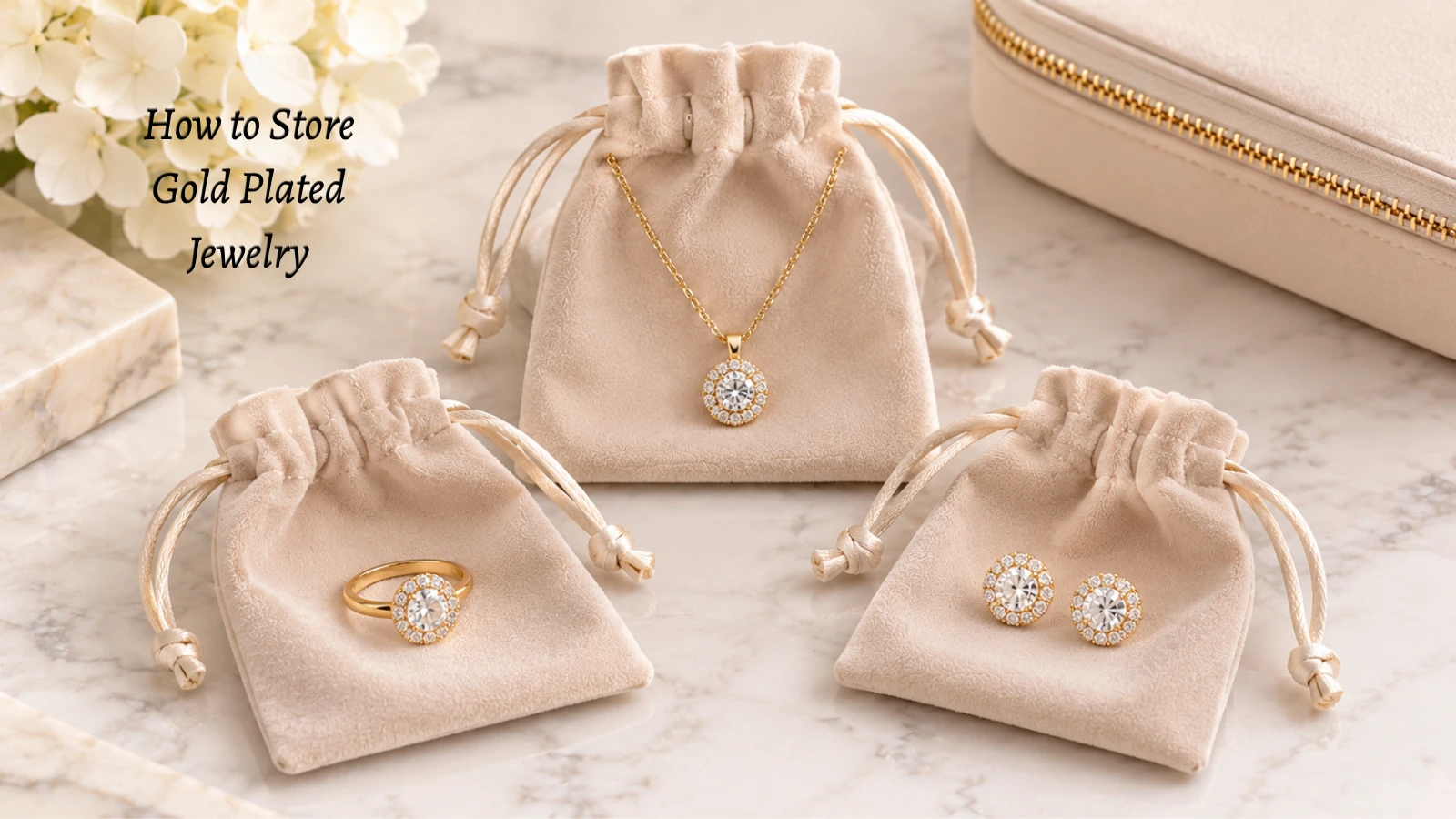 Gold-plated jewelry has a thin layer of gold over a base metal. Because the gold layer is not solid throughout the piece, friction and harsh chemicals can gradually affect its finish.
If you want to know how to store gold-plated jewelry, start with three habits: keep it dry, prevent rubbing, and avoid unnecessary chemical exposure.
Follow these storage practices:
- Wipe the piece gently with a clean, soft, dry cloth after wearing it.
- Store each item separately in a soft pouch or lined compartment.
- Keep it away from perfume, lotions, hairspray, and cleaning products.
- Avoid placing heavy jewelry on top of plated pieces.
- Do not use abrasive polishing cloths or harsh cleaners unless the manufacturer's care instructions specifically allow them.
For gold-plated necklaces, individual storage is especially useful because repeated chain-to-chain contact can cause unnecessary friction.
8. Keep Jewelry Away from Excessive Moisture and Heat
A common storage mistake is keeping jewelry in a bathroom because it is convenient while getting ready.
Bathrooms often experience frequent changes in humidity and temperature. This can create less-than-ideal conditions for many jewelry materials.
Instead, choose a cool, dry location away from direct sunlight, radiators, and other heat sources.
A bedroom drawer, a dedicated jewelry cabinet, or a suitable storage box can be a better option.
However, do not assume that every gemstone should be stored in an extremely dry environment. Pearls and opals, for example, need more careful consideration because excessive dryness and heat can affect them.
9. Store Pearls and Delicate Gemstones Separately
Pearls and certain gemstones require different care from ordinary metal jewelry.
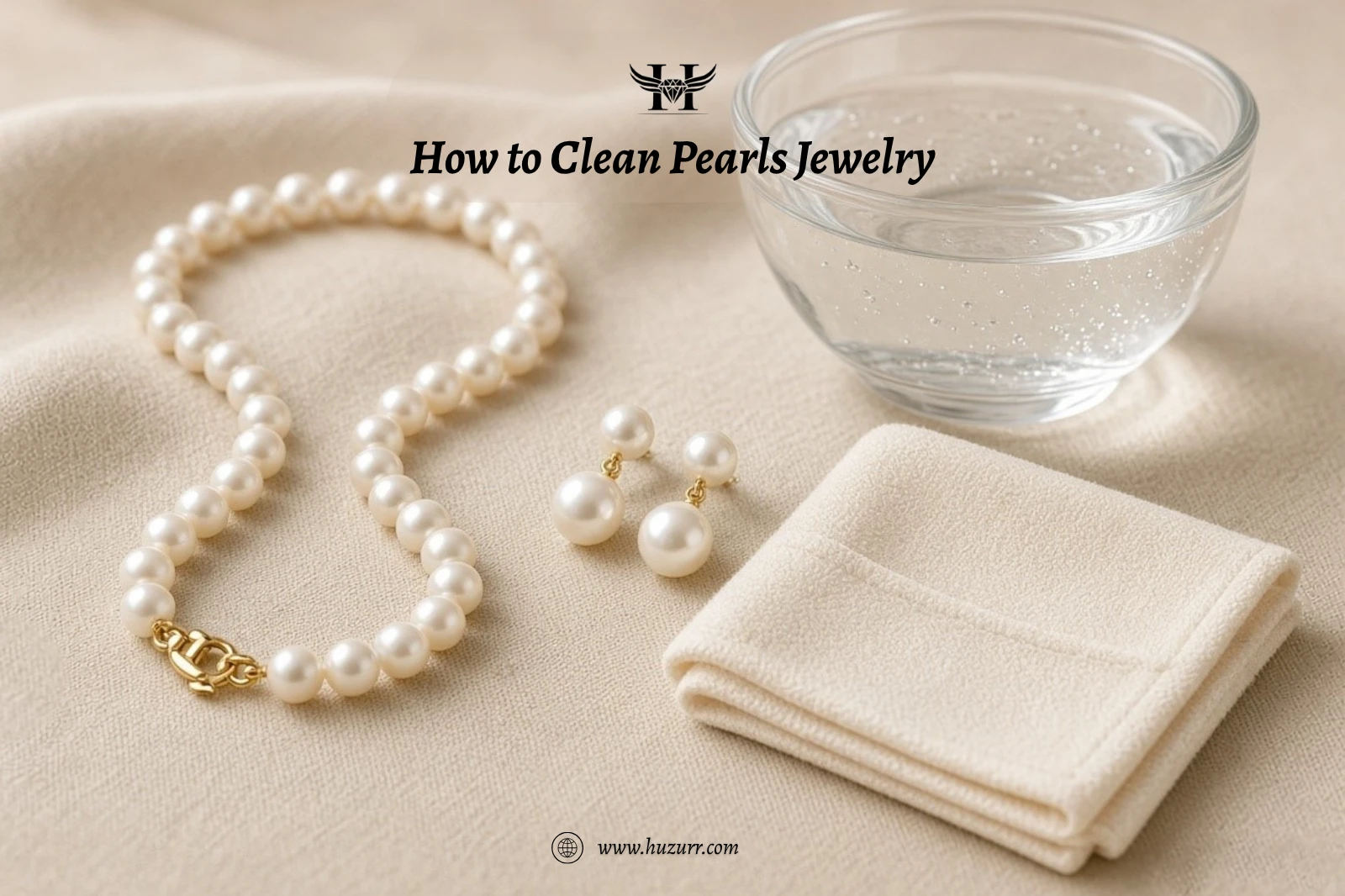
Pearls are relatively soft and can be scratched by harder jewelry. They can also be affected by cosmetics, perfumes, and cleaning chemicals.
For pearls:
- Wipe them gently with a soft cloth after wearing.
- Store them separately from harder jewelry.
- Avoid hot, dry storage environments.
- Keep them away from perfumes and household cleaning products.
- Allow any moisture from cleaning to dry before putting them away.
Opals and other delicate gemstones may also need specific storage conditions. Avoid exposing them to sudden temperature changes or excessive heat.
When a piece has a special gemstone, follow the care instructions provided by the jeweler or gemstone specialist rather than applying a general cleaning method.
10. Make the Most of Small Jewelry Storage Spaces
You do not need a large dressing table or a dedicated jewelry room to keep your collection organized.
If you have limited space, choose storage that uses drawers and vertical areas efficiently.
Useful jewelry storage ideas for small spaces include:
- A shallow drawer organizer with adjustable sections.
- A compact hanging jewelry organizer.
- A small ring tray inside a dresser drawer.
- Individual pouches stored in a labeled box.
- A wall-mounted organizer with separate necklace hooks.
If you are organizing jewelry in a drawer, measure the available space before purchasing an organizer. A tray that fits properly is easier to use and less likely to slide around.
Keep frequently worn pieces in the most accessible section and occasional accessories in a separate compartment.
11. Use a Travel Jewelry Organizer
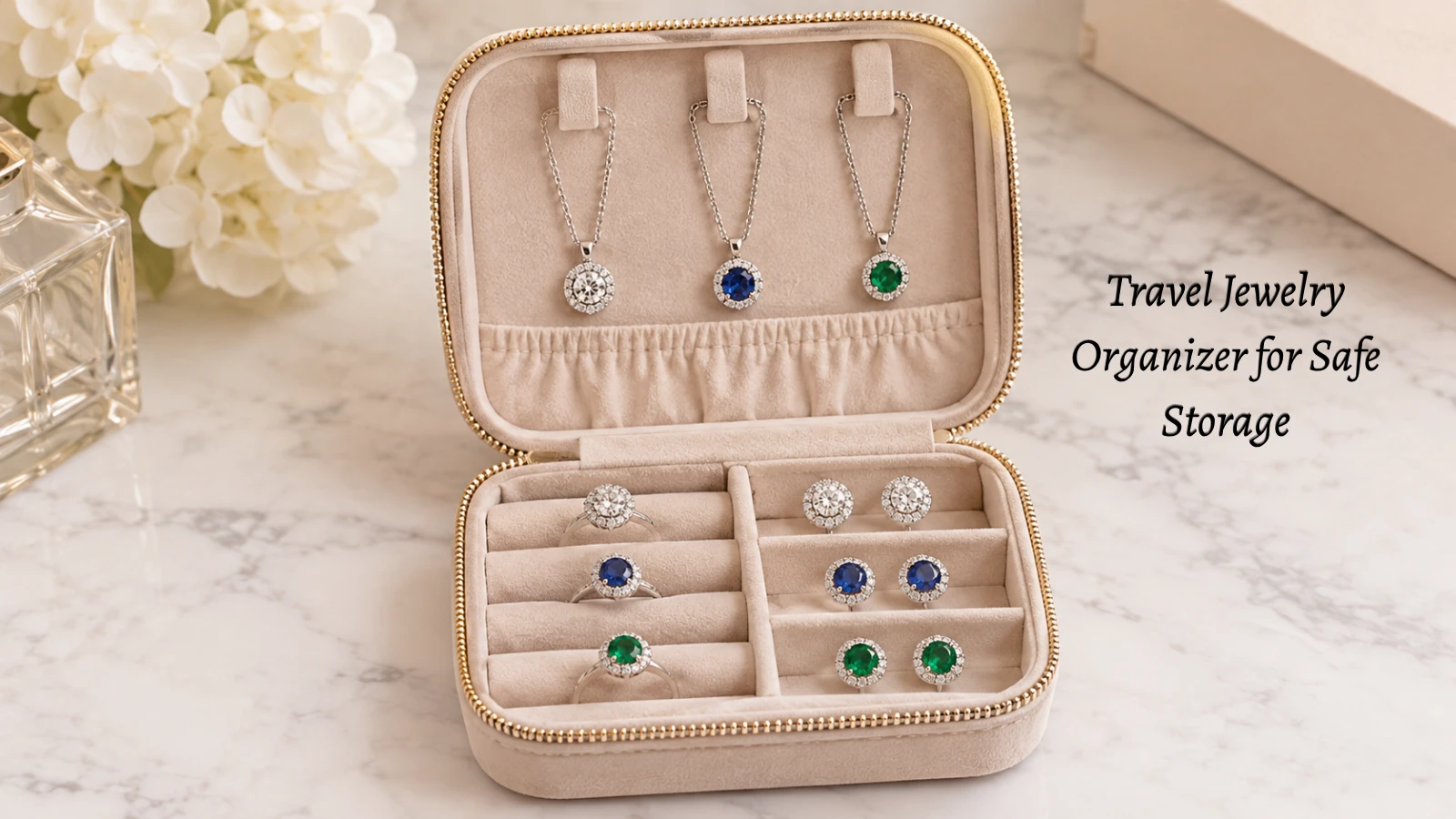 Travel creates additional risks because jewelry can move around inside luggage, rub against other items, or become tangled during transit.
A travel jewelry organizer helps keep pieces separated while taking up relatively little space.
Before packing:
- Select only the jewelry you expect to wear.
- Secure necklace clasps before storing them.
- Place delicate chains in individual compartments.
- Keep earrings together as pairs.
- Use padded sections for rings and gemstone pieces.
- Place the organizer inside your carry-on rather than loose in checked luggage.
For valuable or sentimental jewelry, consider whether taking it on the trip is necessary. If you do bring it, keep it secure and avoid leaving it unattended.
12. Inspect Your Jewelry Before Putting It Away
Storage is also a good opportunity to notice small problems before they become bigger ones.
Before returning a piece to its organizer, check for:
- Loose gemstone settings
- Bent earring posts
- Damaged clasps
- Knotted or stretched chains
- Visible residue or discoloration
- Signs of wear on plated surfaces
If you notice a loose stone or damaged setting, stop wearing the piece until it has been checked by a qualified jeweler.
Regular inspection is especially useful for jewelry that you wear frequently. It helps you notice changes early instead of discovering them when a piece is lost or damaged.
Common Jewelry Storage Mistakes to Avoid
Even an expensive jewelry box cannot protect your collection if the storage habits are unsuitable.
|
Storage mistake |
Why it can cause problems |
Better approach |
|
Putting all jewelry in one box compartment |
Pieces can rub, scratch, and tangle |
Use separate compartments |
|
Leaving necklaces loose |
Chains can knot together |
Use separate hooks or pouches |
|
Storing jewelry in the bathroom |
Humidity can affect some materials |
Choose a cooler, drier location |
|
Keeping plated jewelry with heavy pieces |
Friction can wear the finish |
Store plated items separately |
|
Leaving silver exposed for long periods |
It may tarnish more quickly |
Use suitable anti-tarnish storage |
|
Storing pearls with hard gemstones |
Harder materials may scratch pearls |
Use a separate soft pouch |
|
Packing jewelry loosely for travel |
Movement can cause tangling and scratches |
Use a padded travel organizer |
What Is the Best Way to Store Different Types of Jewelry?
There is no single storage method that works equally well for every piece. The material, finish, setting, and construction should influence your choice.
|
Jewelry type |
Recommended storage |
Main precaution |
|
Sterling silver |
Anti-tarnish pouch or cloth |
Reduce exposure to moisture and tarnish-promoting substances |
|
Gold-plated jewelry |
Separate soft pouch or lined compartment |
Minimize friction and chemical exposure |
|
Necklaces |
Individual hooks or pouches |
Prevent chain tangling |
|
Rings |
Padded ring slots |
Protect settings and surfaces |
|
Earrings |
Divided earring tray |
Keep pairs together |
|
Bracelets |
Separate padded compartments |
Prevent rubbing and scratches |
|
Pearls |
Soft, separate pouch |
Avoid heat, dryness, and harsh chemicals |
|
Opals |
Suitable individual storage |
Avoid excessive heat and sudden temperature changes |
Remember that this is general storage guidance. Follow the specific care instructions for jewelry with unusual finishes, treatments, or delicate gemstones.
Frequently Asked Questions About Jewelry Storage
1. What is the best way to store jewelry?
The best way to store jewelry is to keep each piece separate in a clean, suitable compartment or soft pouch. Choose storage according to the material, protect delicate surfaces, and avoid unnecessary exposure to moisture, heat, and chemicals.
2. How do you store necklaces without tangling?
Store necklaces individually using separate hooks, necklace compartments, or soft pouches. Fasten each clasp before storage and avoid placing multiple delicate chains together.
3. How should I store gold-plated jewelry?
Keep gold-plated jewelry clean and dry, then place each piece in a separate soft pouch or lined compartment. Avoid friction, abrasive cleaning materials, perfume, and harsh chemicals.
4. How do I keep silver jewelry from tarnishing?
Store sterling silver in a clean, dry location using an anti-tarnish pouch or cloth. Reduce exposure to humidity, cosmetics, and other substances that can contribute to tarnishing.
5. Can I store all my jewelry in one jewelry box?
Yes, you can use one jewelry box for your collection, but each type of jewelry should have its own compartment. Separate storage helps prevent scratches, tangling, and unnecessary contact between materials.
6. Should jewelry be stored in airtight containers?
Not every type of jewelry should be stored in the same way. Suitable anti-tarnish storage can help protect silver, but pearls and opals may require different conditions. Avoid assuming that completely airtight or extremely dry storage is ideal for every material.
7. Is it better to hang necklaces or keep them flat?
Both methods can work. Hanging necklaces individually can help prevent tangling, while delicate or particularly fine chains may be better stored flat in separate pouches. Choose the method that keeps the chain secure and free from contact with other pieces.
8. How should I organize jewelry in a small space?
Use shallow drawer trays, compact organizers, individual pouches, or wall-mounted hooks. Keep everyday pieces accessible and store occasional jewelry separately.
Final Thoughts: Make Jewelry Storage Part of Your Care Routine
Good jewelry storage is not about having the biggest organizer or the most expensive jewelry box. It is about understanding what your collection needs and building a few simple habits around it.
Keep necklaces separate, protect delicate settings, store silver appropriately, and give gold-plated jewelry extra attention to prevent unnecessary friction. Most importantly, remember that different materials need different care.
At Huzurr Jewels, we believe that choosing jewelry is only one part of enjoying it. Taking care of the pieces you already own helps you keep them organized, wearable, and ready for the occasions that matter.