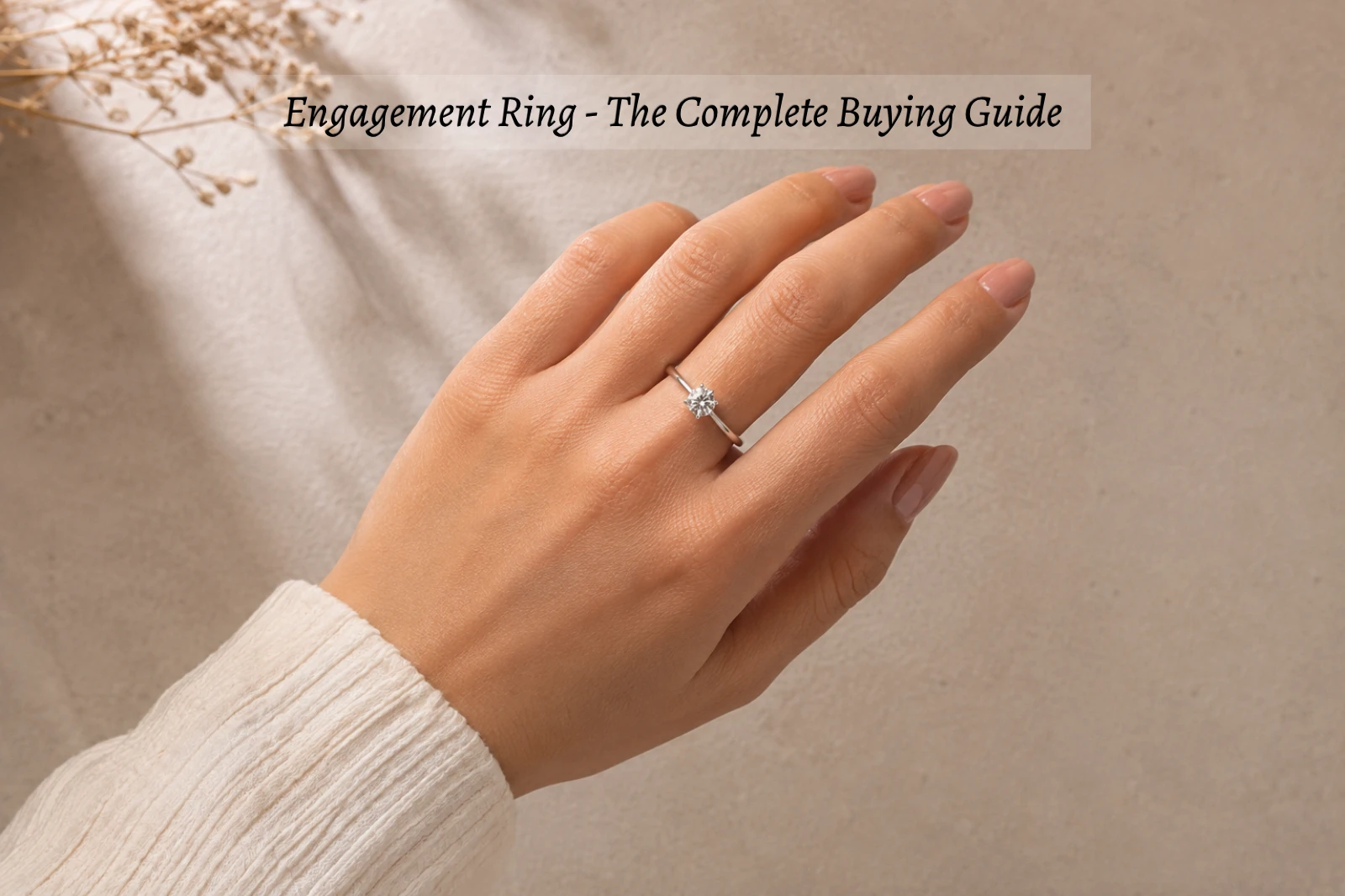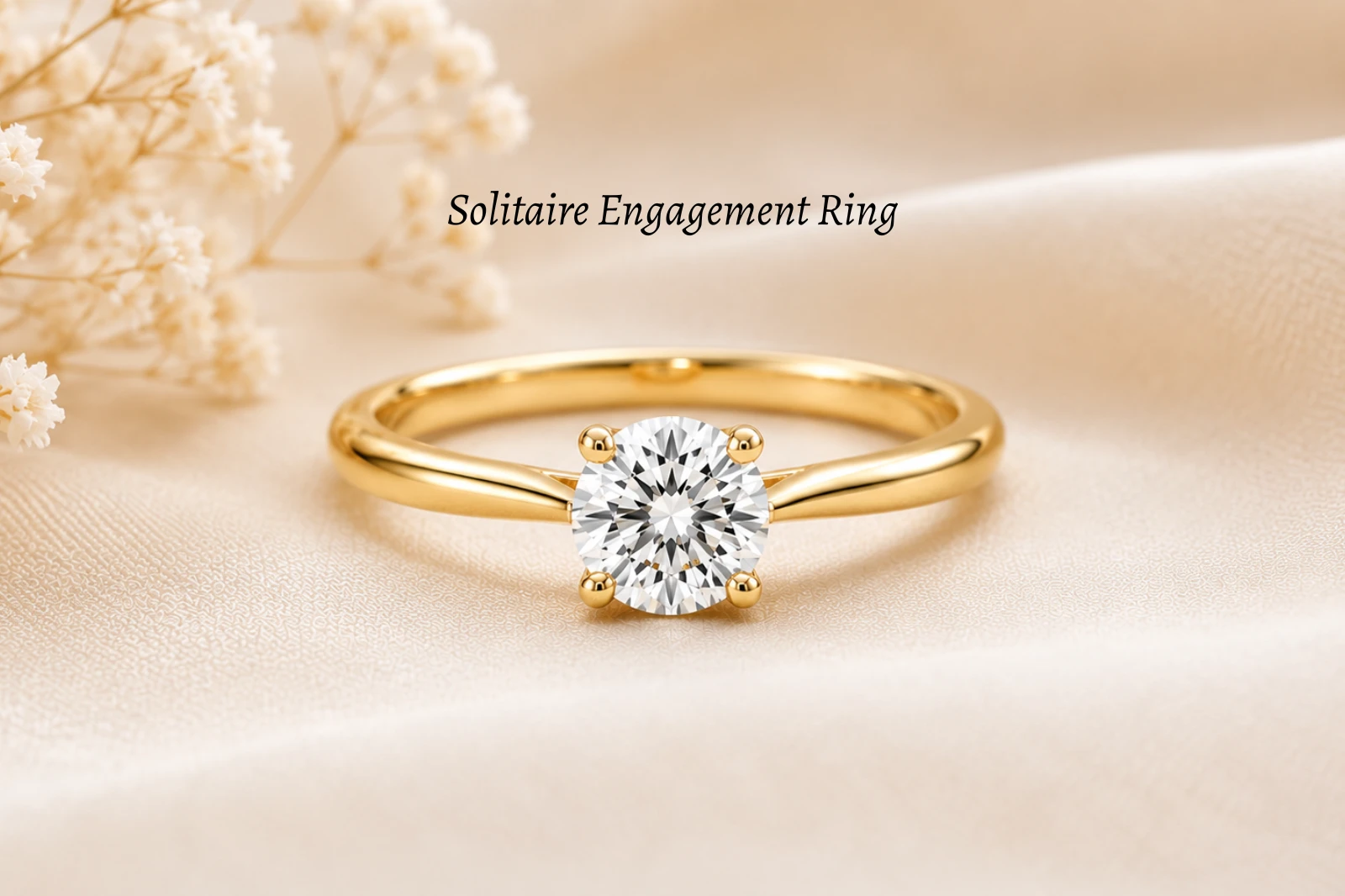
Walk into almost any fine-jewelry collection and one design is immediately recognizable: a single center stone given the space to command attention.
That is the appeal of a solitaire engagement ring.
Instead of surrounding the center gemstone with elaborate clusters or multiple prominent stones, the solitaire lets shape, proportion, setting, and metal do the talking. It can feel traditional with a round diamond and simple prongs, distinctly modern with an emerald-cut center, or more individual with a colored gemstone.
Its apparent simplicity is also why the details matter. Changing the prongs, profile, band shape, or center-stone cut can completely change the personality of the ring.
This guide focuses specifically on solitaire rings. If you are still comparing broader factors across all engagement-ring styles, start with Huzurr's complete guide to choosing an engagement ring.
What Is a Solitaire Engagement Ring?
A solitaire engagement ring is a ring featuring a single, prominent center gemstone. The word “solitaire” literally points to the idea of something standing alone, which is why the center stone receives most of the visual attention.
In a traditional solitaire diamond engagement ring, there is one diamond mounted above a comparatively simple band. Unlike a three-stone ring, halo, or cluster design, there are no other major stones competing with the center.
Modern interpretations can bend the definition slightly. Some include subtle band accents or a hidden halo beneath the center stone while preserving the look of one dominant gemstone from above.
The solitaire engagement ring's meaning is therefore primarily about design: one central focal point. Symbolically, many couples also associate that singular stone with a single commitment or relationship, although that meaning is personal rather than a rule.
Why Choose a Solitaire Engagement Ring?
The strength of a solitaire is not simply that it is “simple.” It is how much freedom that simplicity creates.
The center stone stays prominent. With fewer competing details, shape, color, and proportions are easier to appreciate.
It ages well visually. A restrained silhouette is less closely tied to one decorative trend, which contributes to the enduring appeal of the classic solitaire ring.
It works with many shapes. Round, oval, emerald, cushion, pear,r and princess-cut stones can all create very different solitaire engagement ring designs without changing the basic concept.
It offers styling flexibility. A clean solitaire can later be paired with a plain, curved, diamond, or mixed-metal band.
It can suit multiple aesthetics. Depending on the setting and band, a solitaire can feel traditional, architectural, minimalist, or statement-making.
That versatility is one reason both a subtle solitaire ring for women and a larger, more dramatic center-stone design can belong to the same style family.
Popular Solitaire Engagement Ring Styles
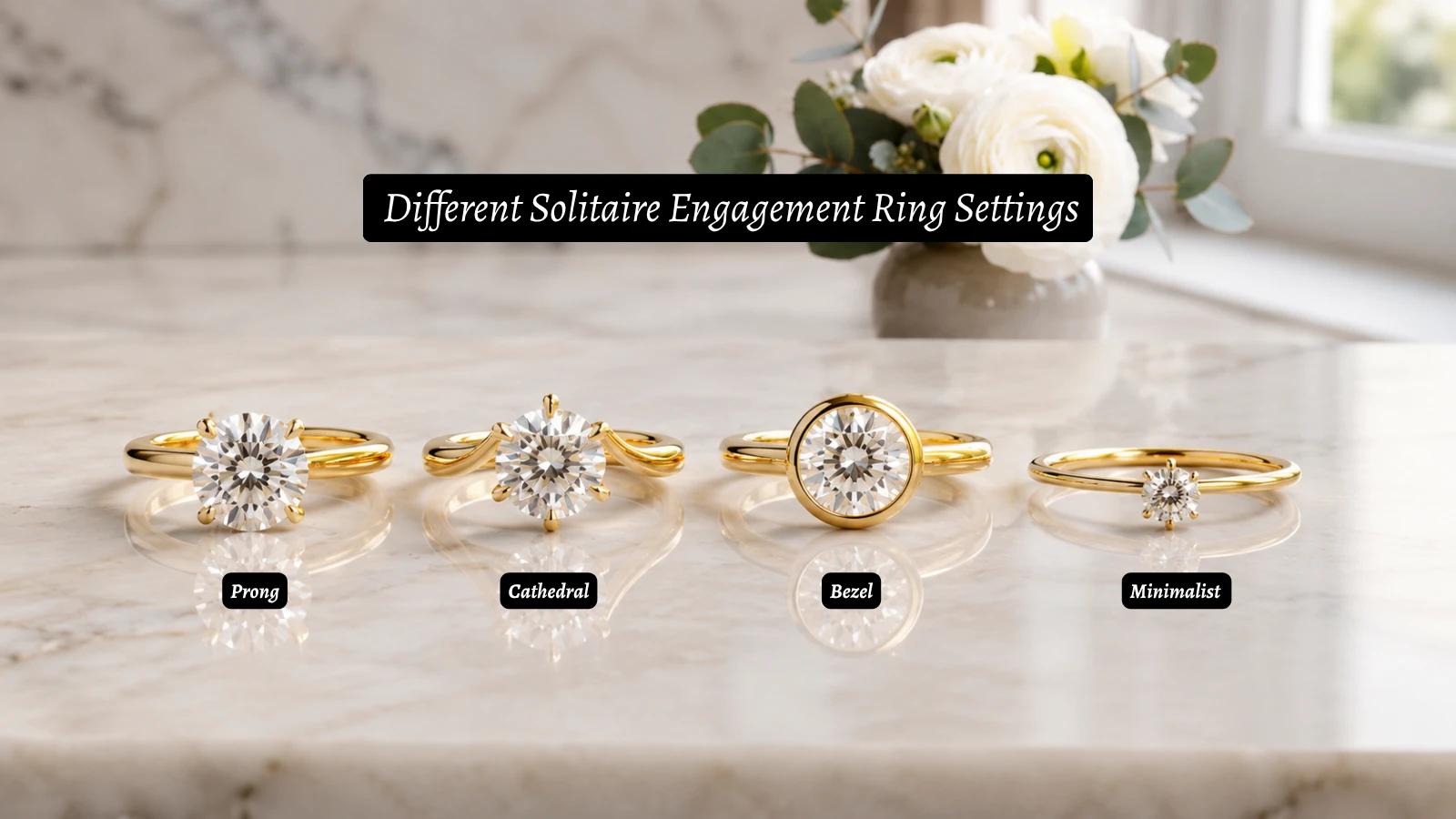
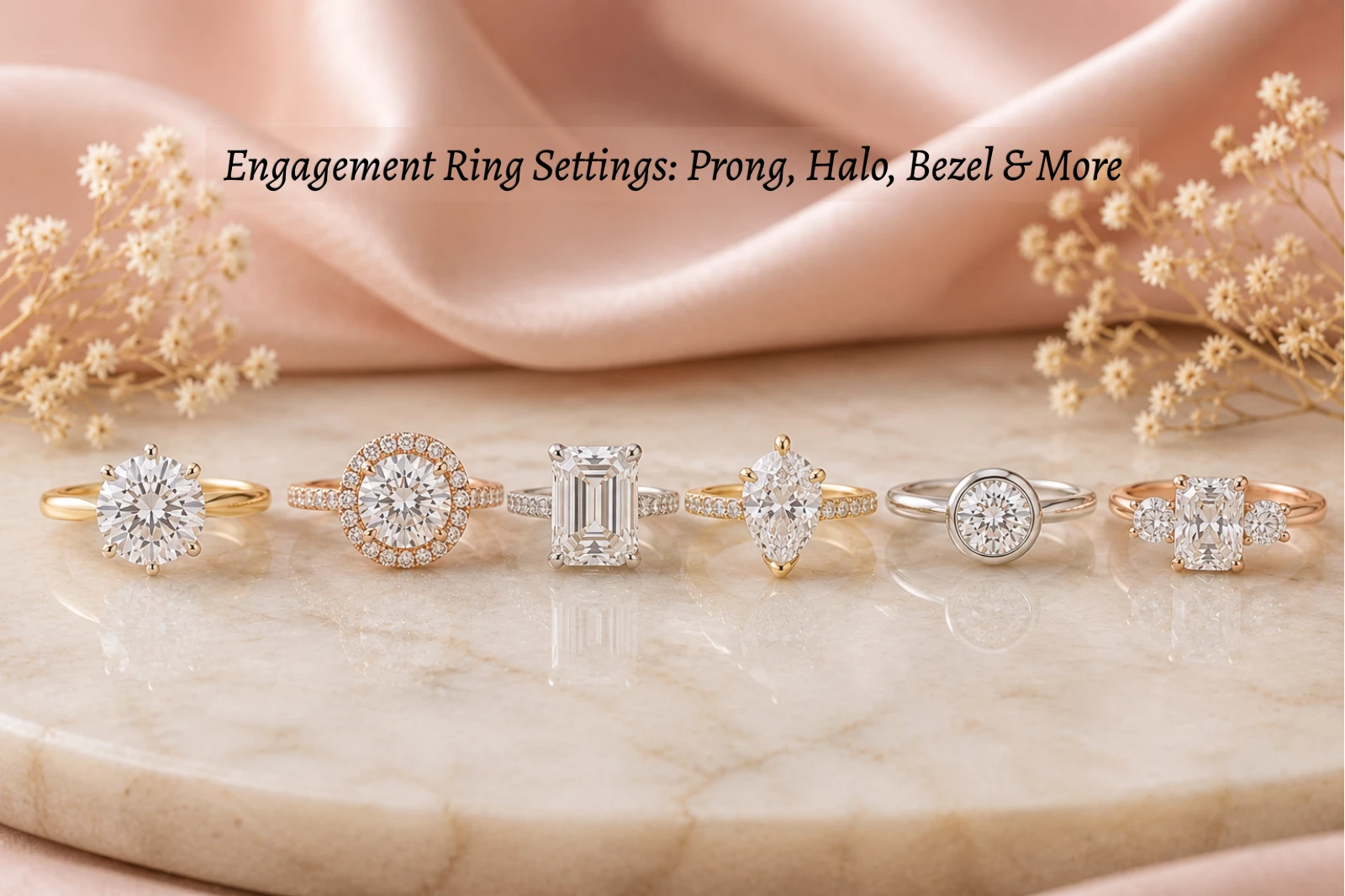
There is no single solitaire look. Most of the personality comes from the way the center gemstone connects to the band.
Classic Prong Solitaire
The classic prong solitaire uses small metal claws—often four or six—to hold the center stone.
Because relatively little metal surrounds the gemstone, more of its outline remains visible. Four prongs usually create a lighter, more open appearance, while additional prongs can change both the visual framing and how the stone is supported.
This is the design most shoppers picture when they hear classic solitaire engagement ring.
For a real Huzurr example of a prong-led diamond design, see the Emerald-Cut Black Diamond Solitaire 925 Silver Ring. Huzurr lists it with an emerald-cut black diamond, a four-prong setting, and a straight silver shank.
Cathedral Solitaire
A cathedral solitaire has shoulders that rise from the band toward the center setting.
Viewed from the side, those sweeping arches create a more architectural profile. The structure can make the center stone appear more elevated and give an otherwise simple solitaire greater presence without adding a second focal gemstone.
Bezel Solitaire
A bezel setting surrounds all or part of the center gemstone with a rim of metal.
The result is smooth and contemporary, with less of the stone's outer edge exposed than in a traditional prong setting. For shoppers who prefer a clean outline and fewer projecting prongs, a bezel can be particularly appealing.
Hidden Halo Solitaire
A hidden halo places small accent stones beneath the center stone rather than around its face-up outline.
Technically, this moves away from the strictest definition of a one-stone solitaire. However, it is commonly considered part of modern center-stone-focused design because the ring can still look predominantly like a solitaire when viewed from above.
Minimalist Solitaire
Minimalist designs reduce decorative detail even further: a narrow or plain band, a clean setting, and one visually dominant gemstone.
The effect depends heavily on proportion. A delicate band can make the center stone look more prominent, while a wider band creates a stronger, more graphic silhouette.
Best Diamond Shapes for a Solitaire Engagement Ring
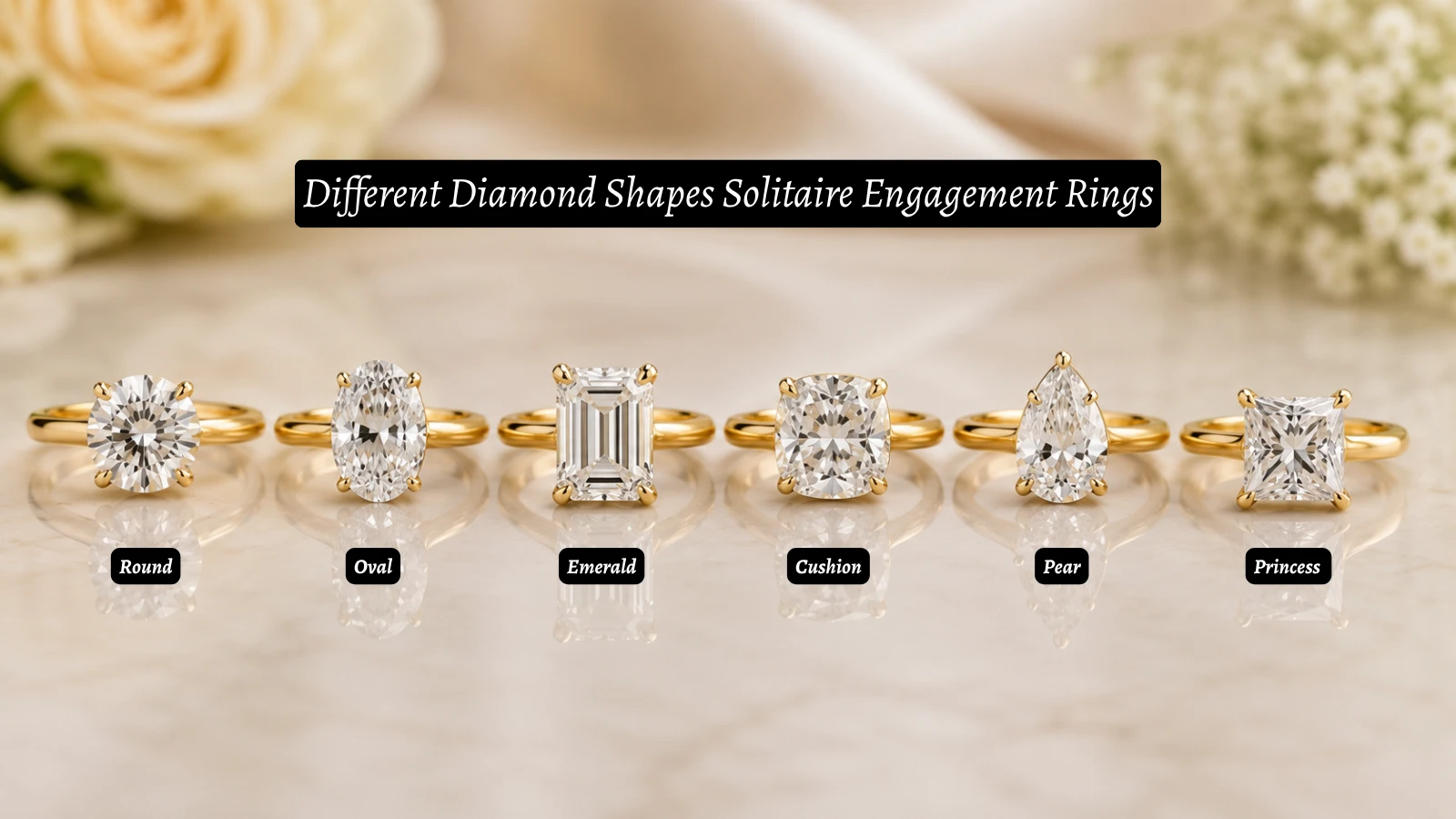 Because the band is deliberately restrained, the gemstone's shape has an unusually strong influence on the personality of a solitaire.
Round
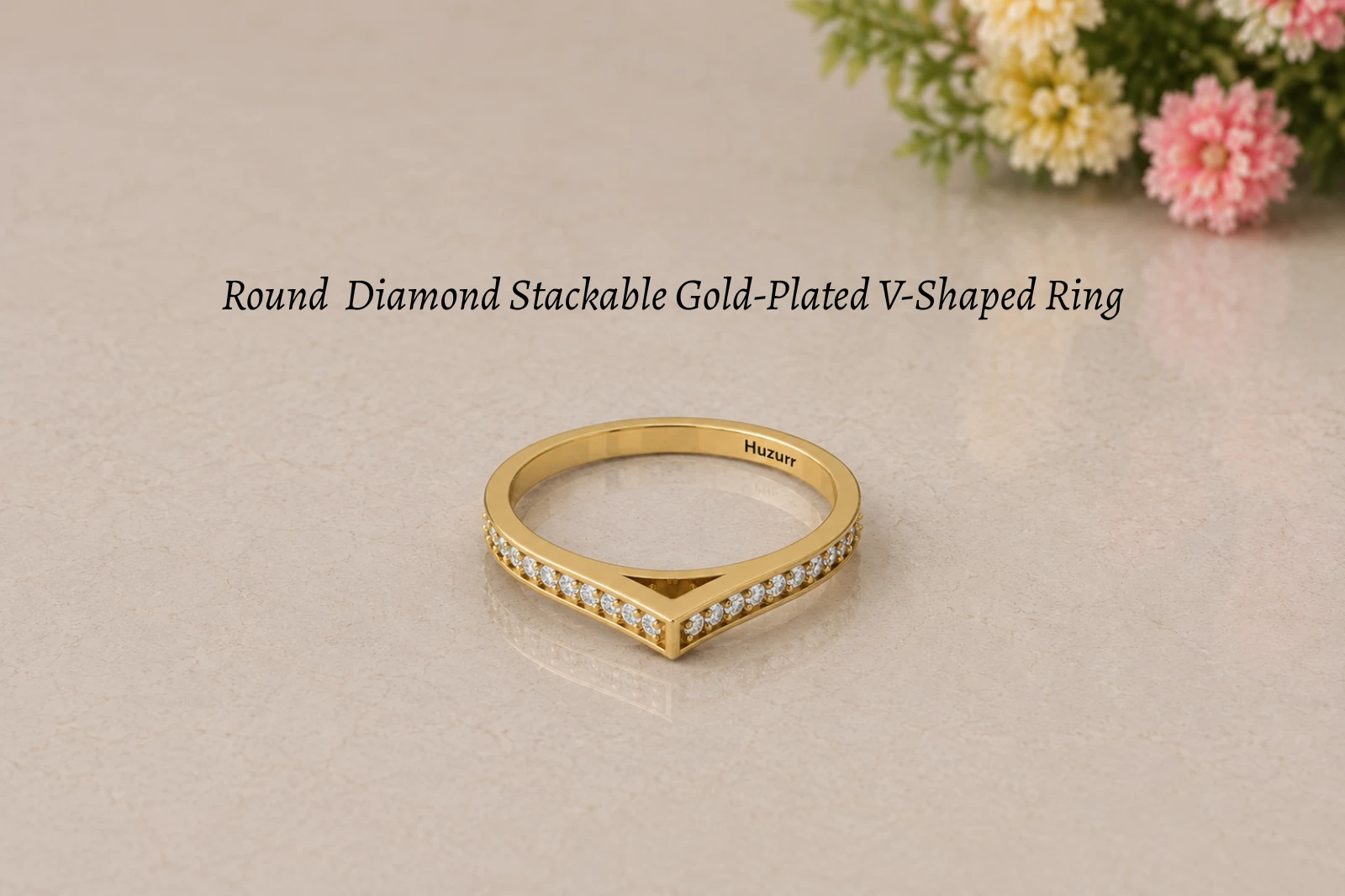 A round center is the traditional reference point for a diamond solitaire engagement ring. Its symmetrical outline works naturally with simple prong settings and looks balanced from almost every angle.
For a more contemporary interpretation, Huzurr's Round Diamond Stackable Solitaire Gold Plated V-Shaped Ring combines a round diamond with a V-shaped, stackable silhouette and prong setting.
Oval
Oval stones create an elongated outline while preserving the softer curves associated with round cuts.
In a solitaire setting, that length becomes especially noticeable because there are no surrounding stones to interrupt the outline. It suits buyers who want a classic-looking center stone with a slightly less conventional silhouette.
Emerald
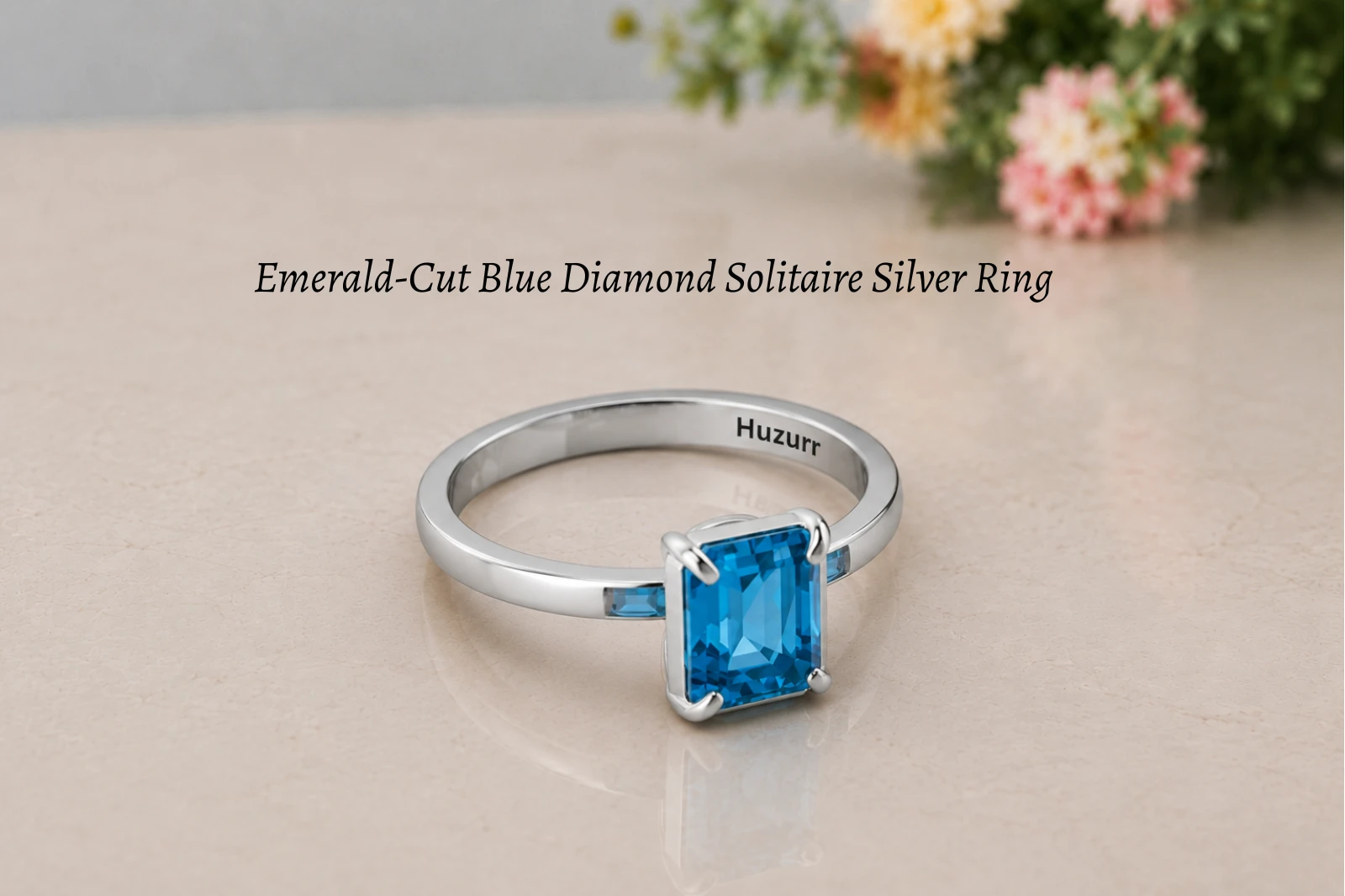
An emerald-cut center emphasizes long lines, broad facets, and geometry rather than a rounded outline.
Placed in a clean solitaire ring setting, its rectangular shape becomes the primary design feature. This makes emerald-cut solitaires particularly well suited to refined, architectural styling.
Huzurr's Emerald-Cut Blue Diamond Solitaire 925 Silver Ring uses an emerald-shaped enhanced blue diamond with a prong setting and straight shank.
Cushion
A cushion shape combines a square or rectangular impression with softened corners.
Within a solitaire, it offers more softness than an emerald or princess cut while still giving the center stone a substantial face-up presence.
Pear
A pear-shaped stone combines a rounded end with a tapered point.
Its asymmetry makes it naturally expressive, even on a very simple band. Orientation also becomes part of the styling, making the pear a useful option when the wearer wants a solitaire that feels less conventional without adding extra ornament.
Princess
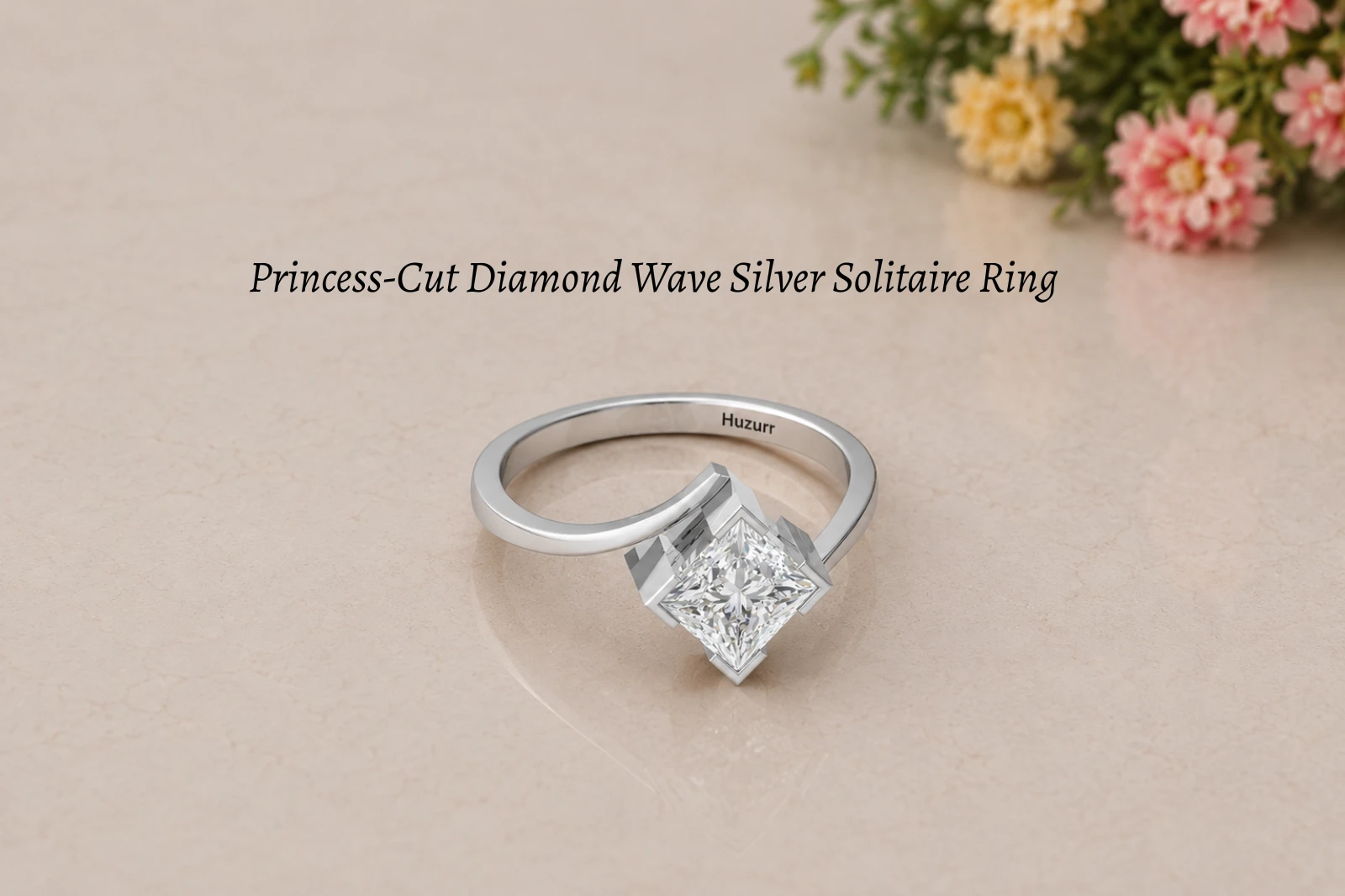
The princess cut introduces crisp corners and a strong square outline.
It gives the solitaire a sharper, more geometric personality and works particularly well when the goal is a clean but distinctive design.
Huzurr's 925 Silver Princess Cut Diamond Wave Solitaire Ring is listed with a princess-cut diamond, V-prong setting, and bypass-style shank, showing how the classic solitaire idea can be interpreted with a more dynamic band.
Solitaire Ring Settings Explained
A solitaire's setting controls more than how the gemstone is held. It affects how much of the stone you see, how high it sits, and how the ring looks from the side.
Prong setting: Uses small metal claws around the gemstone. It creates an open appearance and makes the stone's outline easy to see.
Bezel setting: Wraps a metal rim around some or all of the gemstone's edge, producing a smoother and more enclosed appearance.
Cathedral setting: Refers to the raised shoulders supporting the center setting. A cathedral design may still use prongs to secure the gemstone.
Basket setting: Uses a supporting structure beneath the stone. Depending on its height and shape, it can create a lower or more substantial side profile.
Peg-head setting: Positions the center setting as a distinct head attached to the band, creating a particularly center-stone-led appearance.
When comparing solitaire diamond settings, look at the ring from both the top and the side. A design that appears nearly identical in a face-up photograph may sit much higher or lower on the finger.
For a broader explanation of mounting types beyond solitaires, Huzurr also has a dedicated engagement ring settings guide.
Women's Solitaire Engagement Ring Styles
A woman's solitaire engagement ring does not need to follow one specific formula. The more useful approach is to choose an aesthetic that reflects how the wearer actually dresses and uses jewelry.
Minimalist: Thin or plain band, restrained profile, and little decorative detail.
Classic: Symmetrical center stone, straightforward prong setting,g and traditional band shape.
Contemporary: Unusual band geometry, bezel work, mixed metals,ls or less conventional center-stone proportions.
Elegant: Refined lines, balanced proportions, and details that remain visually secondary to the gemstone.
Statement solitaire: A center stone with a strong shape, color, or scale, paired with a relatively clean band so it remains the focus.
Colored gemstones can also change the personality dramatically while maintaining the same solitaire structure. Huzurr's Green Round Peridot August Enhanced Gold Plated Ring, for example, is classified by Huzurr as a round, prong-set solitaire.
Classic Solitaire Engagement Ring vs Modern Solitaire Designs
A classic solitaire engagement ring usually minimizes visual experimentation. Modern versions keep the center stone dominant while changing the profile, ban,d or hidden details.
|
Feature |
Classic Solitaire |
Modern Solitaire |
|
Overall aesthetic |
Clean, restrained, familiar |
Clean but more individual or architectural |
|
Setting |
Often traditional prongs |
Prongs, bezel, hidden halo, or alternative structures |
|
Design details |
Plain or understated band |
Sculpted, asymmetric, accented or mixed-metal band |
|
Center stone focus |
Very high |
Still high, with more supporting detail |
|
Best for |
Timeless, understated styling |
Buyers wanting a solitaire with a distinctive twist |
Neither is inherently better. The decision is whether you want the band and setting to disappear visually or contribute more strongly to the overall design.
How to Choose the Right Solitaire Engagement Ring
Instead of repeating every part of general engagement-ring shopping, focus on the decisions that have the greatest effect on a solitaire.
- Choose your center-stone shape. In a solitaire, shape becomes the main visual identity.
- Decide how the stone should be set. Compare open prongs with smoother bezels and different supporting structures.
- Choose the metal deliberately. Metal color frames the gemstone and changes the overall warmth or contrast of the design.
- Look at the profile. Check how high the stone sits, not just how the ring looks from above.
- Match your everyday aesthetic. A simple round solitaire and an angular emerald-cut design can communicate very different styles.
- Plan for a second band. The center setting may determine whether another ring can sit flush beside it.
- Compare several solitaire engagement ring styles side by side. Small differences in shank width, prongs, and stone orientation can have a surprisingly large visual effect.
If those decisions reveal that a solitaire may not suit your broader preferences, return to Huzurr's engagement ring buying guide to compare the wider range of engagement ring styles.
Solitaire Engagement Ring and Band Pairing
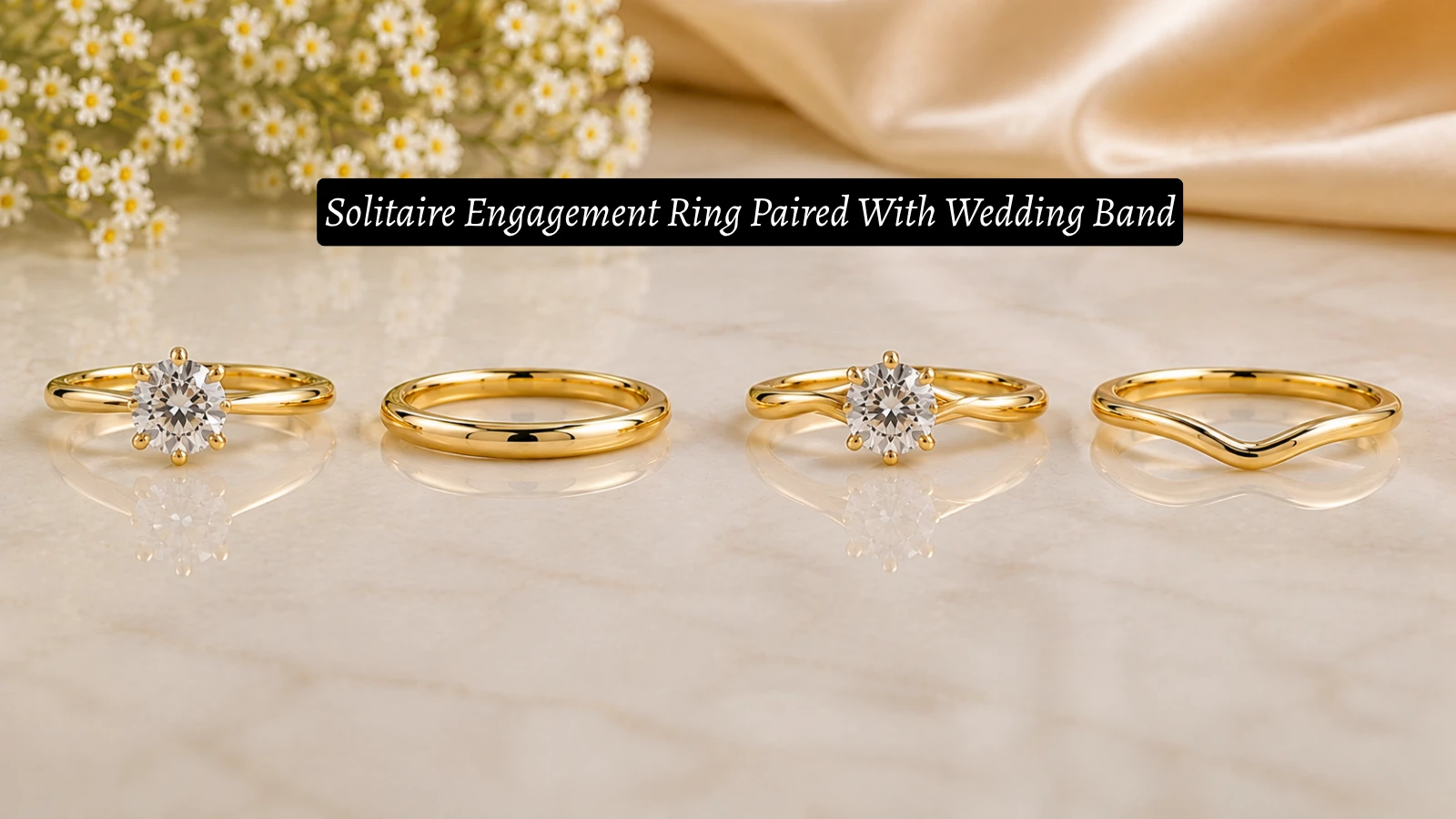
One of the practical advantages of a solitaire is the number of ways it can work with a second ring.
A solitaire engagement band pairing can include:
- Straight band: Clean and traditional; works best when the solitaire's basket or center setting leaves enough side clearance.
- Curved or contoured band: Follows the outline of a lower or wider center setting when a straight band would leave a gap.
- Pavé or diamond band: Adds extra sparkle while preserving the solitaire as the primary focal point.
- Plain metal band: Keeps the overall set understated.
- Matching metals: Creates a visually unified set.
- Mixed metals: Introduces intentional contrast and can make two simple rings feel more individual.
A flush fit should never be assumed from a front-facing product image. Check the side profile and dimensions of both rings.
For a real Huzurr band reference, the Rose Gold Plated Diamond Band Ring for Her is listed as a straight-shank diamond band. Whether it fits flush with a specific solitaire still depends on that solitaire's profile and proportions.
Solitaire Engagement Ring vs Other Popular Styles
|
Feature |
Solitaire |
Halo |
Three-Stone |
Pavé |
|
Center-stone focus |
Highest visual emphasis on one stone |
Center framed by smaller stones |
Shared with two additional prominent stones |
Center remains important while band adds sparkle |
|
Overall look |
Clean and focused |
Bright and detailed |
Balanced and multi-stone |
Decorative through the band |
|
Design complexity |
Usually lower |
Higher |
Moderate to high |
Moderate |
|
Style appeal |
Minimal, classic or modern |
More embellished |
Symbolic, structured look |
Sparkling, refined look |
The right style depends on what you want the eye to notice first. A solitaire prioritizes the center gemstone; the other styles deliberately distribute more attention elsewhere.
How to Care for a Solitaire Engagement Ring
The center stone is the star of a solitaire, so keeping the setting in good condition matters as much as keeping the stone clean.
- Clean the ring according to the care requirements of its specific gemstone and metal.
- Use gentle methods rather than harsh household chemicals unless the jewelry maker specifically recommends otherwise.
- Inspect prongs periodically for visible movement, bending, or unevenness.
- Pay attention if the center stone begins to feel or sound loose.
- Store the ring separately or in a soft compartment so harder jewelry does not rub against it.
- Remove it before activities that could expose the ring to heavy impact, abrasive materials,s or strong chemicals.
- Consider professional inspection or cleaning when the setting needs closer examination.
Be especially careful with gemstone solitaires because cleaning methods that are suitable for one stone may not be appropriate for another.
Explore Solitaire Engagement Rings at Huzurr
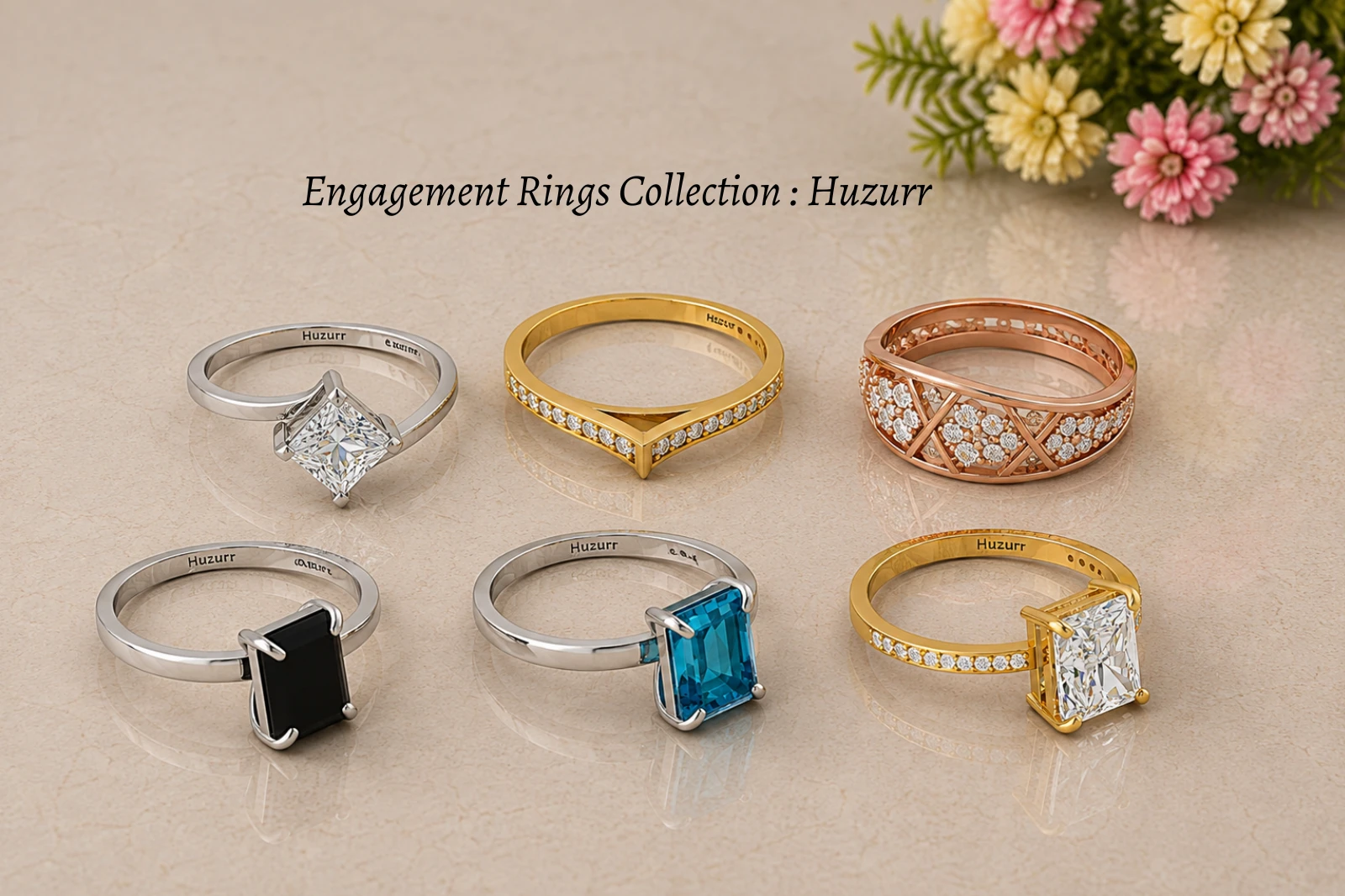
If the appeal of a solitaire is the ability to make one center stone the main event, comparing several shapes is one of the easiest ways to discover your preferred look.
Start with Huzurr's dedicated Solitaire Rings collection. Huzurr also maintains separate Classic Rings, Natural Diamond Rings, and Engagement Jewelry collections.
A few verified designs worth comparing include:
- Round Diamond Stackable SolitaireGold-Platedd V-Shaped Ring — useful for seeing how a round diamond can work with a more contemporary V-shaped band.
- 925 Silver Princess Cut Diamond Wave Solitaire Ring — combines a princess-cut diamond with a V-prong setting and curved bypass-style band.
- Emerald-Cut Blue Diamond Solitaire 925 Silver Ring — a colored-diamond option for shoppers drawn to elongated geometric shapes.
- Emerald-Cut Black Diamond Solitaire 925 Silver Ring — another emerald-cut interpretation with a darker center stone.
- Radiant-Cut Diamond Gold Plated Solitaire Ring — shows how a radiant center and additional band detailing can give a solitaire-labeled design a more modern appearance.
- Rose Gold Plated Diamond Band Ring for Her — a straight diamond band to consider when exploring solitaire-and-band combinations.
Rather than choosing the most elaborate option, compare how each center shape, setting, and band work together. The most successful solitaire is usually the one in which nothing distracts from the detail you wanted to notice in the first place.
FAQs About Solitaire Engagement Rings
What is a solitaire engagement ring?
A solitaire engagement ring places one dominant gemstone at the center of the design. Traditional versions use a plain or understated band so the center stone receives nearly all the visual attention. Modern versions may introduce subtle band details while retaining the same center-focused appearance.
Is a solitaire engagement ring a good choice?
It can be an excellent choice for someone who values a clean design, wants the center gemstone to remain prominent, and would like flexibility when pairing the ring with another band. It is not automatically better than halo, pav,é or multi-stone styles; the decision depends on personal taste.
What diamond shape looks best in a solitaire ring?
There is no single best shape. Round diamonds create the most traditional solitaire appearance, ovals feel elongated and graceful, emerald cuts look architectural, cushions feel softer, pears are distincti,ve and princess cuts create a crisp geometric look.
What is the difference between a solitaire and a halo ring?
A solitaire emphasizes one center gemstone with little competing detail. A halo surrounds the center stone with a visible border of smaller stones. The solitaire therefore creates a cleaner focal point, while the halo produces a more detailed, stone-rich appearance.
Can you wear a band with a solitaire engagement ring?
Yes. A solitaire engagement band combination can use a straight, curved, plain, pavé, or mixed-metal band. Whether the rings sit flush together depends mainly on the height and width of the solitaire's center setting.
What is a classic solitaire engagement ring?
A classic solitaire engagement ring typically combines one center gemstone with a simple band and restrained prong setting. The overall design keeps decorative elements to a minimum, so shape, proportion, and the center stone remain the main visual features.
Are solitaire engagement rings suitable for everyday wear?
Many solitaire designs can be worn regularly, but practicality depends on the gemstone, metal, setting, and profile. A very high setting or projecting prongs may require more awareness during daily activities than a lower-profile or more enclosed design.
How do I choose a solitaire engagement ring?
Start with the center-stone shape, then compare prong, bezel, and other solitaire ring settings. After that, consider metal color, overall profile, everyday styling,g and how the ring will sit beside a future band. These solitaire-specific details usually influence the finished look more than added ornament.