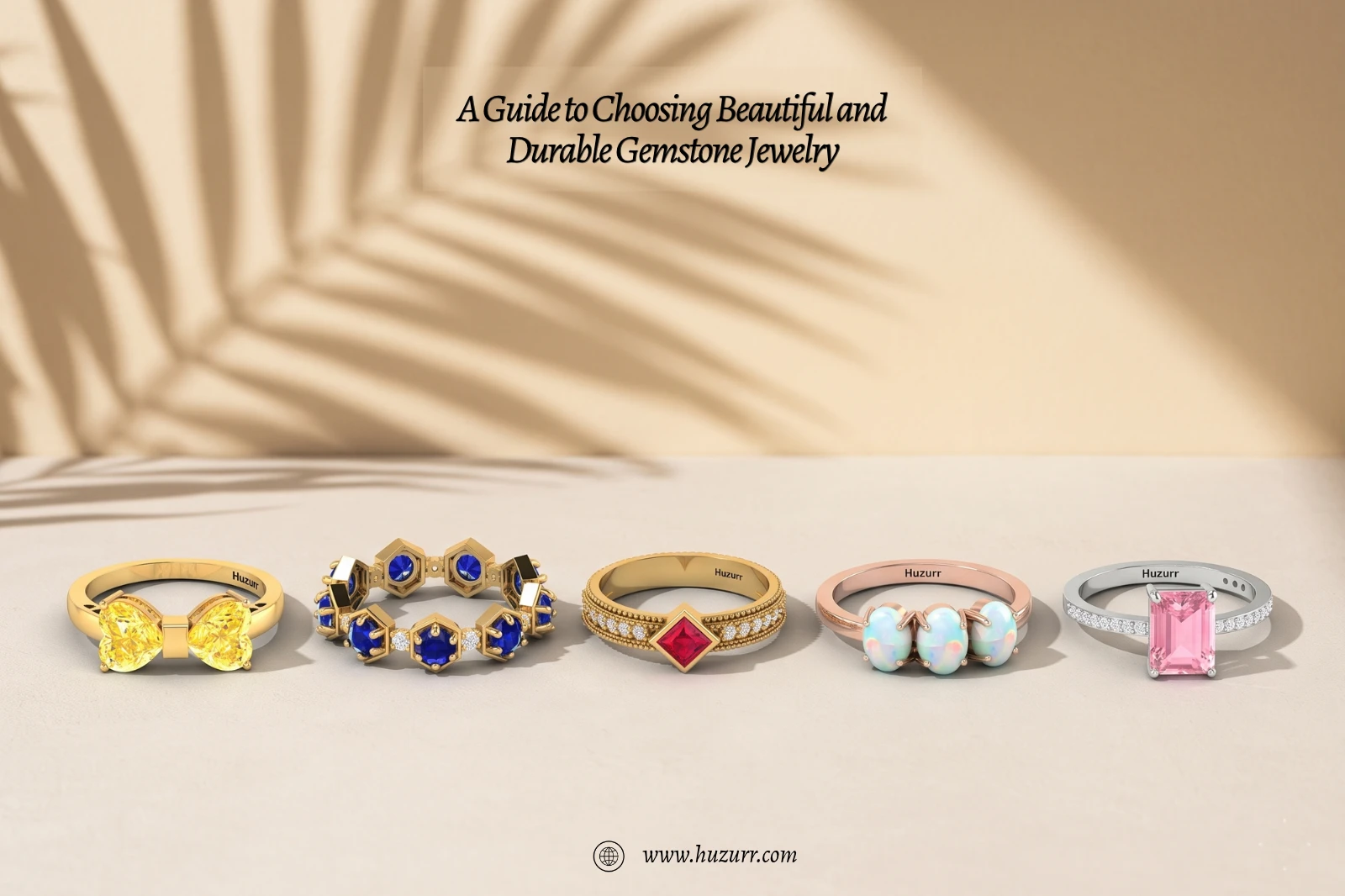
The best way to choose gemstone jewelry is to decide how often you'll wear it before you pick a color. A sapphire ring can take daily knocks for decades. An opal ring on the same finger will chip. Most regret with gemstone jewelry comes from that mismatch, not from a bad stone.
This guide goes in the order that saves the most money and regret: durability, color, clarity and cut, treatments, natural versus lab-grown, certificates, metal, budget and meaning. If you're about to buy, jump to the checklist near the end.
Start with how you'll wear it
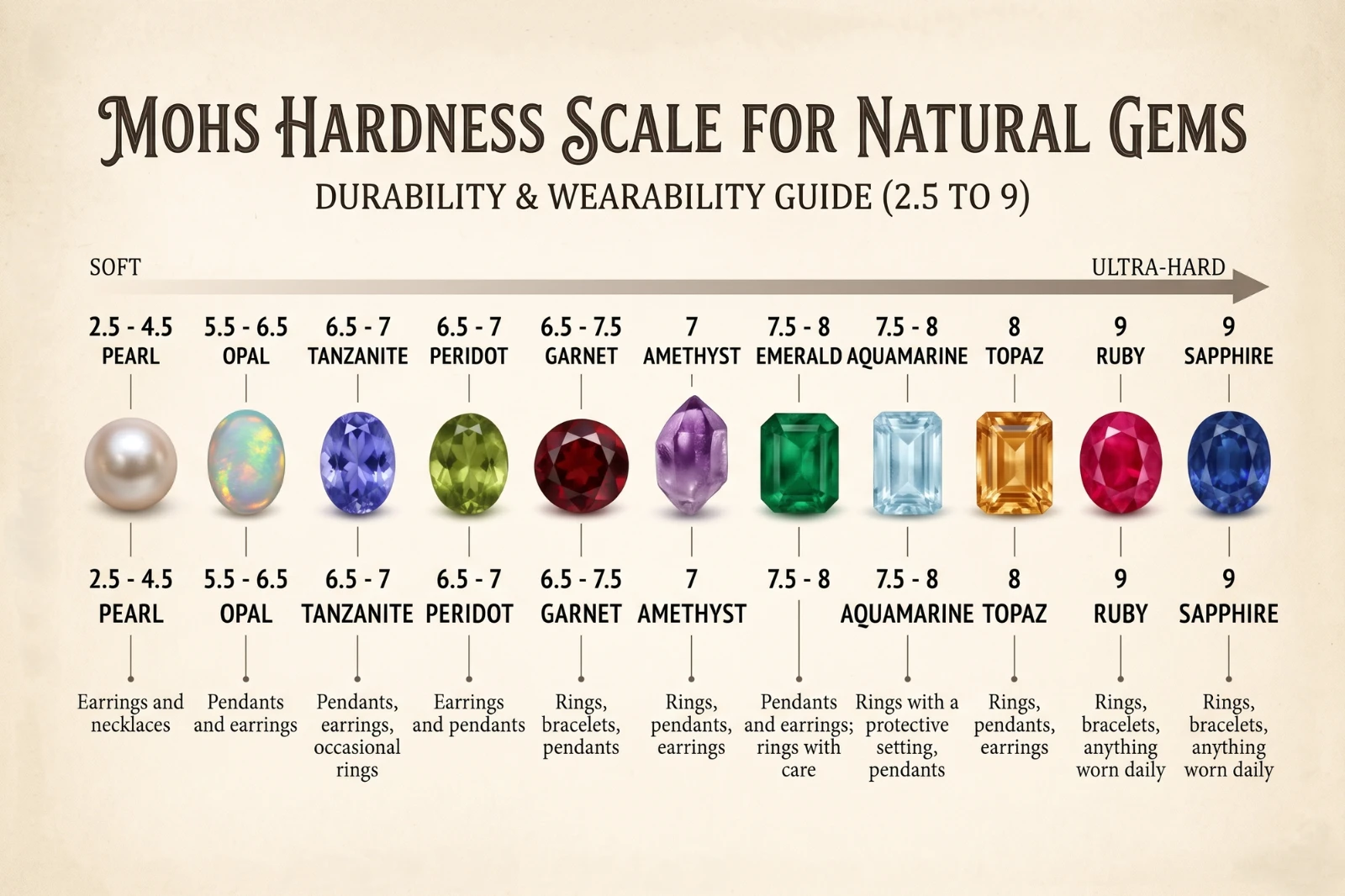 Hardness decides which stones survive on a hand. The Mohs scale runs from 1 to 10, and stones near 9 resist the daily scratching that dulls softer ones. Here's a rough guide (the numbers are approximate and shift a little by variety):
|
Stone |
Mohs hardness |
Where it works best |
|
Sapphire |
9 |
Rings, bracelets, anything worn daily |
|
Ruby |
9 |
Rings, bracelets, anything worn daily |
|
Topaz |
8 |
Rings, pendants, earrings |
|
Aquamarine |
7.5 to 8 |
Rings with a protective setting, pendants |
|
Emerald |
7.5 to 8 |
Pendants and earrings; rings with care |
|
Amethyst |
7 |
Rings, pendants, earrings |
|
Garnet |
6.5 to 7.5 |
Rings, bracelets, pendants |
|
Peridot |
6.5 to 7 |
Earrings and pendants |
|
Tanzanite |
6.5 to 7 |
Pendants, earrings, occasional rings |
|
Opal |
5.5 to 6.5 |
Pendants and earrings |
|
Pearl |
2.5 to 4.5 |
Earrings and necklaces |
Hardness isn't the whole story. Toughness, a stone's resistance to chipping and cracking, is a separate trait. Emerald is fairly hard, yet it's full of tiny fractures and can crack if you catch it on a door frame. Jewelers of America steer emeralds, pearls, and opals toward earrings and necklaces, where they stay out of harm's way. I agree with that.
Is the rule absolute? No. Plenty of people wear opal or tanzanite every day and accept the extra care. But if you want a piece you'll never take off, pick a sapphire, a ruby, or one of the other most durable gemstones and stop worrying.
Judge color in daylight, not under shop lights
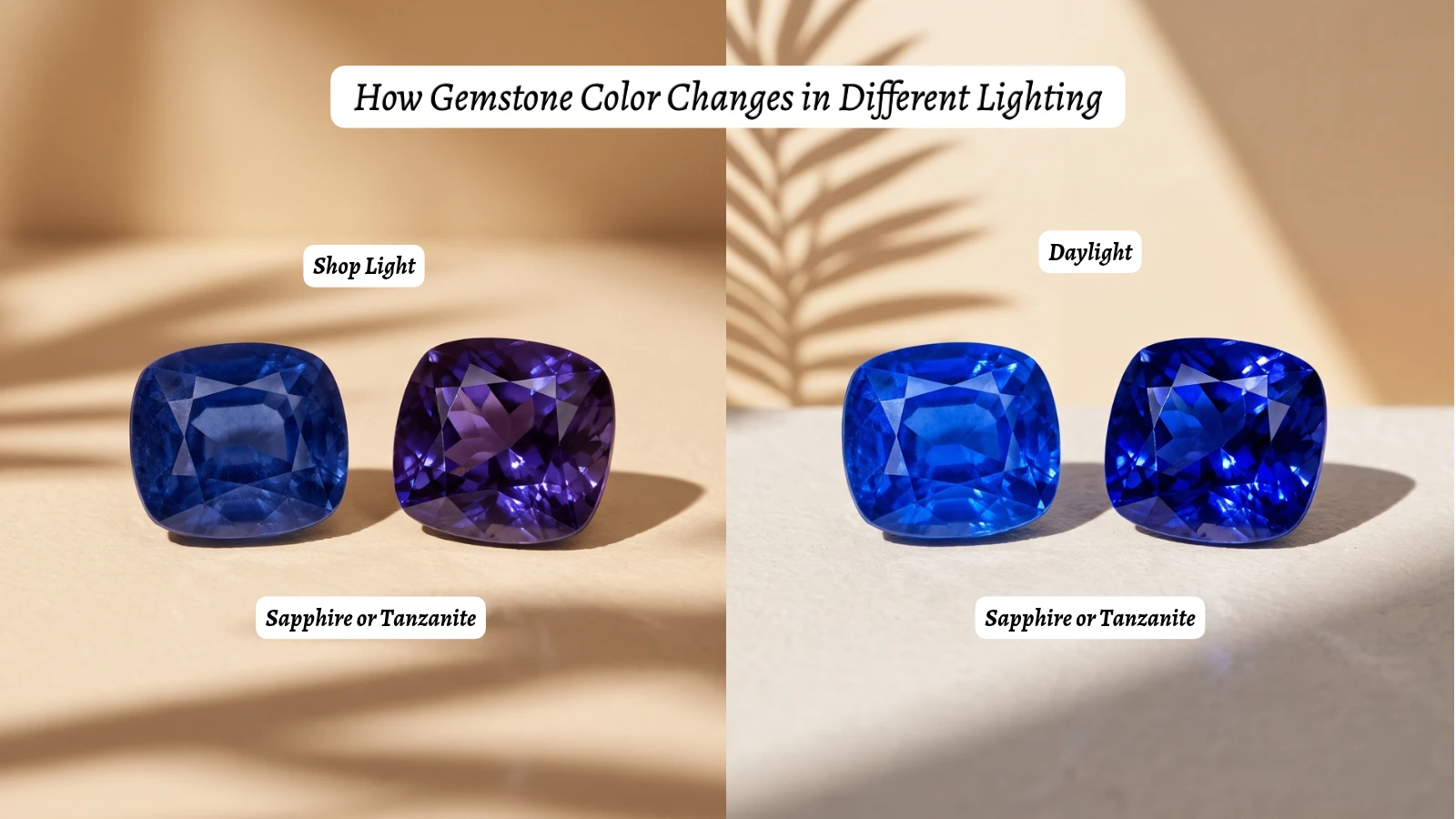 For colored stones, color is the main thing you're paying for. That's the reverse of diamonds, where cut usually leads. Jewelers of America splits color into hue (the base color, like blue or green), tone (how light or dark it is), and saturation (how pure the color looks).
Look at three or four stones side by side, then walk to a window. A deep blue sapphire that glows in the showroom can look nearly black outdoors, and a pale one can wash out. Some stones change on purpose. Alexandrite swings from bluish green in daylight to purplish red under a bulb, and tanzanite shifts between blue and violet with angle and light.
Strong, clean color costs more. A lighter stone of the same type usually costs less, which helps if you want an aquamarine ring or an amethyst ring without paying top-grade prices.
Clarity and cut: what to ignore, what to insist on
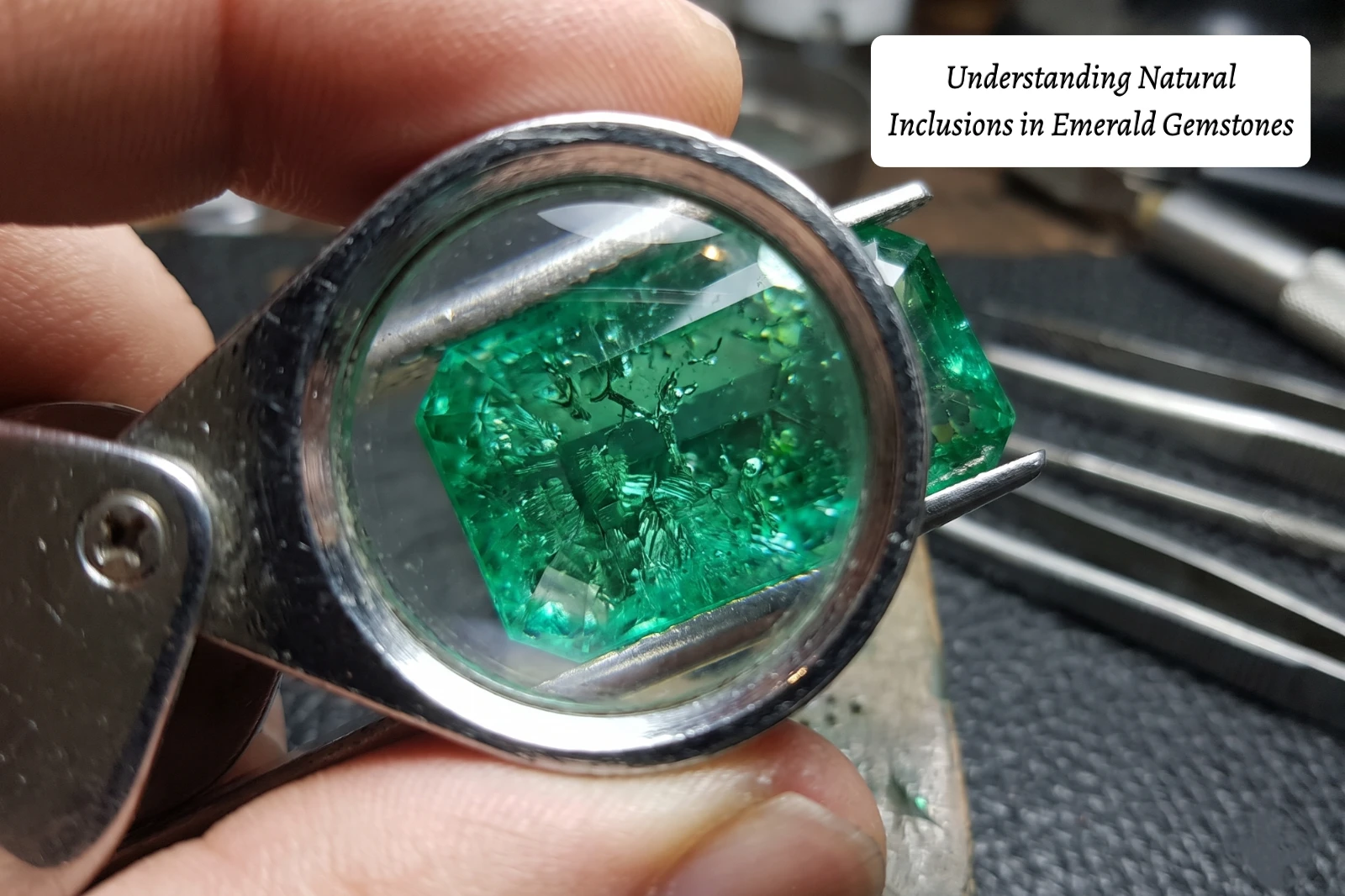 You don't need a spotless stone. Most colored gems have inclusions, and "eye-clean" (no flaws you can see without magnification) is a sensible target. Emerald is the extreme case. Nearly every fine emerald has a visible internal pattern that jewelers call the jardin, French for garden. Holding out for a flawless one means paying a big premium for something very rare.
What to insist on is even color across the stone, with no flat, lifeless patch where light leaks straight through. Cut decides that. Transparent stones like sapphire are usually faceted. Opal and moonstone are usually polished into smooth domes called cabochons, which is correct for those stones and not a shortcut.
Ask for millimeter dimensions, not only carat weight. Carats measure weight, and stones differ in density, so two stones of the same carat weight can look different in size. Dimensions also help when you're matching a pair for gemstone earrings.
Ask what's been done to the stone
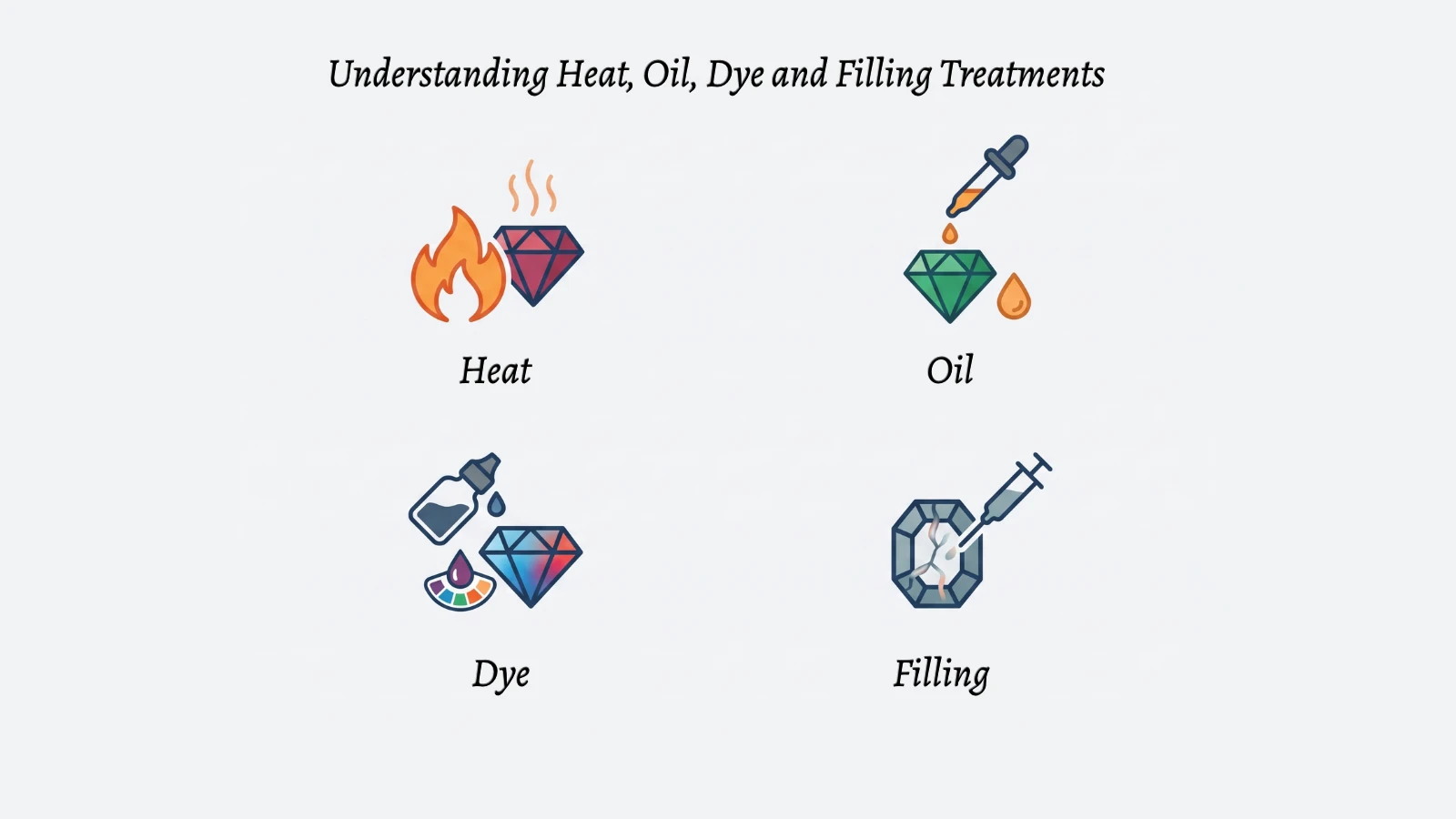 Almost every colored gemstone on sale today has been treated in some way. Untreated stones of top quality exist, but they're rare and priced accordingly.
Treatment isn't a scandal. Heating is the most common type, and it's stable. Jewelers of America says over 95% of rubies on the market are heat-treated, and amethyst, aquamarine, citrine, sapphire, tanzanite, topaz,z and tourmaline are often heated too. A heated sapphire is still a natural sapphire, and it needs no special handling.
The treatments to watch are the ones that fade or wear out:
- Dye, used on turquoise, onyx, lapis, quartz, and lower-grade pearls, can fade, and acetone or rubbing alcohol can strip it.
- Oil or resin in emeralds hides surface cracks. Heat, hot water, and ultrasonic cleaners can damage it.
- Glass, resin, or wax filling, seen in emeralds, rubies, and sapphires, isn't permanent either.
Ask three questions: has this stone been treated, with what, and is the effect permanent? Get the answers on the invoice. Stable treatments like heat are normal, so don't haggle over them. Unstable ones deserve a discount and written disclosure.
Natural, lab-grown or imitation?
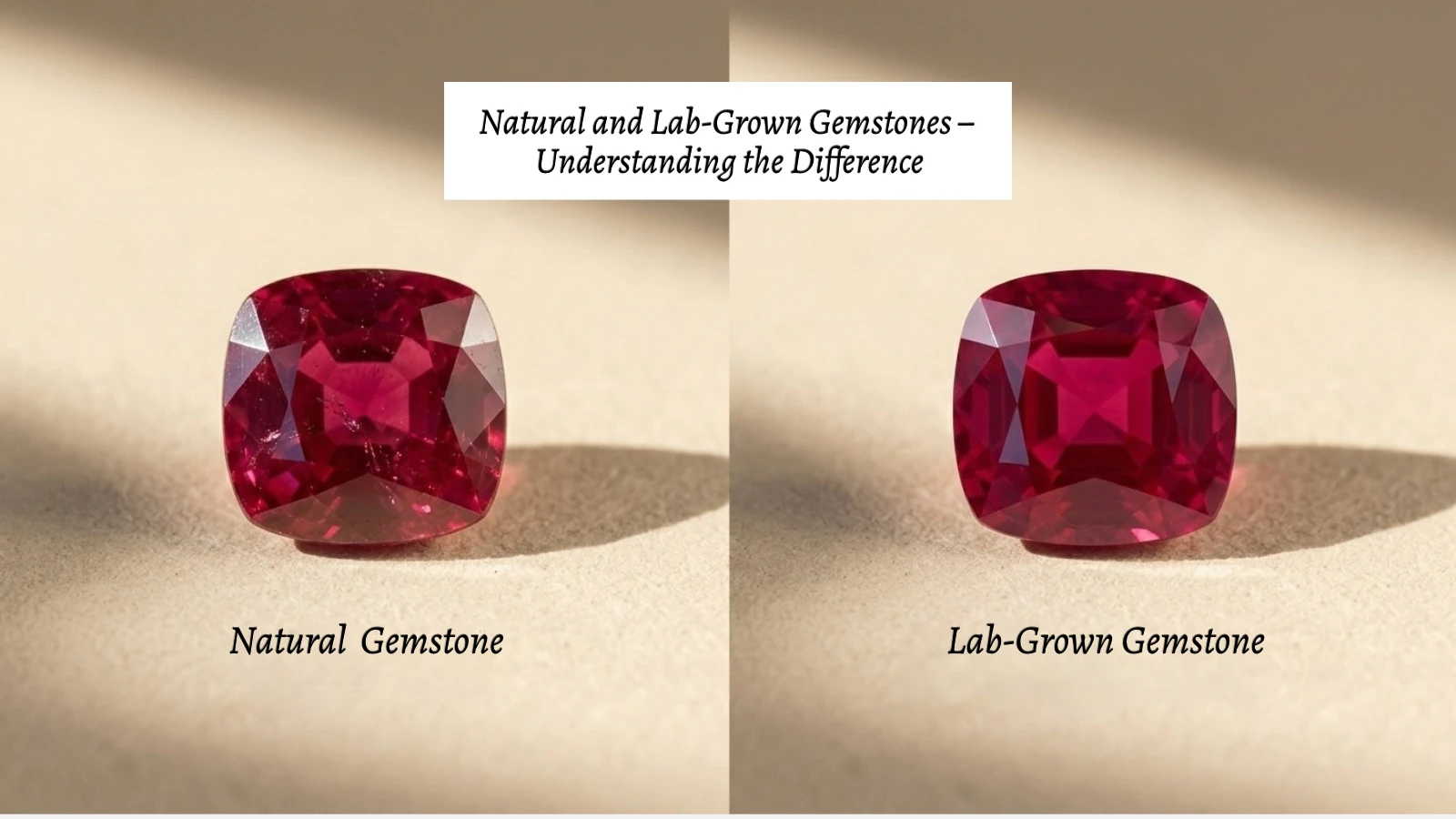 Lab-created gemstones and lab-grown gemstones have the same chemistry, hardness, and optical properties as natural ones. A lab-grown sapphire is a real sapphire, made in a furnace instead of underground. An imitation is something else: glass, or a cheaper stone passed off as a pricier one. That's the thing you never want to pay real money for.
Here's where I land. Lab-grown is a good deal when the price is well below a comparable natural stone and the invoice says lab-grown in plain words. Some jewelers refuse to stock it. That's a business preference, and a fair one, but it isn't a quality rule. Natural gemstone jewelry brings rarity and a story of origin, and some buyers want exactly that. Others want a deep blue stone that survives daily wear at a fraction of the cost. Either choice works if the labeling is honest.
Get a lab report for anything expensive
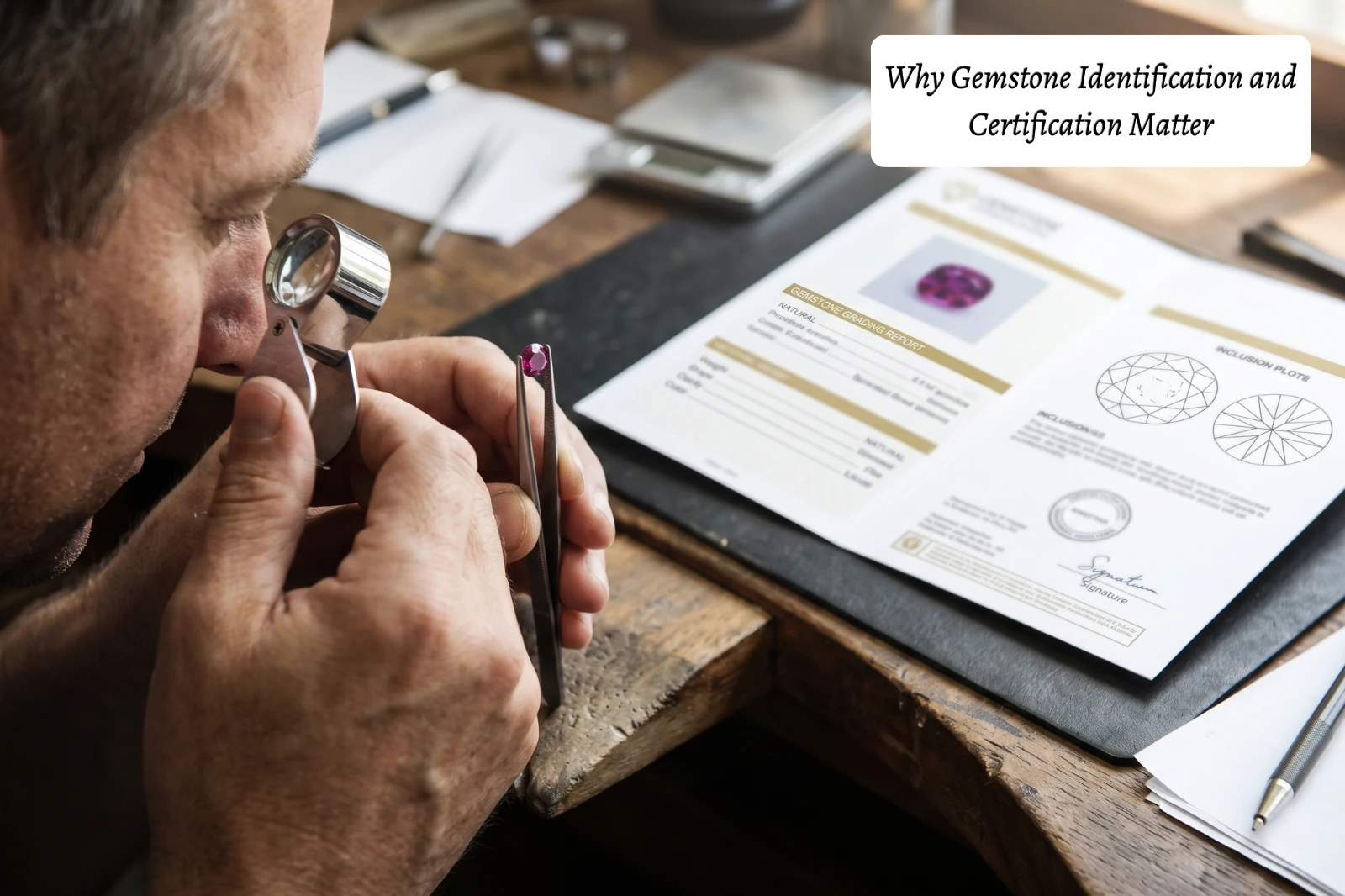 For a modest piece, an invoice listing the stone, the treatment, and whether it's natural or lab-grown is enough. For a stone you'd hate to lose, ask for a report from an independent gem lab such as GIA or IGI. Certified gemstones come with a document that names the stone, says whether it's natural or synthetic,c and lists the treatments the lab found.
Jewelers of America points out that these details affect your purchase price, future repairs,rs and any insurance claim, so collect them before you leave the shop. If a seller says the paperwork is "coming later," hold the payment until it arrives.
Match the metal and the setting
Metal changes how a stone looks. Yellow gold warms reds, greens, and yellows, so it suits ruby, emerald,d and citrine. White gold and platinum keep cool blues and purples crisp: sapphire, aquamarine, amethyst. Rose gold flatters pinks and peaches like morganite.
The setting protects as much as it decorates. In a bezel, metal wraps the edge of the stone, which guards softer or brittle stones better than prongs do. If you're buying a gemstone ring in emerald, aquamarine,ne or morganite, ask about a bezel or a low setting. A sapphire does fine in prongs.
Set a budget before you browse
Gemstone prices don't follow a fixed scale. Two rubies of the same weight can differ many times over in cost, depending on color, clarity, origin, treatment, and cut. Size changes the price too. Amethyst turns up in large sizes easily, while a large alexandrite is extremely rare and costs accordingly.
To stretch a budget, spend on color and cut and accept a few small inclusions. A piece with several smaller stones can look fuller than one big stone at the same price. And don't dismiss what the trade calls semi-precious stone jewelry. Amethyst, citrine, garnet, peridot, and blue topaz give you a lot of color for the money, and "semi-precious" says nothing about how good a stone looks.
Gemstone rings, necklaces, earrings and bracelets: which stone where
Rings take the most abuse because hands hit everything. Bracelets come second. Necklaces and earrings live the gentlest life, so that's where opal, pearl, emerald, tanzanite and peridot can sit without much risk.
For gemstone rings you'll wear daily, go with sapphire, ruby, garnet, or spinel. For gemstone bracelets, the same logic applies, though beaded styles in amethyst or garnet cope with bumps better than rigid bangles with soft stones. A gemstone necklace can hold any stone you like, so save your most delicate favorites for pendants.
Choosing a gemstone for an engagement ring
Sapphire is the safest colored pick for a ring worn every day. It's hard, and it comes in more than blue: pink, yellow, teal,l and others. That range is why sapphire engagement rings keep gaining ground over the usual white diamond. Ruby has the same strength in red.
Aquamarine, morganite and emerald look beautiful but want a bezel or a careful wearer. Opal and pearl suit someone who'd happily move the stone to a pendant after the wedding photos. If you're asking about the best stones for engagement rings, the honest answer is the hard ones first, then the ones you love enough to baby.
Birthstones, gifts and meaning
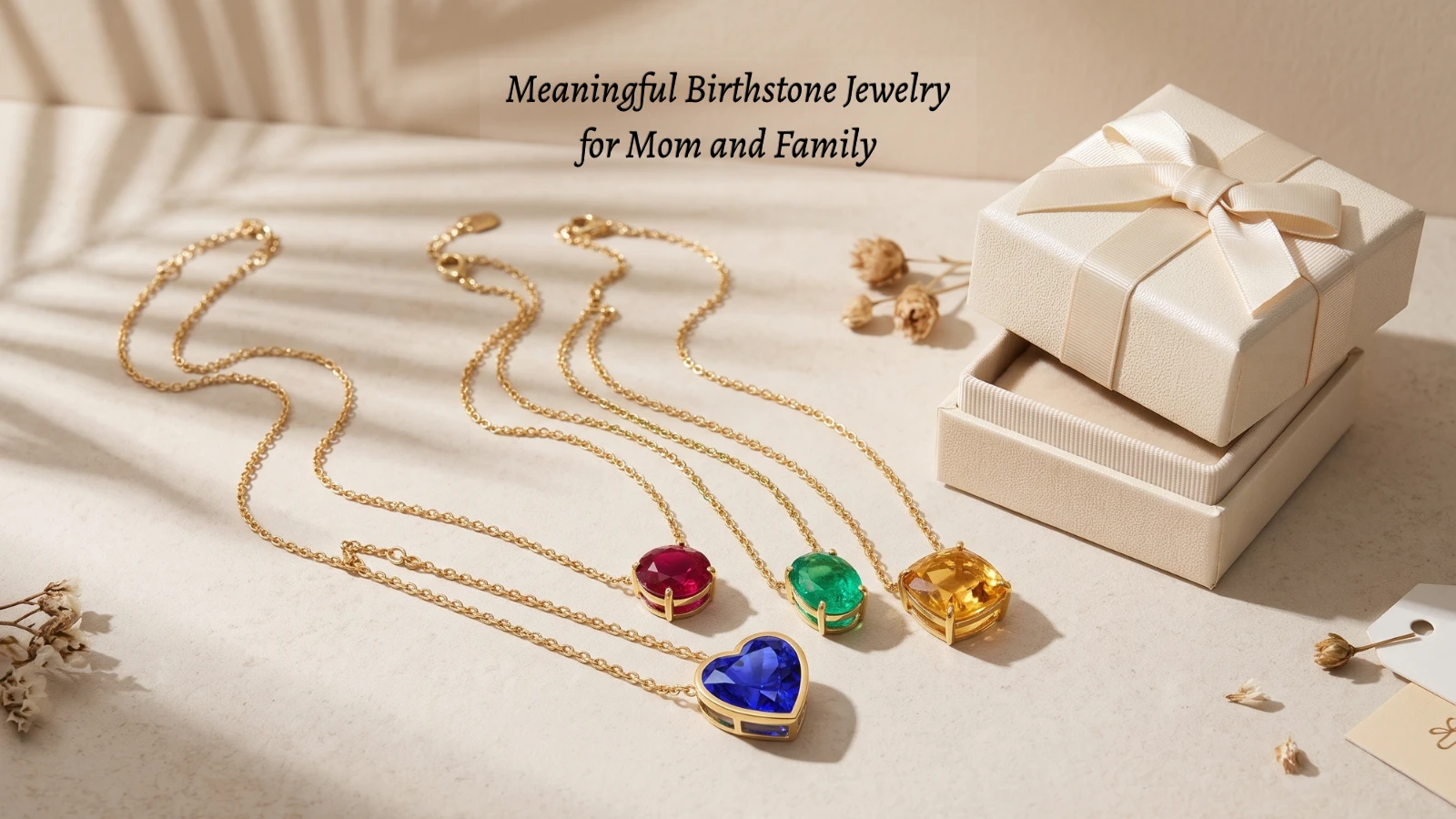 Meanings are folklore, and they change by culture. Garnet stands for friendship in one tradition and protection in another. Treat meaning as a tiebreaker after durability, color, and budget are settled, not as a reason to buy a stone that won't survive the wearer's life.
Birthstone jewelry is the easiest gift route, with one catch: many months have more than one stone. June has pearl, alexandrite, and moonstone. December has turquoise, tanzanite, topaz,z and zircon. Check which one the person actually likes before you buy.
For birthstone jewelry for mom, a mother's birthstone necklace with a stone for each child is a classic, and stackable birthstone rings let you add stones over time. If several stones share one piece, remember that the softest stone sets the care rules for the whole thing.
Checklist before you pay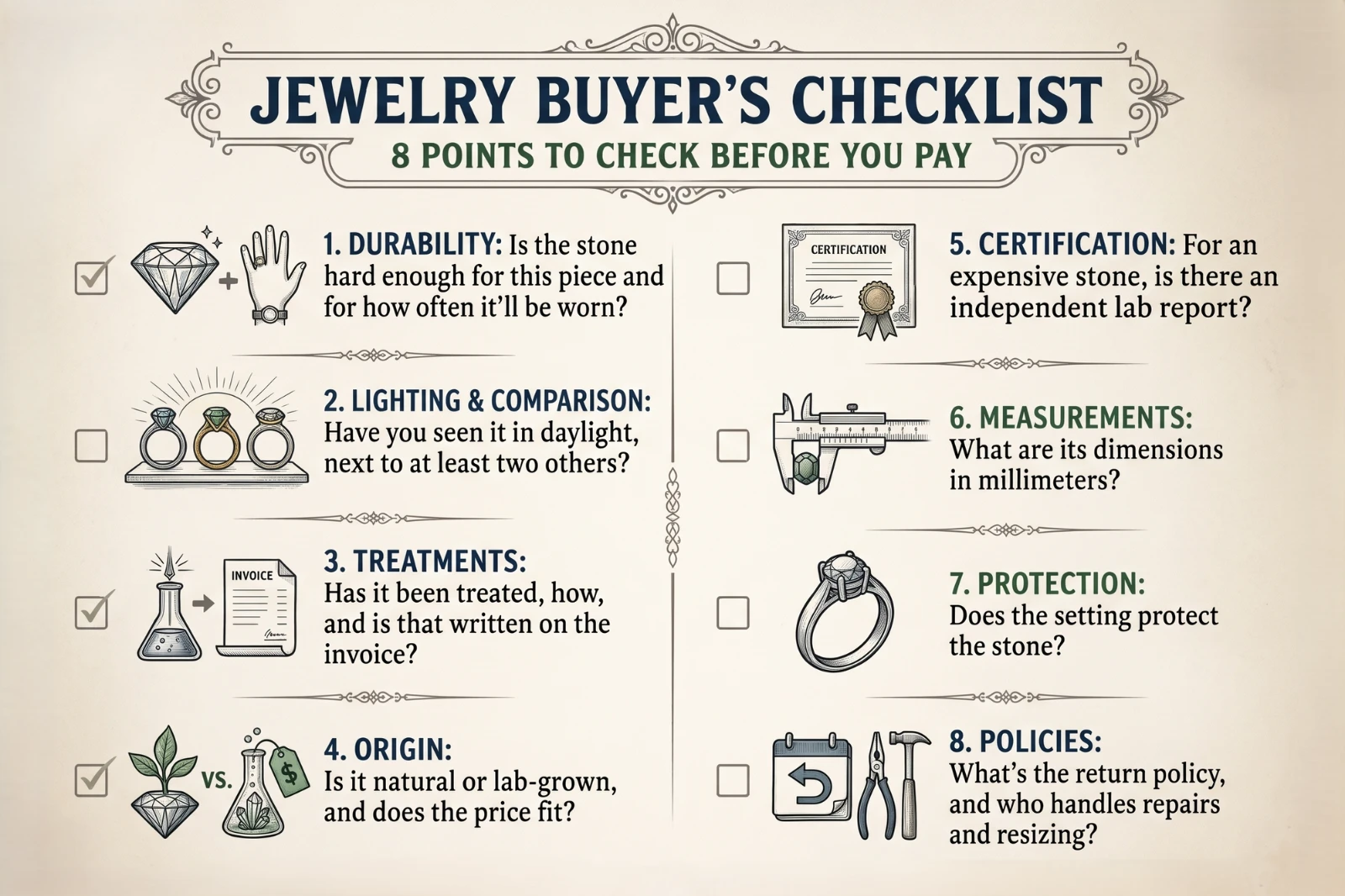
- Is the stone hard enough for this piece and for how often it'll be worn?
- Have you seen it in daylight, next to at least two others?
- Has it been treated, how, and is that written on the invoice?
- Is it natural or lab-grown, and does the price fit?
- For an expensive stone, is there an independent lab report?
- What are its dimensions in millimeters?
- Does the setting protect the stone?
- What's the return policy, and who handles repairs and resizing?
Caring for gemstone jewelry
Warm water, mild soap, a soft brush,sh and a dry cloth are right for most stones. Skip ultrasonic cleaners for emerald, opal and anything oiled or filled, and keep acetone and alcohol away from dyed stones. Opal contains water and dislikes harsh conditions. Put pearls and opals on last, after perfume and hairspray, and take rings off for the gym, gardening,ing and washing up. Store pieces separately, because a sapphire will scratch the amethyst sitting next to it.
Frequently asked questions
How do I choose gemstone jewelry that suits me?
Start with how often you'll wear it, then pick a stone hard enough for that, in a color you still like in daylight, with treatments and origin written on the invoice. Metal and budget come after.
Which gemstones are the most durable for daily wear?
Sapphire and ruby, at 9 on the Mohs scale, are the most durable colored gemstones. Topaz and spinel follow at about 8, with aquamarine close behind at 7.5 to 8.
Are lab-grown gemstones real?
Yes. They have the same chemistry and hardness as natural stones but are made in a lab, so the seller should say so, and the price should be lower.
Do I need a certificate for gemstone jewelry?
For a small, low-cost piece, a clear invoice naming the stone, treatment, and natural or lab-grown status is enough. For an expensive stone, ask for an independent lab report.
Is a treated gemstone fake?
No. A heated or oiled stone is still natural. Treatment only affects price and care, because some types fade or wear out over time.
Your next step before you choose gemstone jewelry
Write down two things: what you'll wear the piece for, and the most you're willing to spend. Take both to the jeweler and ask to see two stones in daylight, with the treatment and natural-or-lab status on paper. The rest of this guide follows from those answers.