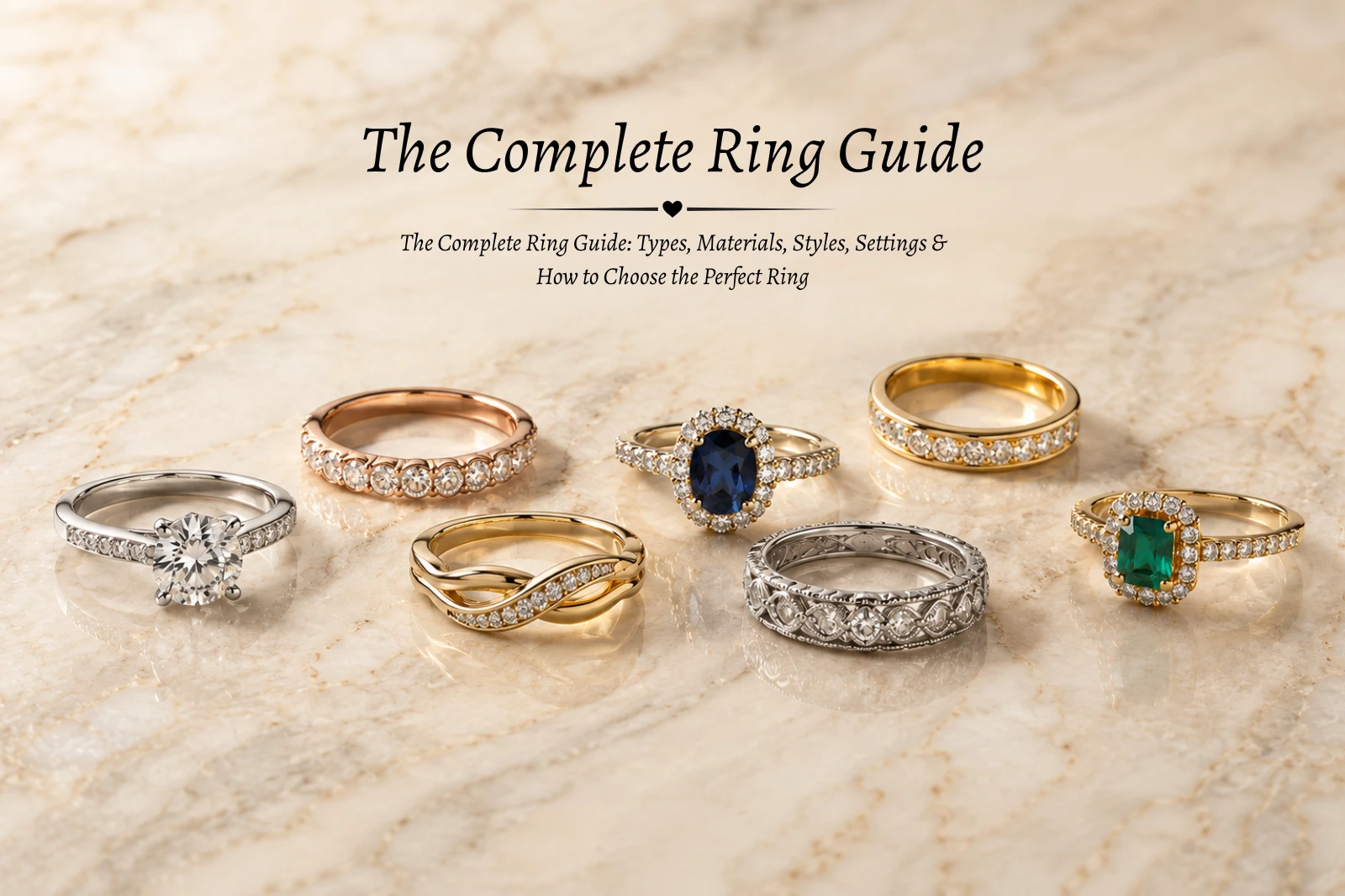
Buying a ring can feel surprisingly complicated.
You may begin by looking for something beautiful, only to encounter unfamiliar terms such as bezel, pavé, comfort fit, precious metal purity, gemstone hardness, and ring certification. Then come the practical questions: Will it fit? Can it handle daily wear? Is the price fair? Will the design still feel right years from now?
This complete ring guide answers those questions in one place.
You will learn about the main types of rings, popular materials, gemstone choices, ring settings, sizing methods, care requirements, and the buying mistakes that are easiest to avoid. Whether you are choosing an engagement ring, a birthday gift, a wedding band, or your first piece of fine jewelry, the goal is simple: help you buy with clarity rather than confusion.
Quick answer: The best ring is one that suits the occasion, fits the wearer’s lifestyle, feels comfortable, uses an appropriate metal and gemstone, and stays within a realistic budget.
What Is a Ring? Meaning, Parts & Purpose Explained
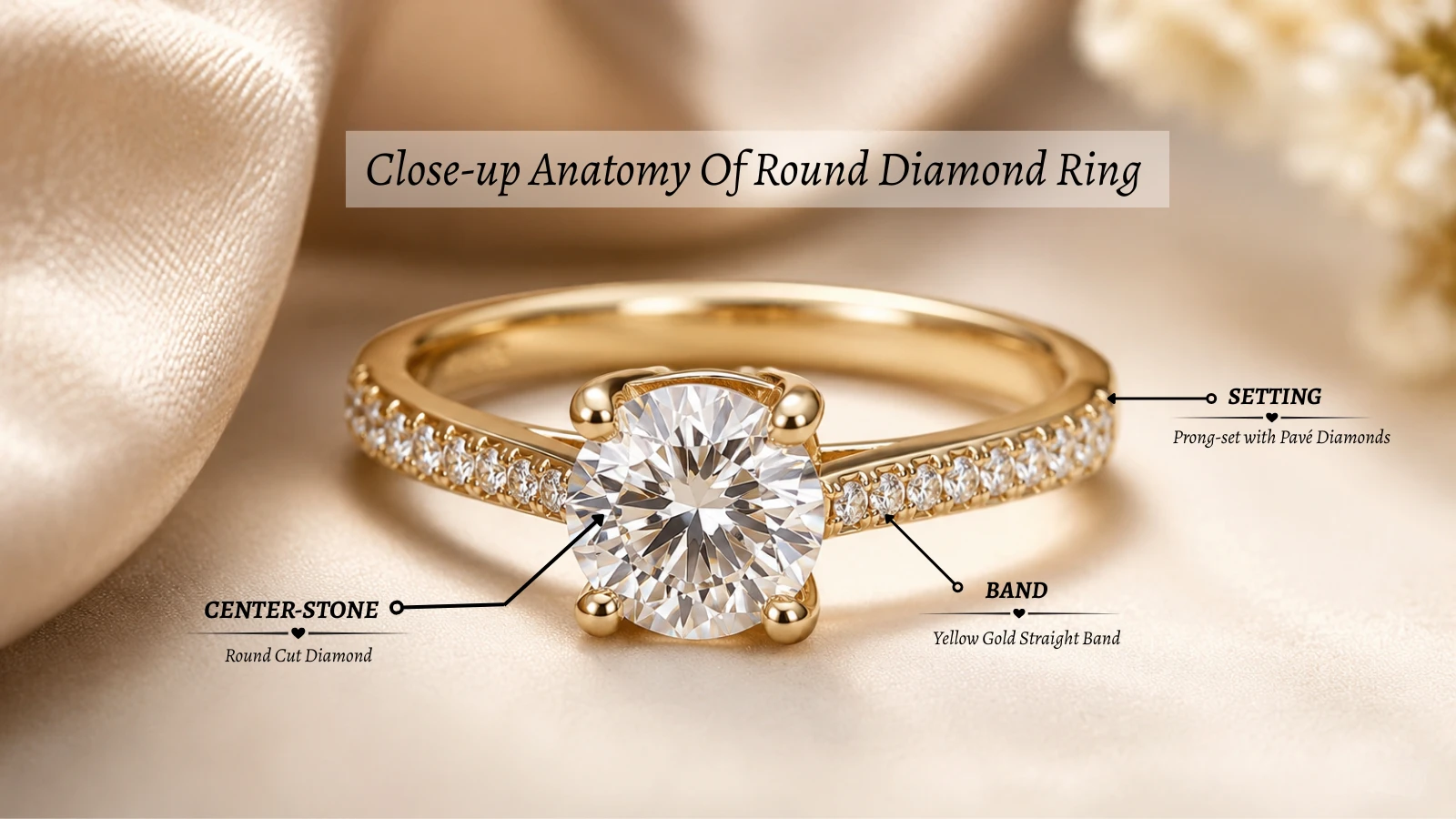
A ring is a circular piece of jewelry worn around a finger for decoration, commitment, identity, remembrance, or personal expression. Rings may be made from precious metals, alternative metals, gemstones, or a combination of materials.
A ring has several basic parts:
- Band or shank: The circular section that wraps around the finger.
- Setting: The structure that secures a gemstone.
- Center stone: The main diamond or gemstone.
- Accent stones: Smaller stones placed around or beside the center.
- Gallery: The area beneath the center stone.
- Shoulders: The upper sides of the band near the setting.
Some rings are simple metal bands. Others are highly detailed handcrafted rings featuring diamonds, natural gemstones, engraving, or vintage-inspired metalwork.
The meaning of a ring often matters as much as its materials. A wedding ring symbolizes commitment. A birthstone ring may represent identity or family. A signet ring can express heritage, while a cocktail ring is usually chosen for visual impact.
Types of Rings: Complete Guide to Engagement, Wedding, Promise & Fashion Rings
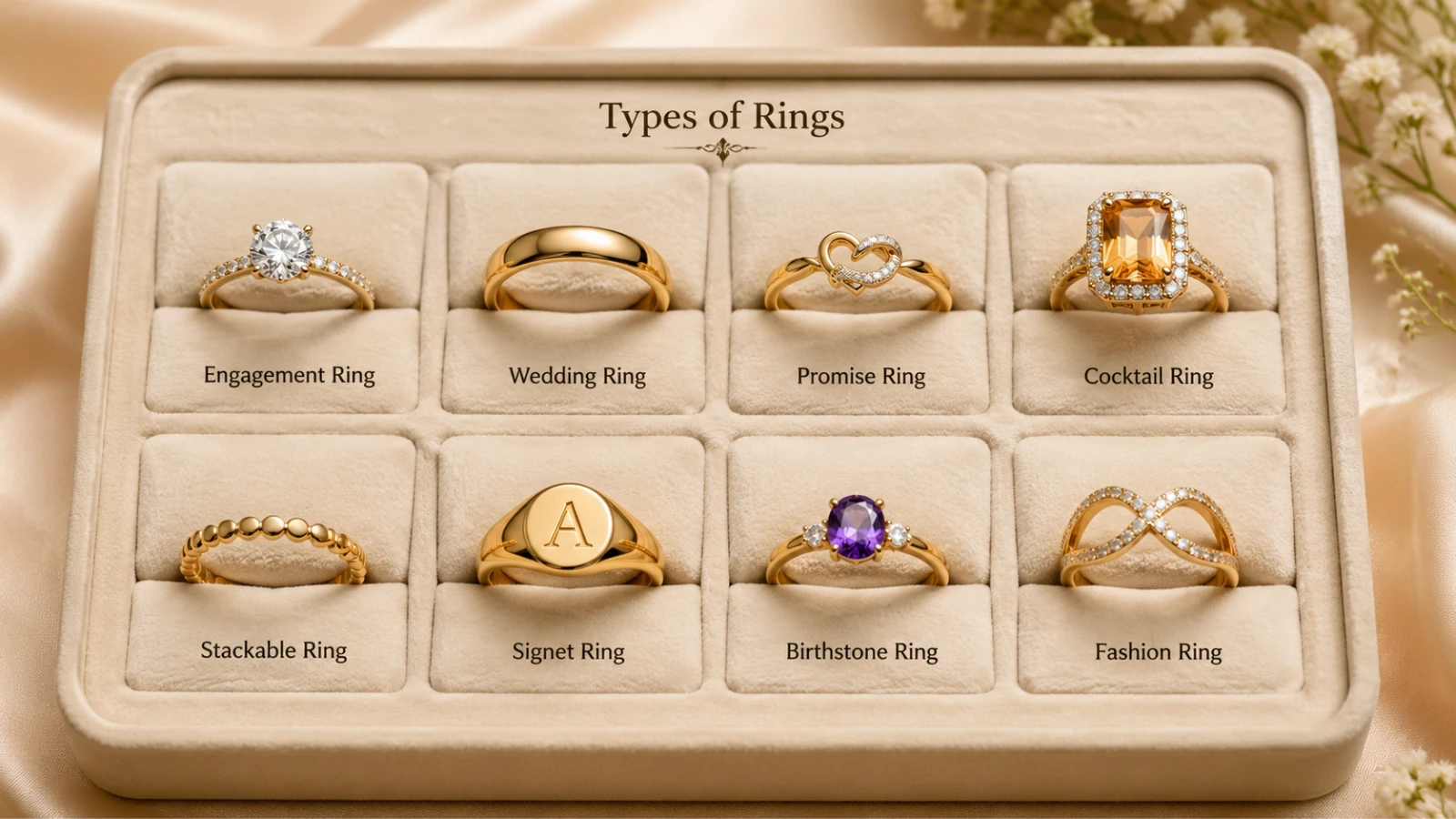
The most common types of rings include engagement rings, wedding rings, promise rings, cocktail rings, stackable rings, signet rings, birthstone rings, and fashion rings. Each type serves a different purpose and may require a different balance of beauty, durability, comfort, and symbolism.
Engagement Rings
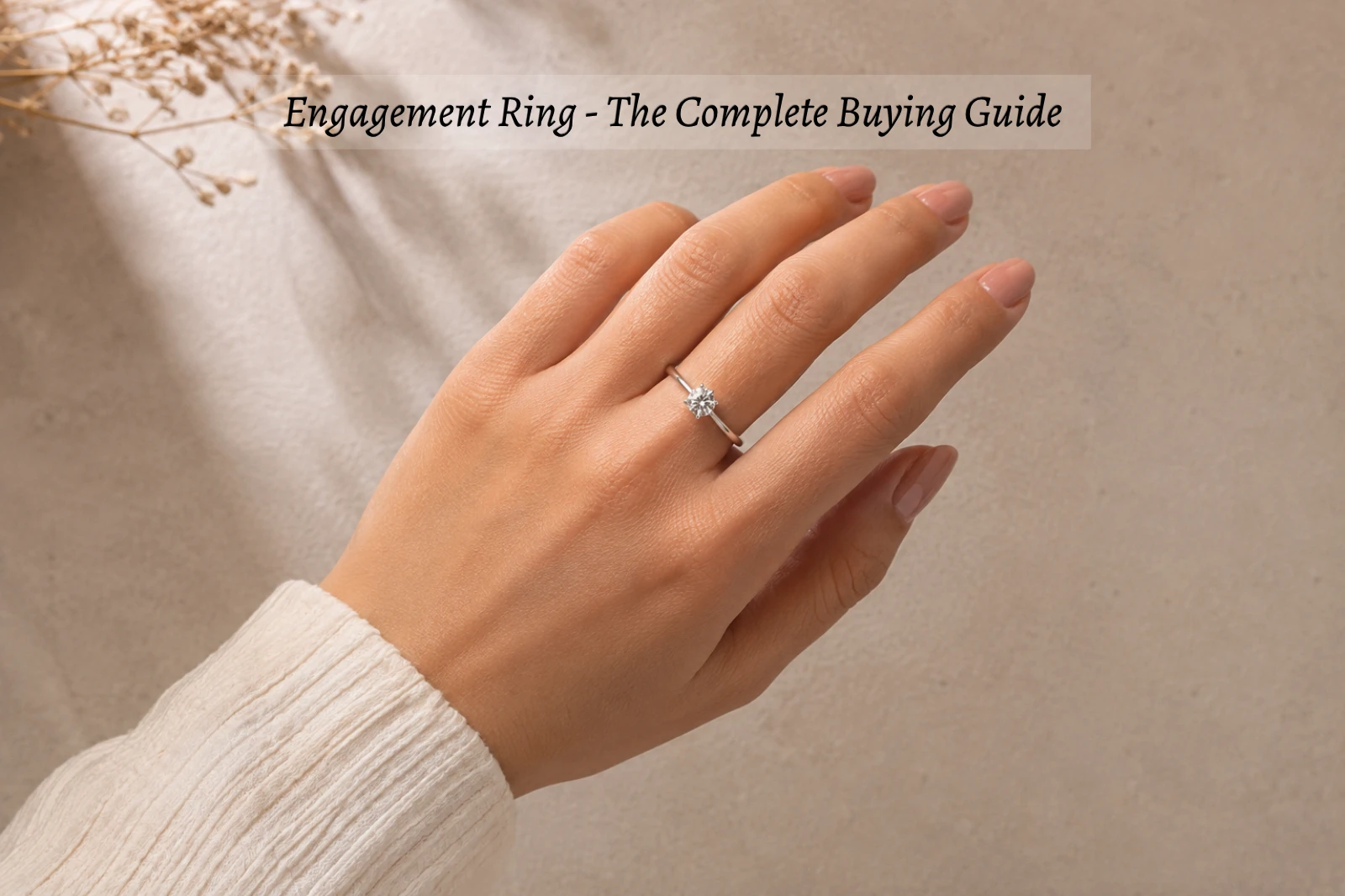
An engagement ring represents the intention to marry. It traditionally features a diamond, although sapphire, ruby, moissanite, emerald, and other gemstone rings are increasingly popular.
When choosing an engagement ring, consider:
- Daily-wear durability
- Gemstone hardness
- Setting security
- Personal style
- Compatibility with a future wedding band
- Maintenance requirements
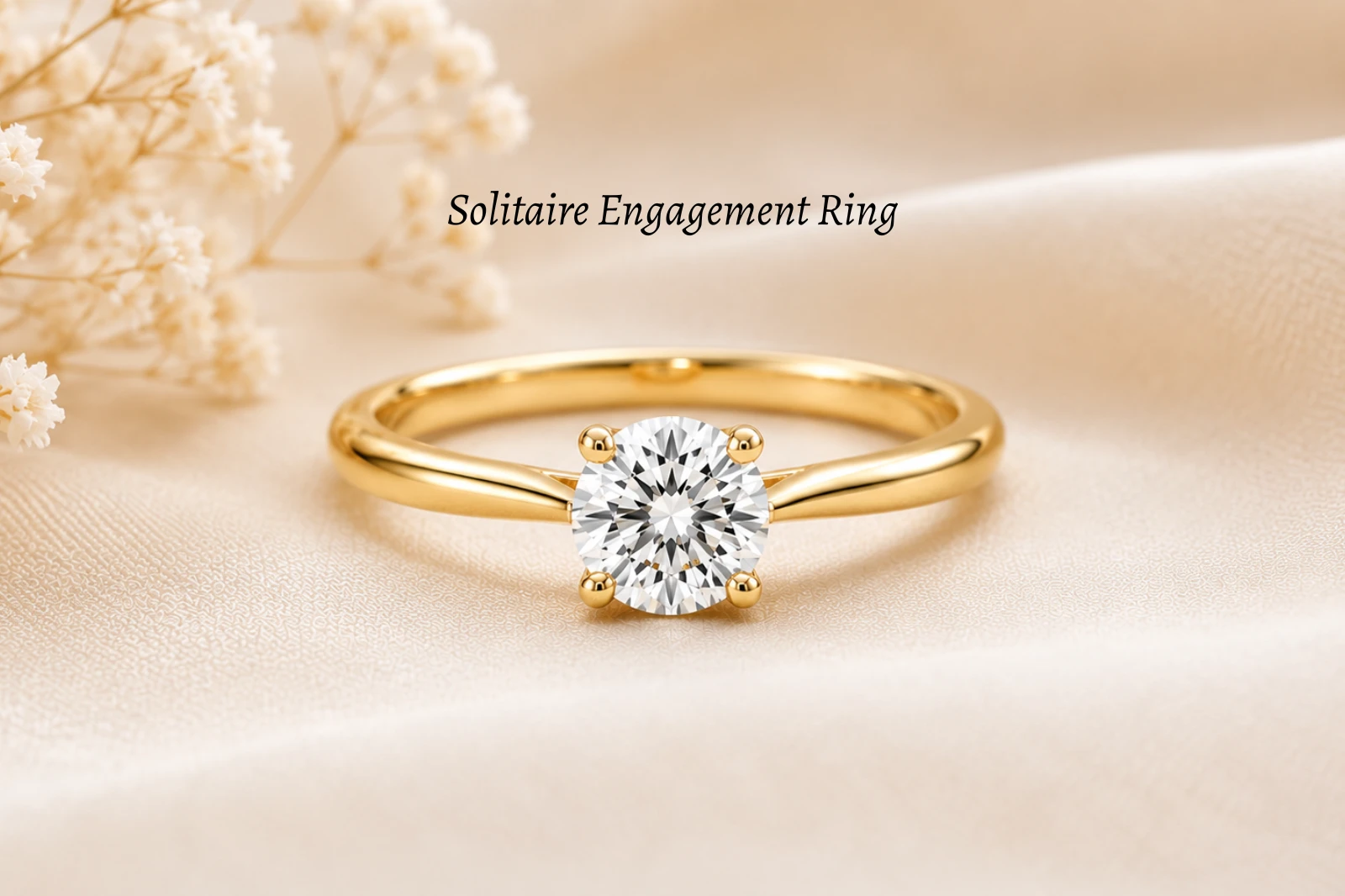
A solitaire diamond ring offers timeless simplicity, while halo, three-stone, vintage, and gemstone designs create a more distinctive appearance.
Wedding Rings
A wedding ring or wedding band is exchanged during the marriage ceremony. It may be a plain precious metal band, a diamond-set band, a curved band, or a design created to sit beside an engagement ring.
A good wedding ring should feel comfortable enough for daily wear. Check the width, profile, metal, and whether the inside of the band has a comfort-fit shape.
Promise Rings
A promise ring represents commitment, loyalty, or a shared future. It does not need to look like a traditional engagement ring.
Popular choices include:
- Small solitaire rings
- Heart-shaped designs
- Birthstone rings
- Initial rings
- Infinity-inspired styles
- Minimalist gemstone bands
The meaning should be clear between the people exchanging the ring, especially if the design could be mistaken for an engagement ring.
Cocktail Rings
Cocktail rings are bold statement pieces usually worn for parties, dinners, celebrations, or special events. They often feature oversized gemstones, clusters, dramatic settings, or colorful combinations.
Because many cocktail rings sit high on the finger, they may catch on clothing and are not always ideal for demanding daily activities.
Stackable Rings
Stackable rings are slim bands designed to be worn together. A stack may combine diamonds, colored gemstones, textured metal, birthstones, or mixed finishes.
A practical stack usually includes different widths but similar profiles. Too many raised settings can rub against neighboring rings or feel bulky between the fingers.
Signet Rings
A signet ring has a flat or slightly rounded face that may feature initials, a family symbol, engraving, or a clean polished surface.
Traditionally associated with identity and heritage, signet rings are now worn as both personal and fashion jewelry. They work especially well in yellow gold, sterling silver, and platinum.
Birthstone Rings
A birthstone ring features a gemstone associated with a particular month. It may represent the wearer, a child, a partner, or several family members.
Before buying, check whether the gemstone ring is suitable for daily wear. Sapphire and ruby are highly durable, while softer stones may need more careful handling.
Fashion Rings
Fashion rings are selected primarily for style rather than a formal milestone. They range from minimalist metal bands to colorful gemstone pieces and sculptural designs.
They allow more freedom with materials, size, and trends because they may not be worn every day.
Ring Materials Explained: Gold, Sterling Silver, Platinum & More
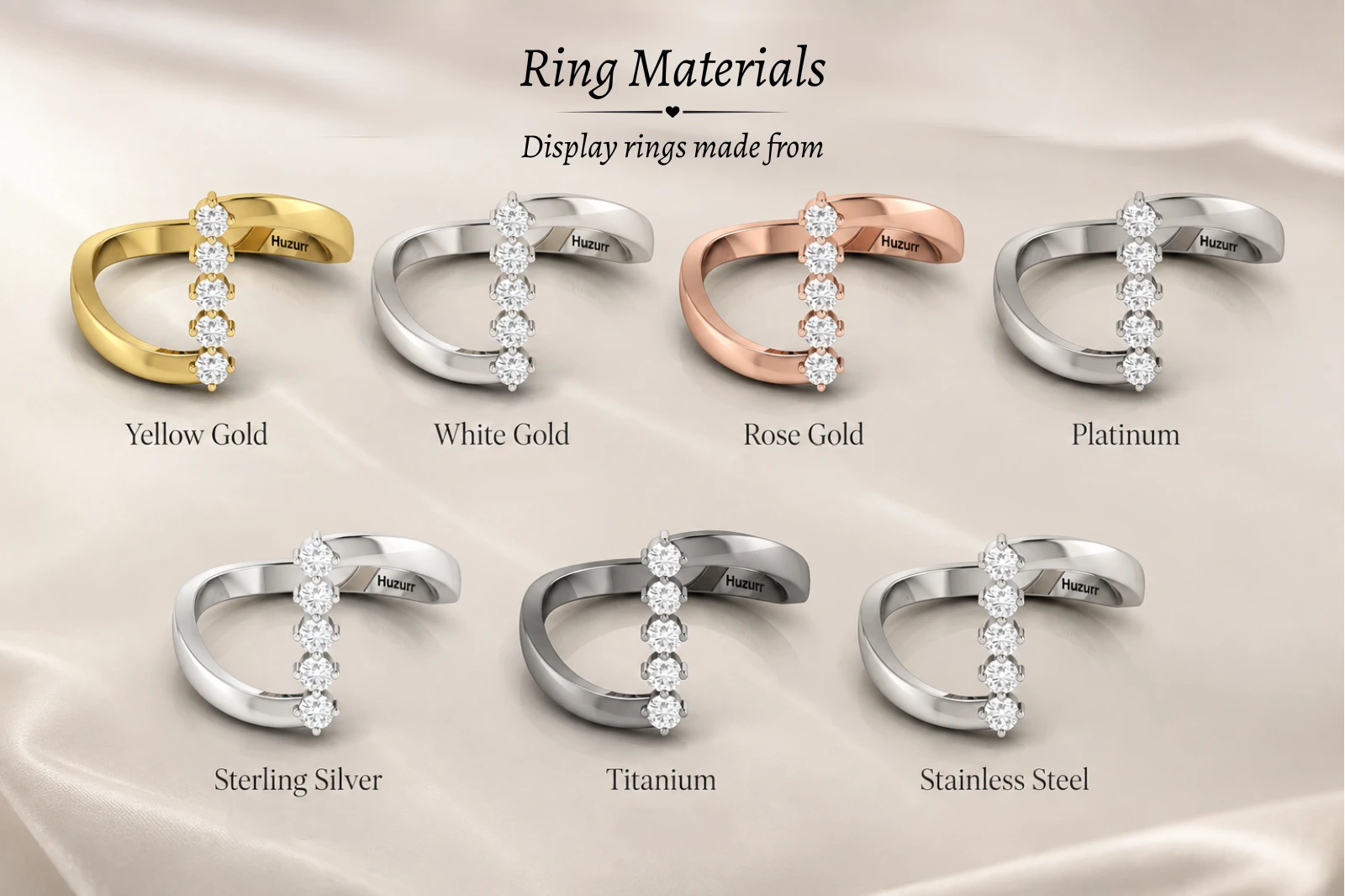
Ring materials affect appearance, price, weight, comfort, maintenance, and durability. Gold, sterling silver, platinum, titanium, and stainless steel are among the most common choices.
Gold Rings
Gold rings are available in yellow gold, white gold, and rose gold. Pure 24-karat gold is generally too soft for most everyday rings, so it is mixed with other metals to improve strength.
Common choices include:
- 10K gold: Durable, lower gold content, more affordable
- 14K gold: Strong, practical, and widely chosen in the United States
- 18K gold: Richer color and higher gold content, but slightly softer
Yellow gold offers a classic warm tone. White gold has a bright appearance and is often rhodium plated. Rose gold gets its pink tone from copper in the alloy.
Sterling Silver Rings
Sterling silver rings contain 92.5% silver mixed with other metals for strength. It is affordable, bright, versatile, and easy to style.
Its main drawback is tarnish. Tarnish is a surface reaction rather than permanent damage and can usually be removed with appropriate cleaning.
Sterling silver works well for fashion rings, occasional pieces, minimalist rings, and buyers exploring a style before investing in gold or platinum.
Platinum
Platinum is a naturally white precious metal known for density, durability, and prestige. It does not require rhodium plating and is often selected for engagement and wedding rings.
Platinum develops a soft surface patina over time. Some wearers appreciate this appearance, while others prefer periodic polishing.
Platinum rings usually cost more than comparable gold rings because of the metal’s rarity, density, and manufacturing requirements.
Titanium
Titanium is lightweight, durable, modern, and resistant to corrosion. It is popular for men’s bands, active lifestyles, and contemporary designs.
However, titanium rings may be difficult or impossible to resize depending on their construction. Sizing accuracy is therefore especially important.
Stainless Steel
Stainless steel is durable, affordable, and resistant to tarnish. It is commonly used for fashion jewelry and casual bands.
It does not carry the same fine-jewelry value as gold or platinum, but it can be a sensible option for travel, work, or budget-conscious buyers.
Ring Material Comparison
|
Material |
Appearance |
Durability |
Maintenance |
Resizing |
Best For |
|
14K gold |
Warm, white, or rose |
High |
Moderate |
Usually possible |
Everyday fine jewelry |
|
18K gold |
Rich and luxurious |
Moderate |
Moderate |
Usually possible |
Premium rings |
|
Sterling silver |
Bright white |
Moderate |
Tarnish care needed |
Often possible |
Fashion and gifting |
|
Platinum |
Naturally white |
Very high |
May develop patina |
Usually possible |
Engagement and wedding rings |
|
Titanium |
Modern gray |
Very high |
Low |
Often difficult |
Active lifestyles |
|
Stainless steel |
Bright or dark gray |
High |
Low |
Often limited |
Affordable fashion rings |
Popular Ring Styles: Solitaire, Halo, Vintage, Pavé & Modern Designs
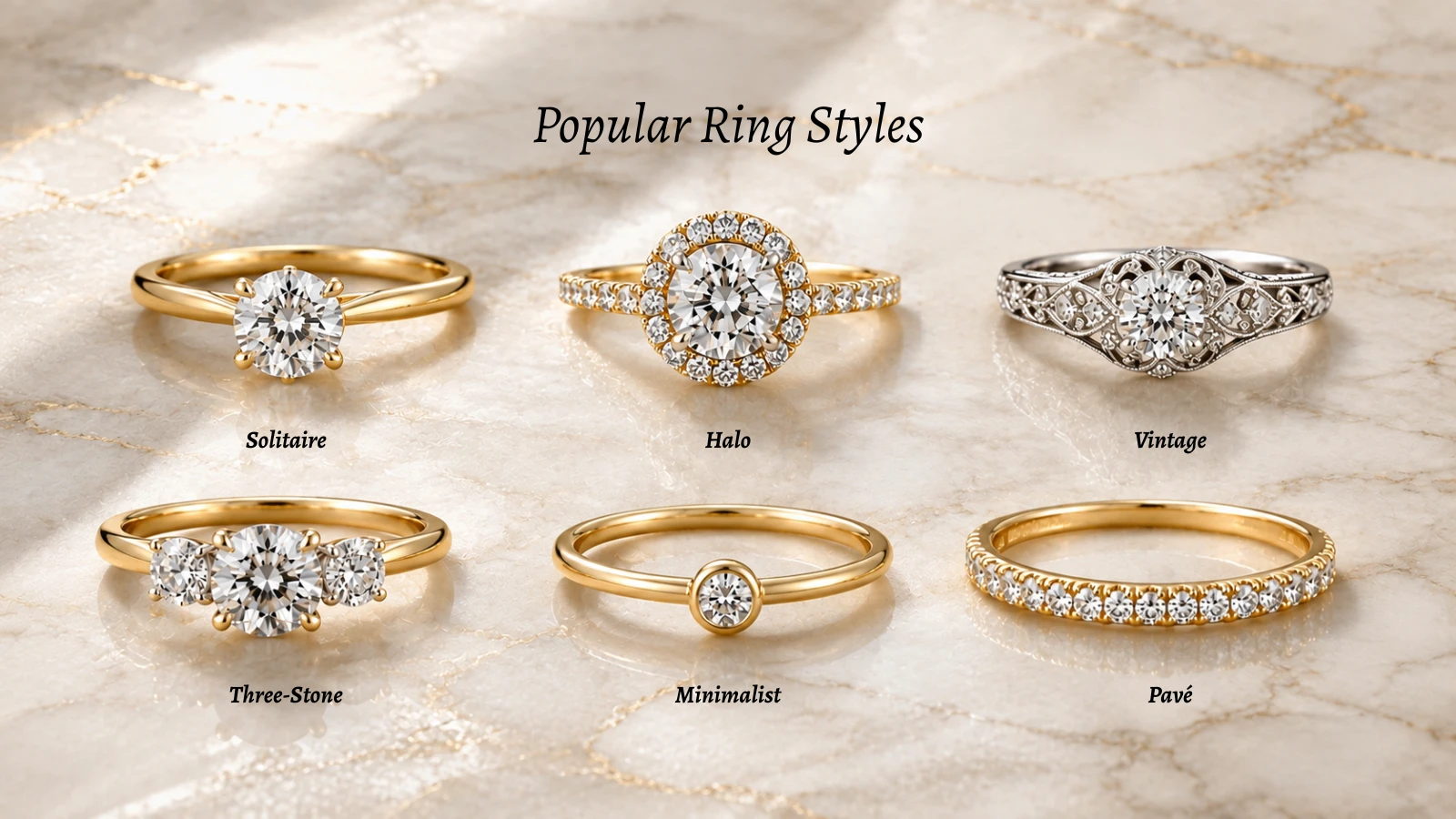
Popular ring styles include solitaire, halo, vintage, minimalist, three-stone, and pavé designs. Style affects not only appearance but also cleaning, maintenance, comfort, and how large the center stone appears.
Solitaire
A solitaire ring features one main gemstone with little or no additional decoration. It is clean, timeless, and easy to pair with many wedding bands.
Best for: Buyers who want the gemstone to remain the main focus.
Halo
A halo ring surrounds the center stone with smaller diamonds or gemstones. This can increase sparkle and make the center appear larger.
Halo designs require more cleaning because lotion and debris can collect around the small stones.
Vintage
Vintage rings may feature milgrain edges, engraving, floral details, filigree, antique-inspired cuts, or Art Deco geometry.
They offer strong personality but require careful inspection because detailed metalwork and small accent stones may need periodic maintenance.
Minimalist
Minimalist rings use clean lines, slim bands, small gemstones, or smooth metal surfaces. They are easy to wear, stack, and style.
Very thin bands can be elegant but may bend more easily, especially when made from softer metals.
Three-Stone
A three-stone ring features a center stone with one stone on each side. It is often said to represent the past, present, and future.
The side stones may match the center or introduce contrasting gemstones such as sapphires beside a diamond.
Pavé
A pavé ring has small stones set closely across the band, creating a continuous surface of sparkle.
Pavé rings look refined but require more attentive care than plain bands. Small stones can loosen if the ring is repeatedly knocked or bent.
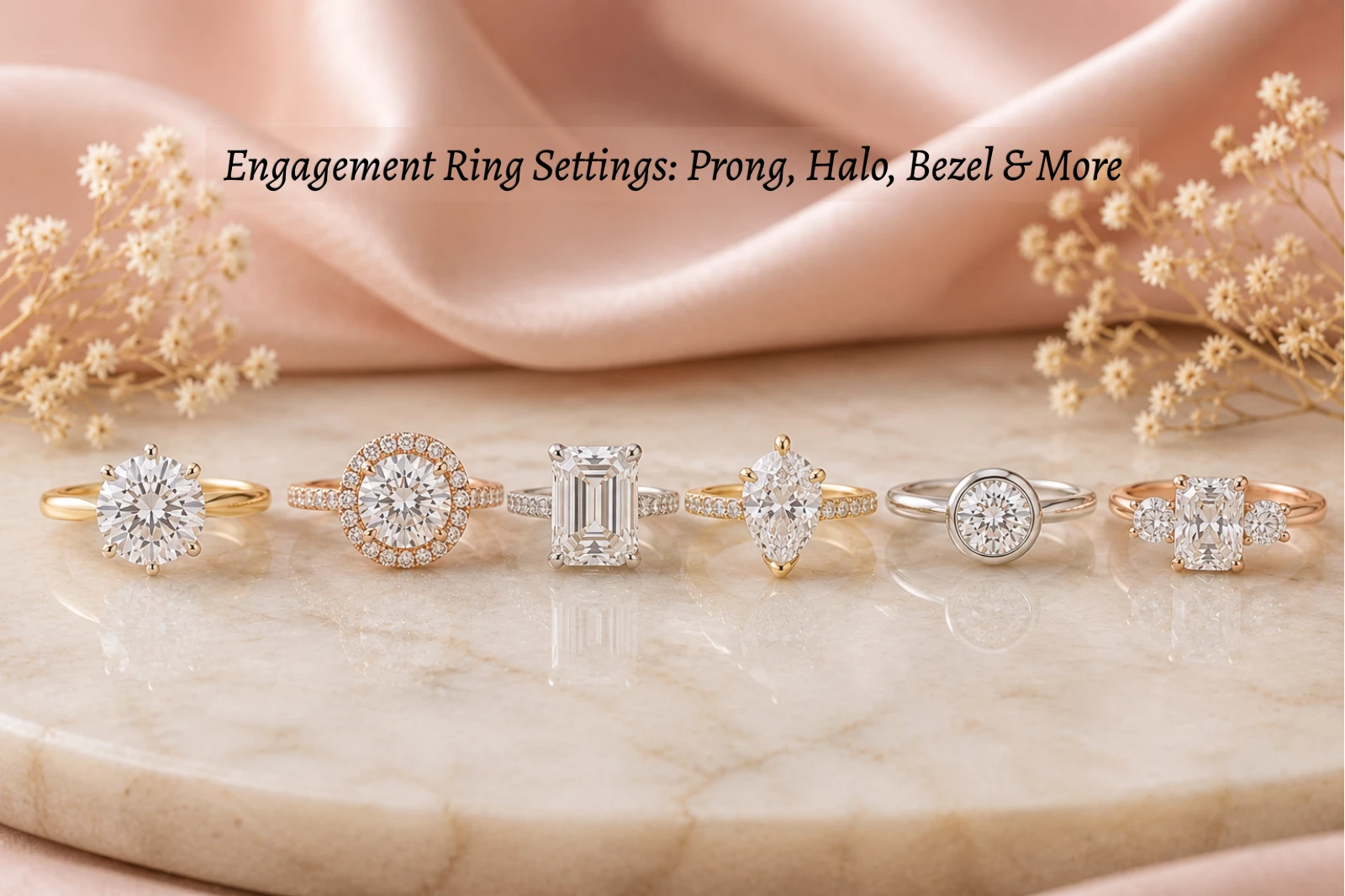
Ring Settings Explained: Prong, Bezel, Halo, Pavé & Other Ring Settings
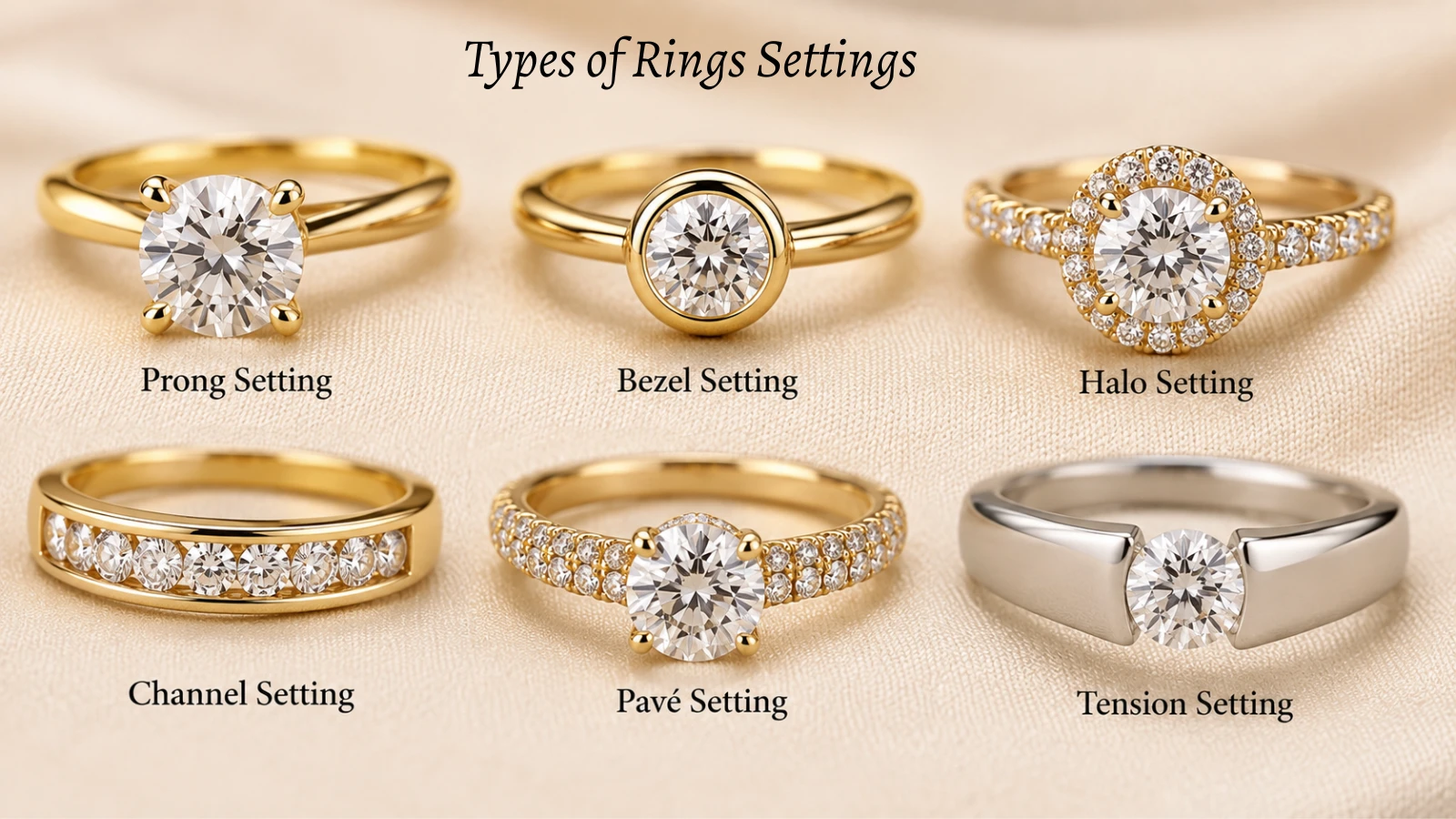
A ring setting is the structure that holds a diamond or gemstone in place. Prong, bezel, halo, channel, pavé, and tension settings each offer a different balance of visibility, sparkle, security, and maintenance.
Prong Setting
Prongs are small metal claws that hold the gemstone. Four-prong settings reveal more of the stone, while six-prong settings provide additional points of contact.
Pros: High light exposure, classic appearance
Cons: Prongs can catch on fabric and should be inspected periodically
Bezel Setting
A bezel surrounds all or part of the gemstone with a metal rim.
Pros: Excellent protection, smooth profile, suitable for active lifestyles
Cons: Covers more of the gemstone and may reduce visible surface area
Halo Setting
A halo uses smaller stones around the center gemstone.
Pros: More sparkle, stronger visual presence
Cons: More detailed cleaning and maintenance
Channel Setting
Channel-set stones sit between two strips of metal without exposed prongs.
Pros: Smooth, secure appearance
Cons: Resizing and repairs may be more complex
Pavé Setting
Pavé stones are held by tiny beads or prongs, making the band appear covered in diamonds.
Pros: Delicate, luxurious sparkle
Cons: Small stones require careful handling
Tension Setting
A tension setting holds the gemstone between two sides of the band through controlled pressure.
Pros: Modern, floating appearance
Cons: Specialized resizing and repair; not ideal for every gemstone
Setting Decision Guide
|
Your Priority |
Consider |
|
Maximum center-stone visibility |
Prong |
|
Better protection |
Bezel |
|
Larger-looking center stone |
Halo |
|
Smooth diamond band |
Channel |
|
Fine sparkle across the band |
Pavé |
|
Modern architectural style |
Tension |
Gemstone Rings Guide: Diamond, Sapphire, Ruby, Emerald, Tanzanite & Moissanite
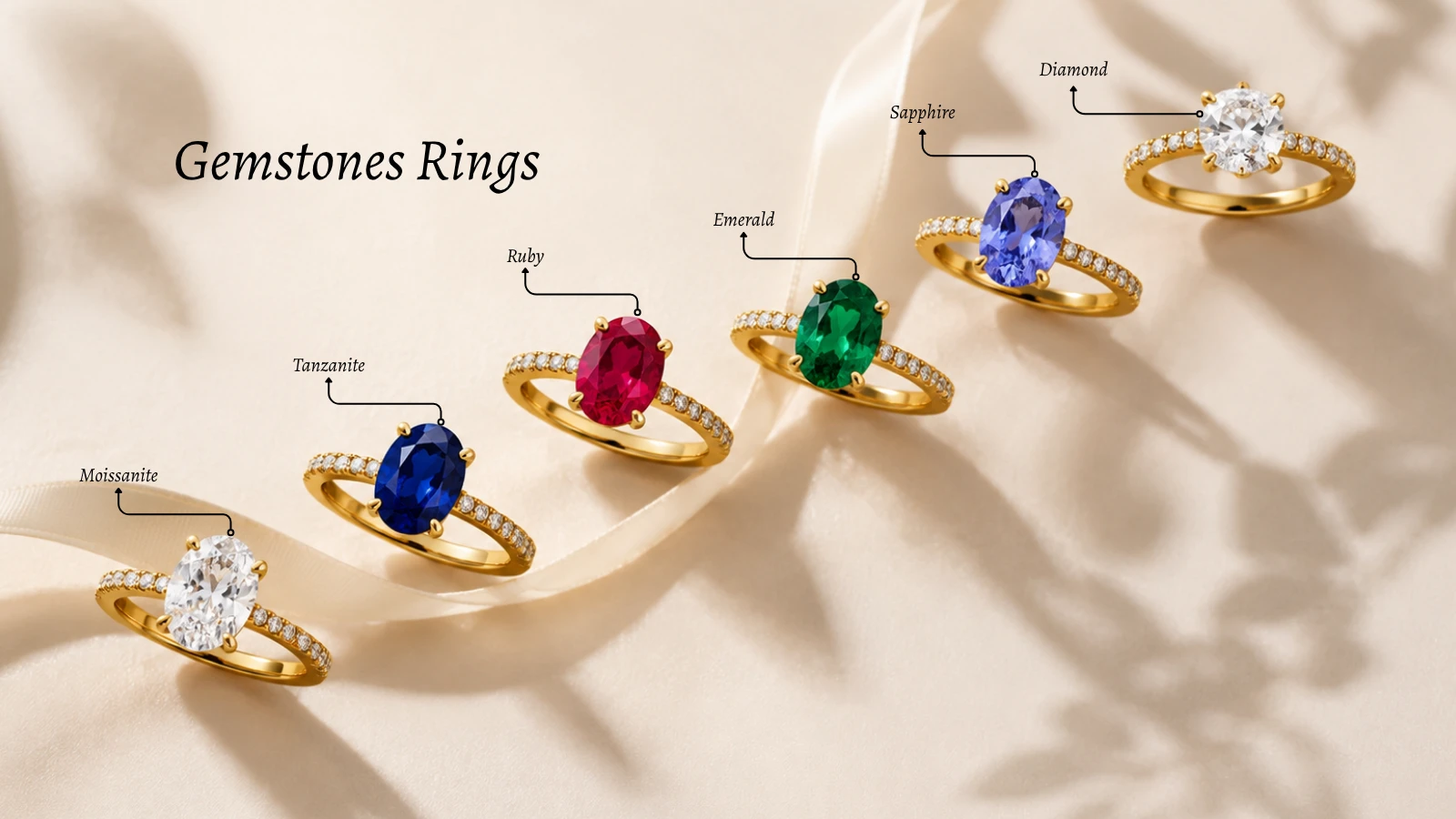
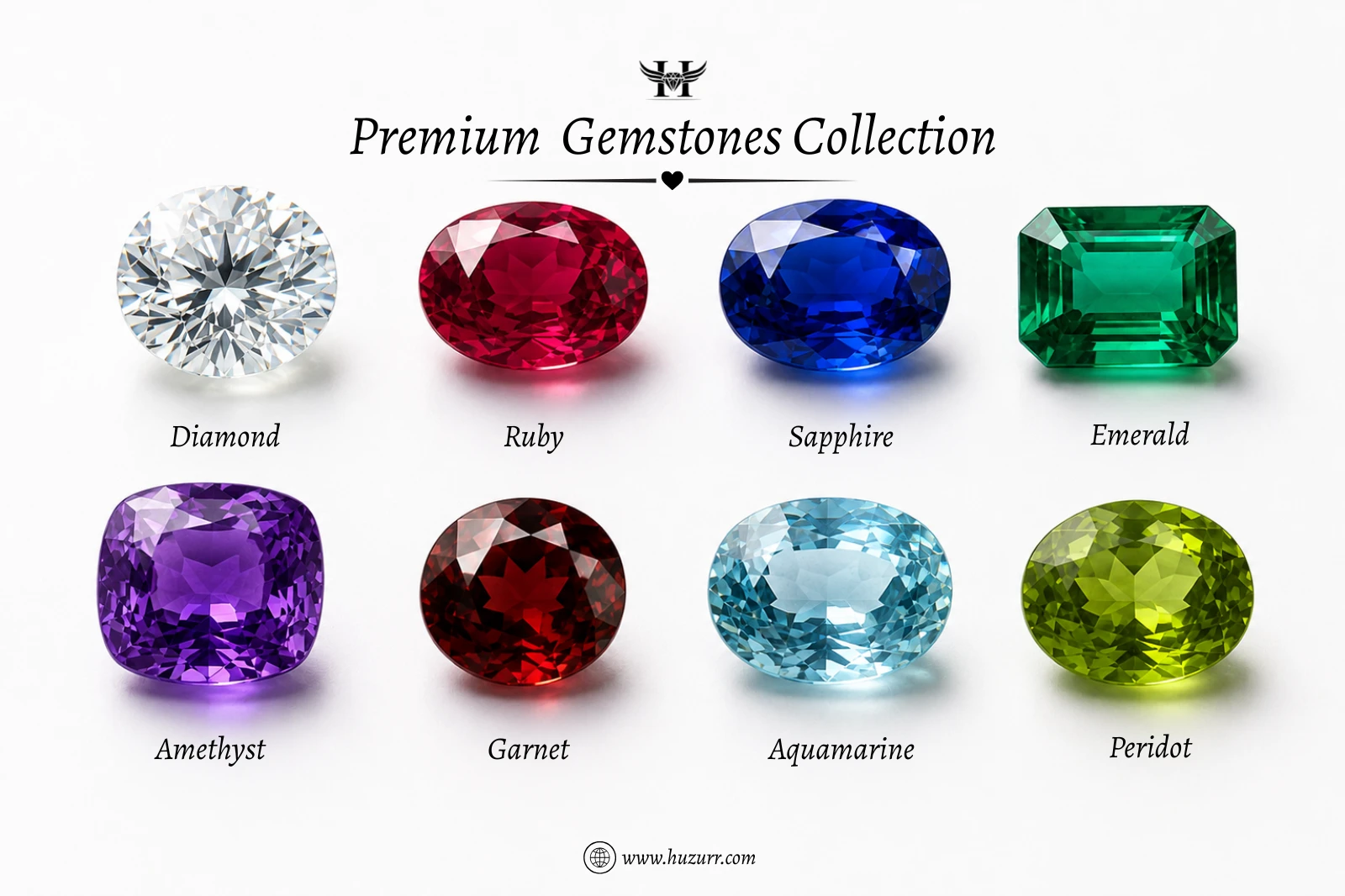
Gemstone rings use diamonds, sapphires, rubies, emeralds, tanzanite, moissanite, or other stones as the main design feature. The right choice depends on color, durability, symbolism, budget, and how often the ring will be worn.
Diamond
Diamonds are valued for brilliance, durability, and their established role in engagement jewelry.
When comparing diamonds, consider:
- Cut quality
- Color
- Clarity
- Carat weight
- Shape
- Certification
- Setting quality
Cut usually has the greatest visible effect on sparkle. A well-cut diamond may appear more lively than a larger stone with weaker proportions.
Sapphire
Sapphire is a durable gemstone best known for blue, although it also appears in pink, yellow, green, white, and other colors.
Its durability makes it suitable for engagement rings and regular wear. Color quality, treatment disclosure, origin information, and certification may influence value.
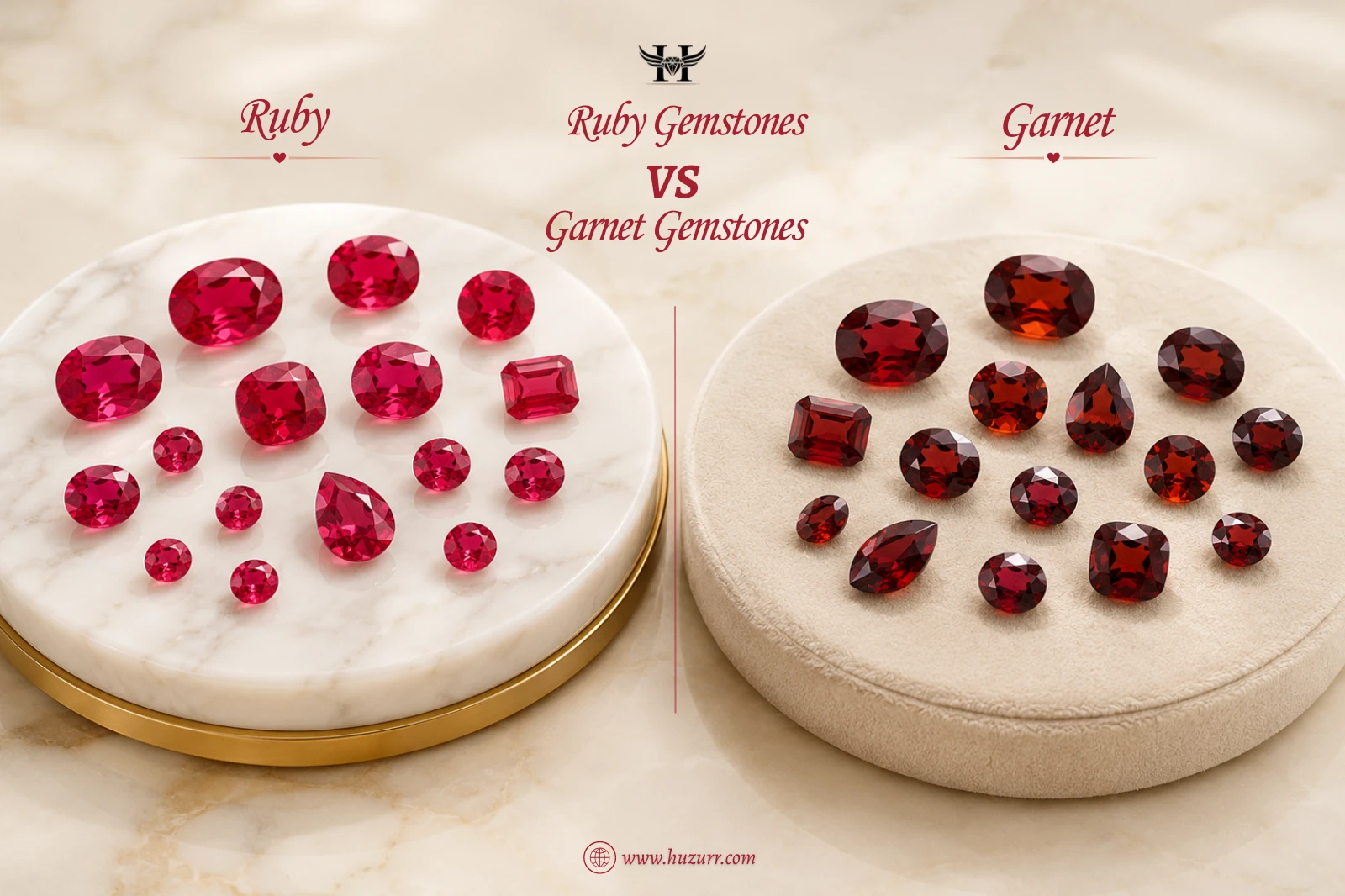
Ruby
Ruby is the red variety of corundum and belongs to the same mineral family as sapphire. It is durable enough for many daily-wear rings.
Fine rubies can be valuable, so buyers should ask whether a stone is natural, lab-created, treated, or untreated.
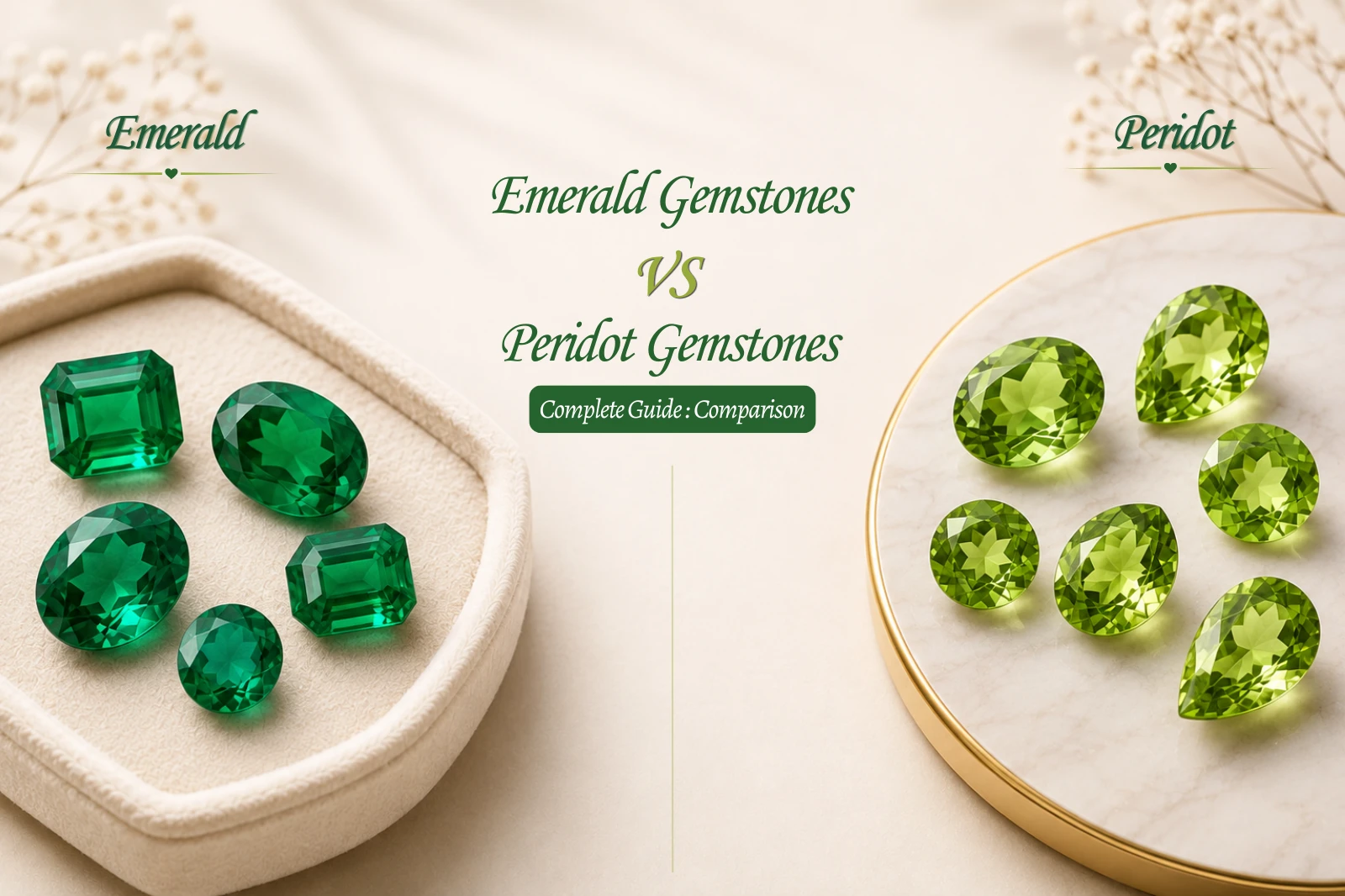
Emerald
Emerald is loved for its rich green color and natural internal characteristics. It is less resistant to impact than diamond, sapphire, or ruby.
An emerald ring benefits from a protective bezel or secure prong setting. Avoid ultrasonic cleaning unless a qualified jeweler confirms that the specific stone and treatment can tolerate it.
Tanzanite
Tanzanite displays blue, violet, and purple tones. It is visually distinctive but less durable than sapphire.
It is better suited to occasional rings or careful wear. Buyers should avoid knocks, extreme temperature changes, and harsh cleaning methods.
Moissanite
Moissanite is a lab-created gemstone known for strong brilliance, durability, and lower cost compared with many diamonds.
It produces more rainbow-colored fire than diamond, which some buyers love, and others find less traditional. Choose it because you enjoy its appearance, not simply because it resembles another gemstone.
Gemstone Comparison
|
Gemstone |
Typical Appeal |
Daily-Wear Suitability |
Main Buying Consideration |
|
Diamond |
Bright, classic brilliance |
Excellent |
Cut and certification |
|
Sapphire |
Rich color and durability |
Excellent |
Color and treatment |
|
Ruby |
Vivid red luxury |
Excellent |
Treatment and origin claims |
|
Emerald |
Distinctive green character |
Moderate |
Inclusions and careful wear |
|
Tanzanite |
Blue-violet color |
Moderate to low |
Protection from impact |
|
Moissanite |
High sparkle and value |
Excellent |
Different fire pattern |
Rings Comparison: Gold Rings vs Sterling Silver Rings
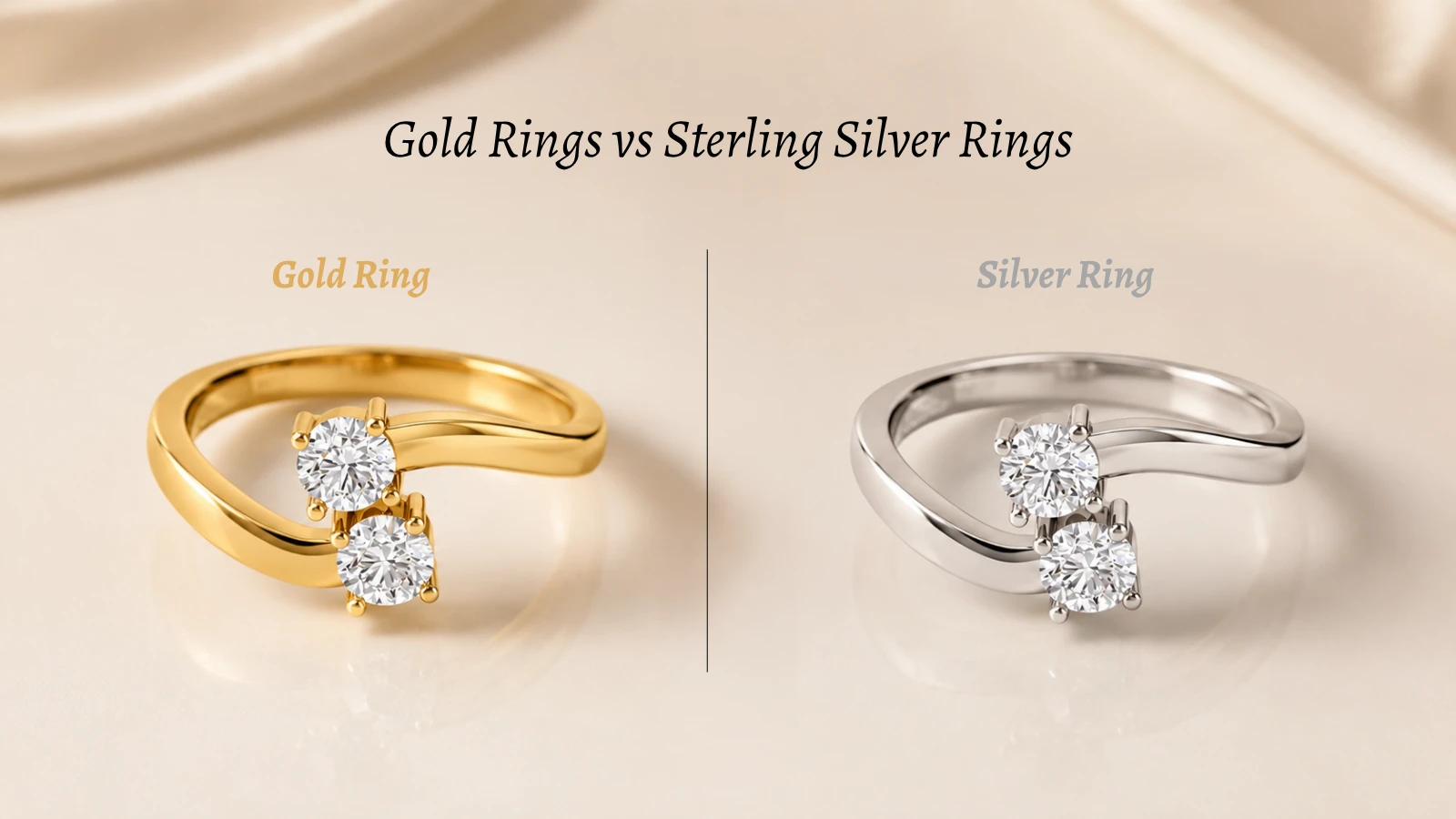
Gold rings provide greater long-term durability, value, and fine-jewelry appeal, while sterling silver rings offer affordability, brightness, and easy access to fashion-forward designs. The better choice depends on budget, wear frequency, maintenance expectations, and whether the ring marks a major milestone.
|
Factor |
Gold Rings |
Sterling Silver Rings |
|
Price |
Higher |
Lower |
|
Durability |
Strong for daily wear |
Good with proper care |
|
Tarnish |
Gold itself does not tarnish like silver, though alloys and finishes vary |
Tarnishes over time |
|
Color choices |
Yellow, white, and rose |
Bright white |
|
Resizing |
Usually possible |
Often possible |
|
Long-term value |
Generally higher |
Lower |
|
Best use |
Engagement, wedding, heirloom, daily fine jewelry |
Fashion, gifting, occasional wear |
Choose Gold When:
- The ring is intended for daily wear.
- The piece marks an engagement, wedding, or major milestone.
- You want a higher-value precious metal.
- You prefer yellow, white, or rose tones.
- Long-term repairability matters.
Choose Sterling Silver When:
- You want an affordable fine-metal ring.
- You enjoy changing styles frequently.
- The ring will be worn occasionally.
- You are testing a design before buying it in gold.
- You are comfortable with routine tarnish care.
How to choose the perfect ring
To choose a ring, match seven elements: budget, occasion, lifestyle, metal, gemstone, ring size, and comfort. A ring that fits the wearer’s real life is usually a better purchase than one selected only for visual impact.
1. Set a Complete Budget
Include more than the center stone. Your total budget may need to cover:
- Ring setting
- Gemstone or diamond
- Taxes
- Shipping
- Resizing
- Insurance
- Future maintenance
Avoid spending more simply because a traditional rule suggests you should. A ring should feel meaningful, not financially uncomfortable.
2. Define the Occasion
Ask what the ring needs to communicate.
An engagement ring should support long-term daily wear. A cocktail ring can prioritize visual drama. A birthday ring may center on a birthstone or personal color.
3. Consider Lifestyle
A nurse, chef, athlete, gardener, or hands-on professional may prefer a low-profile bezel or secure prong design.
Someone who removes jewelry before activity may have more freedom to choose raised settings, detailed halos, or softer gemstones.
4. Select the Metal
Choose a metal based on color preference, durability, sensitivity, maintenance, and budget.
White gold may need replating. Sterling silver may tarnish. Platinum is dense and premium. Titanium is light but difficult to resize.
5. Choose the Gemstone
Consider:
- Durability
- Color
- Treatment
- Natural or lab-created origin
- Certification
- Care requirements
- Replacement cost
A beautiful stone is not automatically a practical daily-wear stone.
6. Confirm the Ring Size
Finger size can change with temperature, time of day, pregnancy, medication, and weight changes. Measure more than once before ordering.
7. Check Comfort
Look at:
- Band width
- Ring weight
- Setting height
- Space between fingers
- Sharp edges
- Comfort-fit interior
- Compatibility with other rings
Buyer Checklist
Before purchasing, confirm:
- The ring suits the occasion.
- The metal is clearly identified.
- Gemstone treatments are disclosed.
- The size has been measured accurately.
- The setting suits the wearer’s lifestyle.
- The return and resizing terms are understood.
- Care requirements are realistic.
- Certification is included when appropriate.
- The final cost fits the budget.
- Product photos and measurements have been reviewed.
Ring Size Guide: How to Measure Ring Size & Find the Perfect Fit
The most accurate way to determine ring size is to have the finger measured by a professional jeweler. At-home methods can provide a useful estimate, but measurement errors are common when paper, string, or an incorrectly scaled printable ring sizer is used.
How to Measure Ring Size
Measure near the end of the day when fingers are usually slightly larger.
For better accuracy:
- Measure the exact finger on which the ring will be worn.
- Measure at least two or three times.
- Avoid measuring immediately after exercise or exposure to extreme heat or cold.
- Make sure the ring can pass over the knuckle.
- Use a wider size sample for wide bands.
Approximate US Ring Size Chart
|
US Size |
Inside Diameter |
Inside Circumference |
|
4 |
14.9 mm |
46.8 mm |
|
5 |
15.7 mm |
49.3 mm |
|
6 |
16.5 mm |
51.9 mm |
|
7 |
17.3 mm |
54.4 mm |
|
8 |
18.1 mm |
57.0 mm |
|
9 |
18.9 mm |
59.5 mm |
|
10 |
19.8 mm |
62.1 mm |
|
11 |
20.6 mm |
64.6 mm |
|
12 |
21.4 mm |
67.2 mm |
Measurements may vary slightly between charts and manufacturers. Use the seller’s own ring size chart whenever possible.
Printable Ring Sizer
A printable ring sizer can help, but only when printed at 100% scale with no page resizing.
Before using it:
- Check the printed calibration line with a ruler.
- Do not use “fit to page.”
- Compare more than one existing ring if possible.
- Confirm the result with the seller..
International Ring Sizes
The United States uses numbered sizes. Other regions may use letters, circumference measurements, or different numerical systems.
International conversions are approximate because manufacturing tolerances and chart standards vary. Confirm the inside diameter in millimeters rather than relying only on a converted label.
Ring Care and Maintenance
Proper ring care includes removing jewelry during damaging activities, using gentle cleaning methods, checking settings regularly, storing rings separately, and scheduling professional inspection when needed.
Daily Care
Remove rings before:
- Cleaning with harsh chemicals
- Swimming in chlorinated water
- Heavy lifting
- Gardening
- Contact sports
- Applying thick lotions or hair products
- Working with tools
Do not remove a ring over an open sink or public countertop. Store it in a secure pouch or ring box.
Cleaning Tips
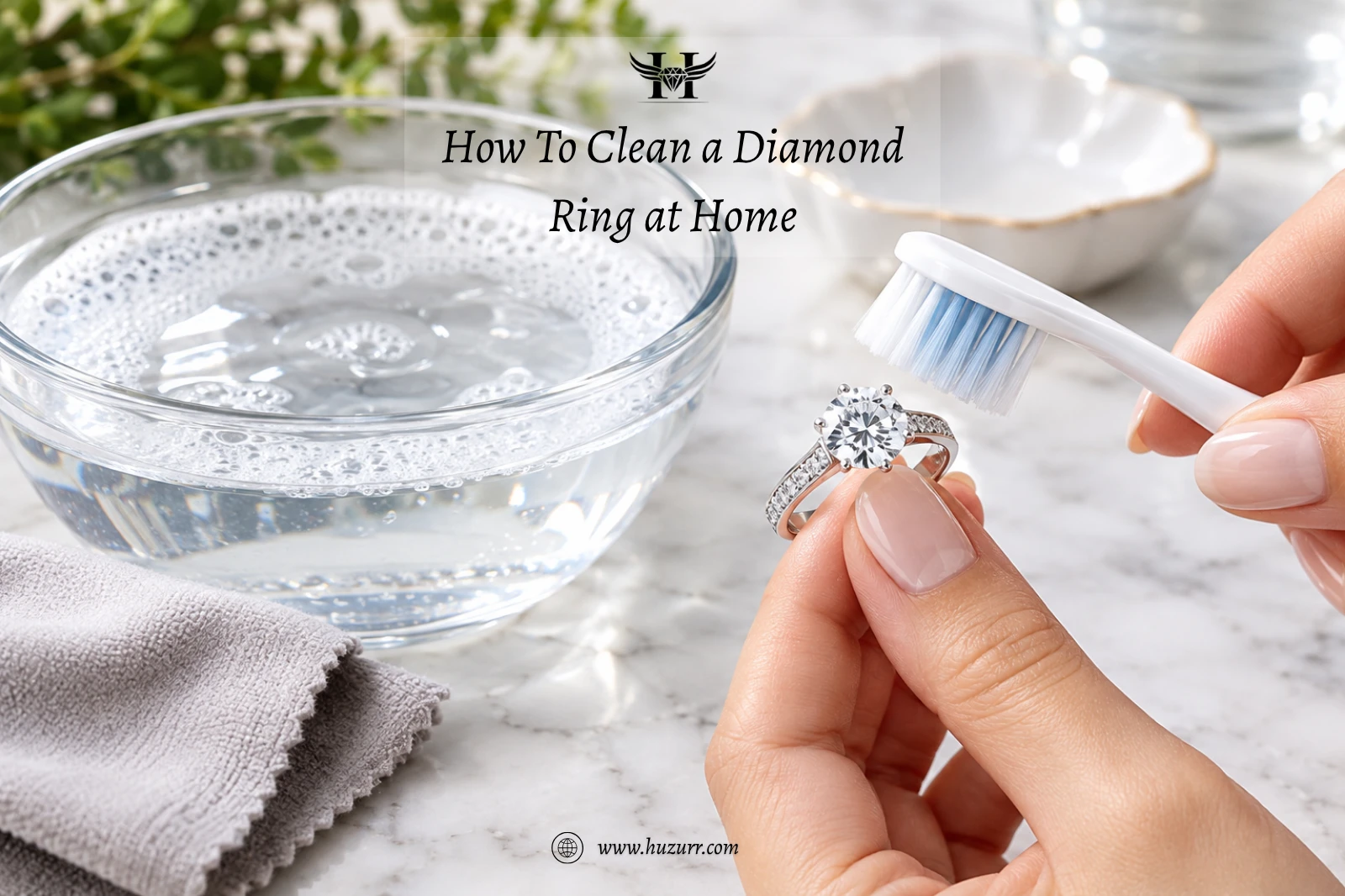
For many gold, platinum, diamond, sapphire, ruby, and moissanite rings, gentle cleaning with lukewarm water, mild dish soap, and a soft brush may be appropriate.
However, one cleaning method does not suit every ring.
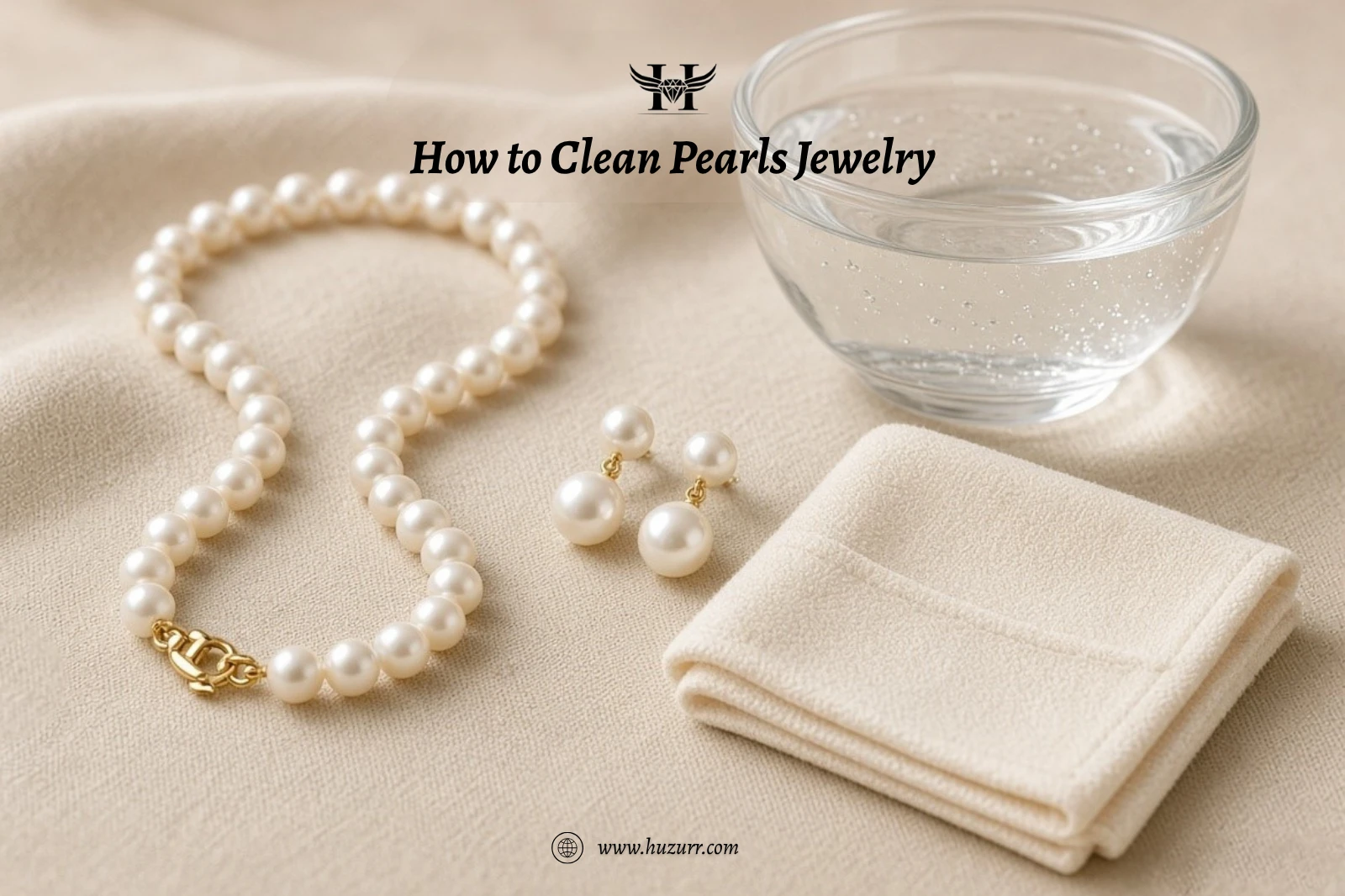
Emerald, tanzanite, pearl, opal, treated gemstones, antique jewelry, glued settings, and heavily included stones may require specialized care.
Diamond Ring Care
Diamonds attract oils, which can reduce visible brilliance. Clean the underside of the stone carefully because buildup often collects beneath the setting.
Never assume that hardness makes a diamond indestructible. A hard impact can chip an exposed edge or damage the setting.
Engagement Ring Care
Have prongs and accent stones checked periodically, especially if the ring is worn every day.
Seek inspection sooner if:
- The center stone moves
- A prong feels sharp
- The ring catches more than usual
- A pavé stone is missing
- The band looks bent
- The setting has taken a hard impact
Platinum Ring Care
Platinum may develop a natural patina. This is not the same as tarnish.
Professional polishing can restore a brighter surface, but repeated polishing removes a small amount of metal. Some wearers prefer to preserve the patina.
Professional Cleaning
Professional inspection is valuable because cleaning alone will not reveal every structural issue.
A jeweler may examine:
- Prongs
- Stone movement
- Band thinning
- Solder joints
- Clasping or guard components
- Surface damage
- Resizing areas
Storage
Store rings separately in fabric-lined compartments or soft pouches. Diamonds and other hard gemstones can scratch softer stones and metals.
Travel Tips
When traveling:
- Carry valuable rings rather than placing them in checked luggage.
- Use a compact jewelry case.
- Photograph the ring before departure.
- Keep purchase and insurance records secure.
- Avoid leaving jewelry loose in hotel rooms.
- Wear a simpler travel ring when appropriate.
Why choose Huzurr for premium rings
Buying a ring is more than selecting a beautiful design—it's about choosing a piece you'll enjoy wearing for years. At Huzurr, every ring is thoughtfully crafted to combine timeless elegance, quality materials, and everyday comfort.
Whether you're celebrating an engagement, wedding, anniversary, birthday, or simply treating yourself, our collections are designed to suit different styles, budgets, and occasions without compromising on craftsmanship.
Why Customers Choose Huzurr
✔ Handcrafted designs inspired by timeless and modern styles
✔ Carefully selected gemstones and quality precious metals
✔ Elegant collections for everyday wear and special occasions
✔ Rings designed with comfort, durability, and lasting beauty in mind
✔ A growing collection of gold, sterling silver, gemstone, and statement rings
10 Common Ring Buying Mistakes (And How to Avoid Them)
The most common ring-buying mistakes involve choosing appearance over lifestyle, guessing the size, ignoring gemstone treatments, misunderstanding metal maintenance, overlooking return terms, and failing to inspect the setting.
Mistakes to Avoid
-
Choosing the largest stone instead of the best overall ring
Size does not compensate for weak cut, poor setting quality, or uncomfortable proportions. -
Guessing the ring size
Resizing may be limited for eternity bands, tension settings, titanium rings, and detailed designs. -
Ignoring the wearer’s routine
A high-set emerald may not suit someone who works with their hands every day. -
Assuming all white metals are the same
White gold, platinum, sterling silver, titanium, and stainless steel differ significantly. -
Not asking about treatments
Heat, fracture filling, oiling, coating, and other treatments can affect care and value. -
Overlooking band width
Wide bands usually feel tighter than narrow bands in the same labeled size. -
Buying without checking the return policy
Customized, engraved, resized, or made-to-order rings may have different terms. -
Skipping certification where it matters
Significant diamonds and valuable gemstones may benefit from independent documentation. -
Cleaning every gemstone the same way
Ultrasonic and steam cleaning are not safe for every stone or setting. -
Forgetting long-term maintenance
Prong tightening, replating, polishing, and professional cleaning may become part of ownership.
Frequently Asked Questions
1. What type of ring is best for everyday wear?
A ring made from 14K gold or platinum with a durable gemstone and secure setting is usually a strong choice for everyday wear. Diamond, sapphire, ruby, and moissanite are generally more practical than softer or impact-sensitive stones. Lifestyle should guide the final decision.
2. Is gold or sterling silver better for rings?
Gold is usually better for long-term daily wear, milestone jewelry, and higher-value purchases. Sterling silver is better for affordable fashion, gifting, and occasional wear. Silver requires more tarnish care, while gold generally offers greater durability and long-term repairability.
3. What ring setting is the most secure?
A full bezel is among the most protective settings because metal surrounds the gemstone’s edge. Six-prong settings can also provide strong security for round stones. The best setting depends on stone shape, size, craftsmanship, and the wearer’s daily activities.
4. Which gemstones are best for engagement rings?
Diamond, sapphire, ruby, and moissanite are popular engagement-ring choices because they combine beauty with strong durability. Emerald and tanzanite can also be used, but they require greater care and a protective setting.
5. How should a ring fit?
A ring should slide over the knuckle with slight resistance and sit comfortably without spinning excessively. It should not leave a deep mark, cause numbness, or feel at risk of slipping off. Wide bands may require a slightly larger size.
6. Can all rings be resized?
No. Plain gold and platinum bands are often resizable, but the range varies by design. Eternity bands, tension settings, titanium rings, stainless steel rings, and heavily detailed designs may be difficult or impossible to resize.
7. How often should an engagement ring be professionally checked?
A frequently worn engagement ring should be inspected periodically and immediately after a strong impact. The ideal schedule depends on the setting, metal, and wearer’s routine. Pavé rings and exposed prong settings may require closer attention.
8. Can I clean my ring with toothpaste?
Toothpaste is not recommended for most rings. Its abrasive ingredients can scratch metal and damage finishes. Use a gemstone-appropriate cleaning method, mild soap when suitable, or professional jewelry cleaning.
9. What does comfort fit mean?
A comfort-fit ring has a gently rounded interior rather than a completely flat inner surface. This shape can reduce pressure and make wider bands easier to slide over the knuckle. Comfort-fit sizing may differ slightly from standard-fit sizing.
10. Is a ring a good jewelry investment?
A ring should usually be purchased for wear and meaning rather than guaranteed financial return. Precious metals, important gemstones, craftsmanship, condition, rarity, documentation, and market demand may support value, but resale prices can differ from retail prices.
Conclusion
The perfect ring is not simply the most expensive design or the largest gemstone. It is the ring that fits the wearer’s hand, lifestyle, taste, occasion, and expectations.
Use this ring guide to compare ring types, materials, styles, gemstone options, settings, sizing, and care before making a decision. Pay attention to the details that are easy to overlook: setting height, band width, treatment disclosure, resizing limits, comfort, and long-term maintenance.
A carefully chosen ring should feel beautiful in the display box, comfortable on the hand, and appropriate for the life of the person wearing it.
Key Takeaways
- Choose the ring type according to the occasion and meaning.
- Match the setting and gemstone to the wearer’s lifestyle.
- Use 14K gold or platinum when daily-wear durability is a priority.
- Consider sterling silver for affordable fashion and occasional jewelry.
- Measure ring size several times before ordering.
- Ask about gemstone origin, treatment, and certification.
- Review resizing, return, and maintenance policies.
- Clean each gemstone according to its specific care needs.
- Inspect frequently worn rings for loose stones or damaged prongs.
- Prioritize comfort and craftsmanship over size alone.