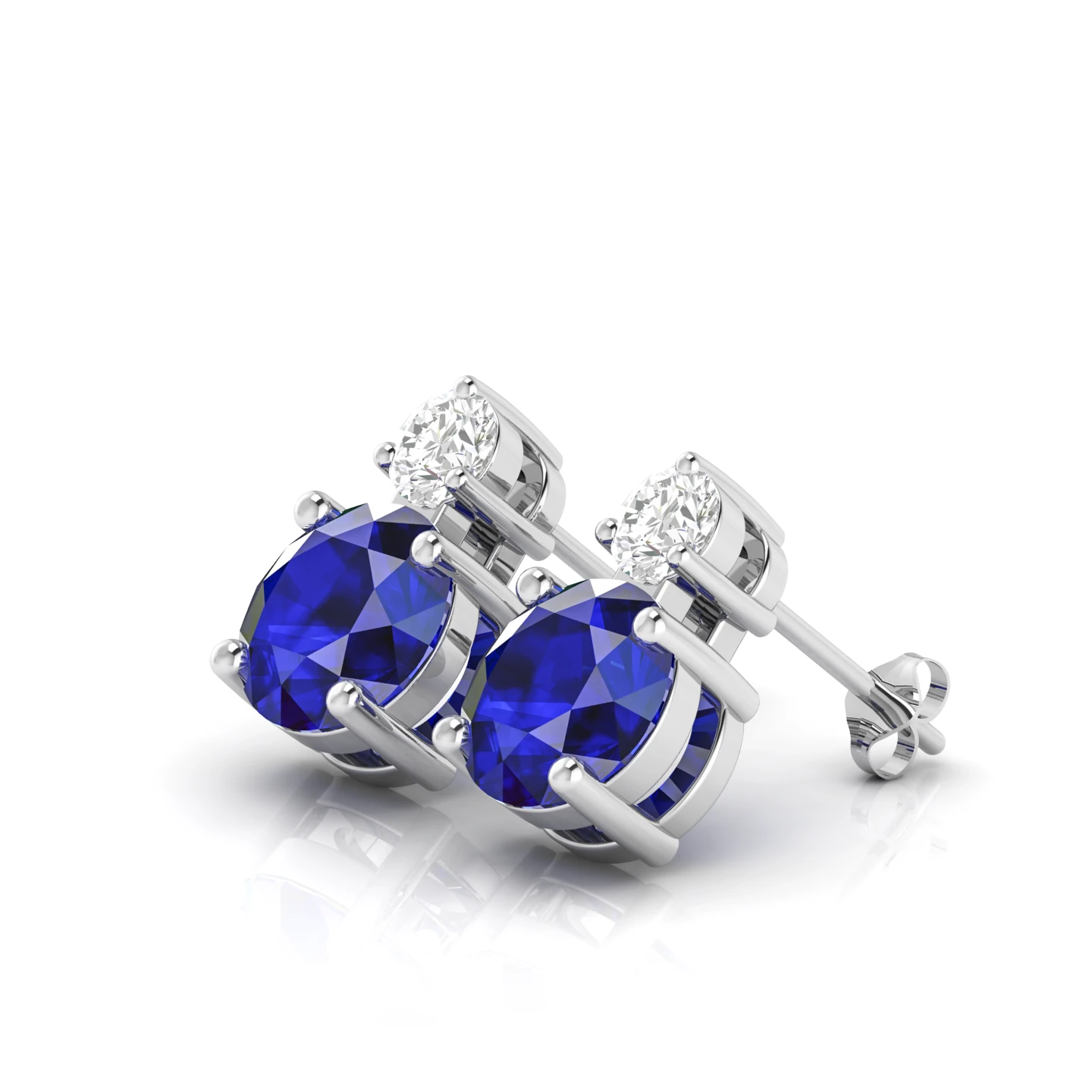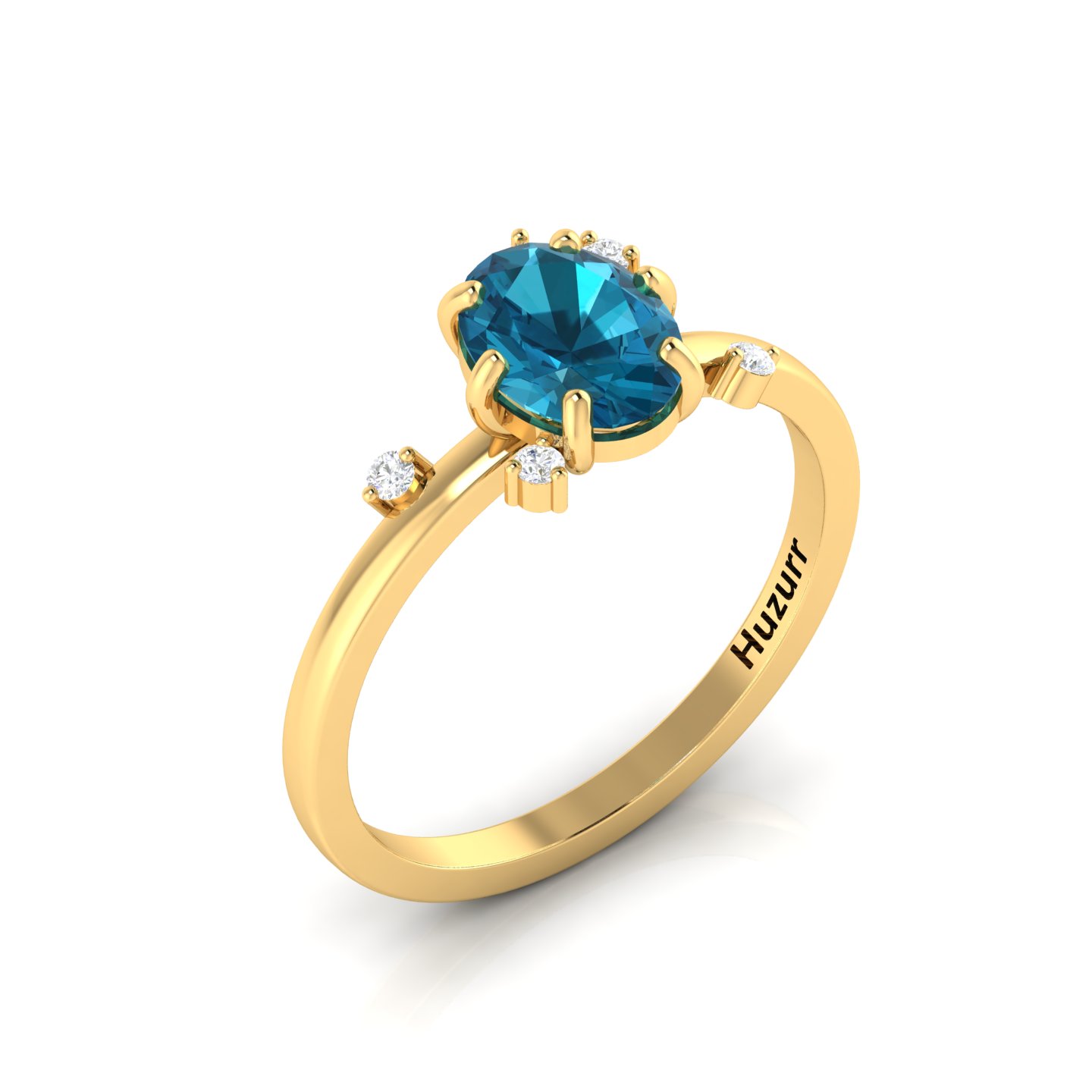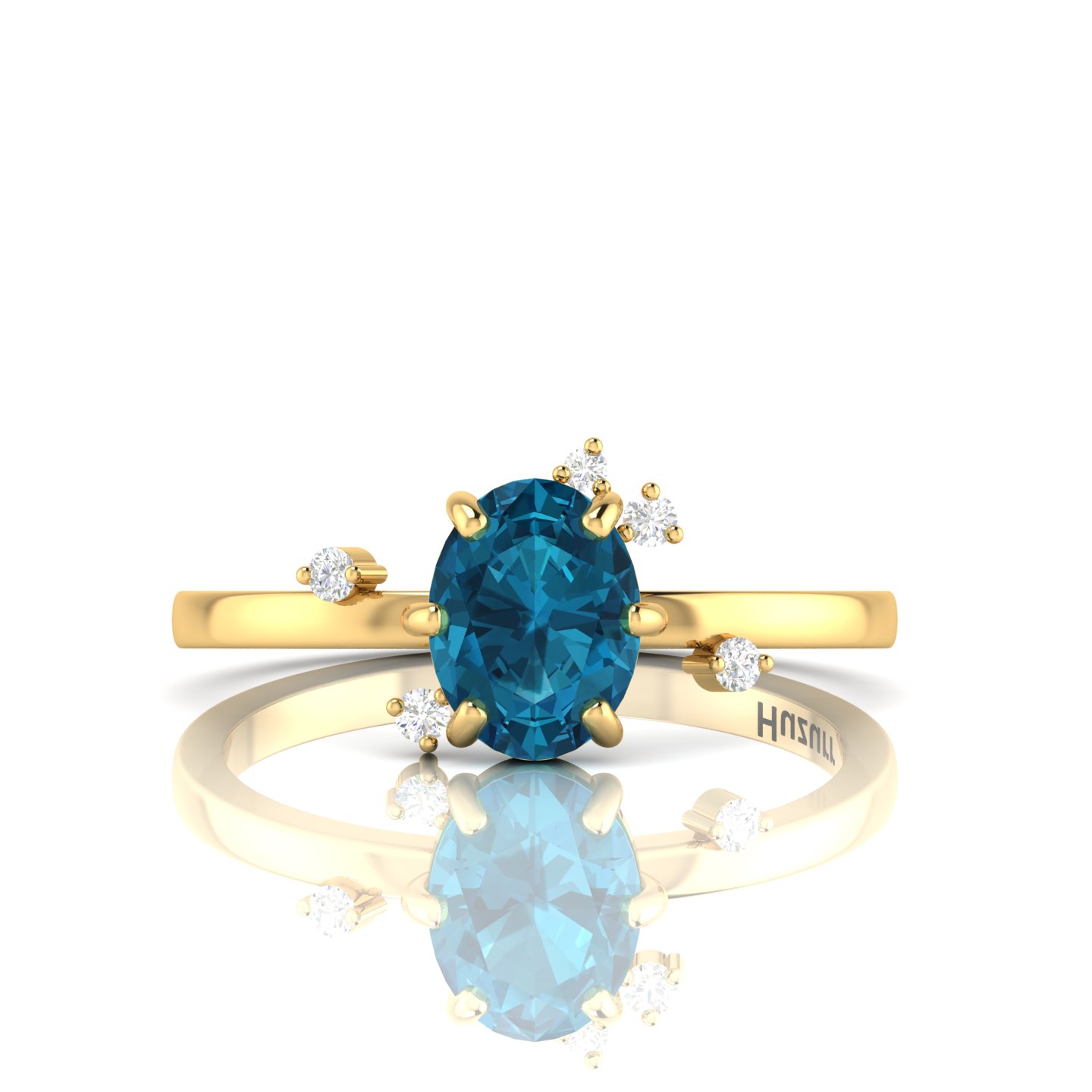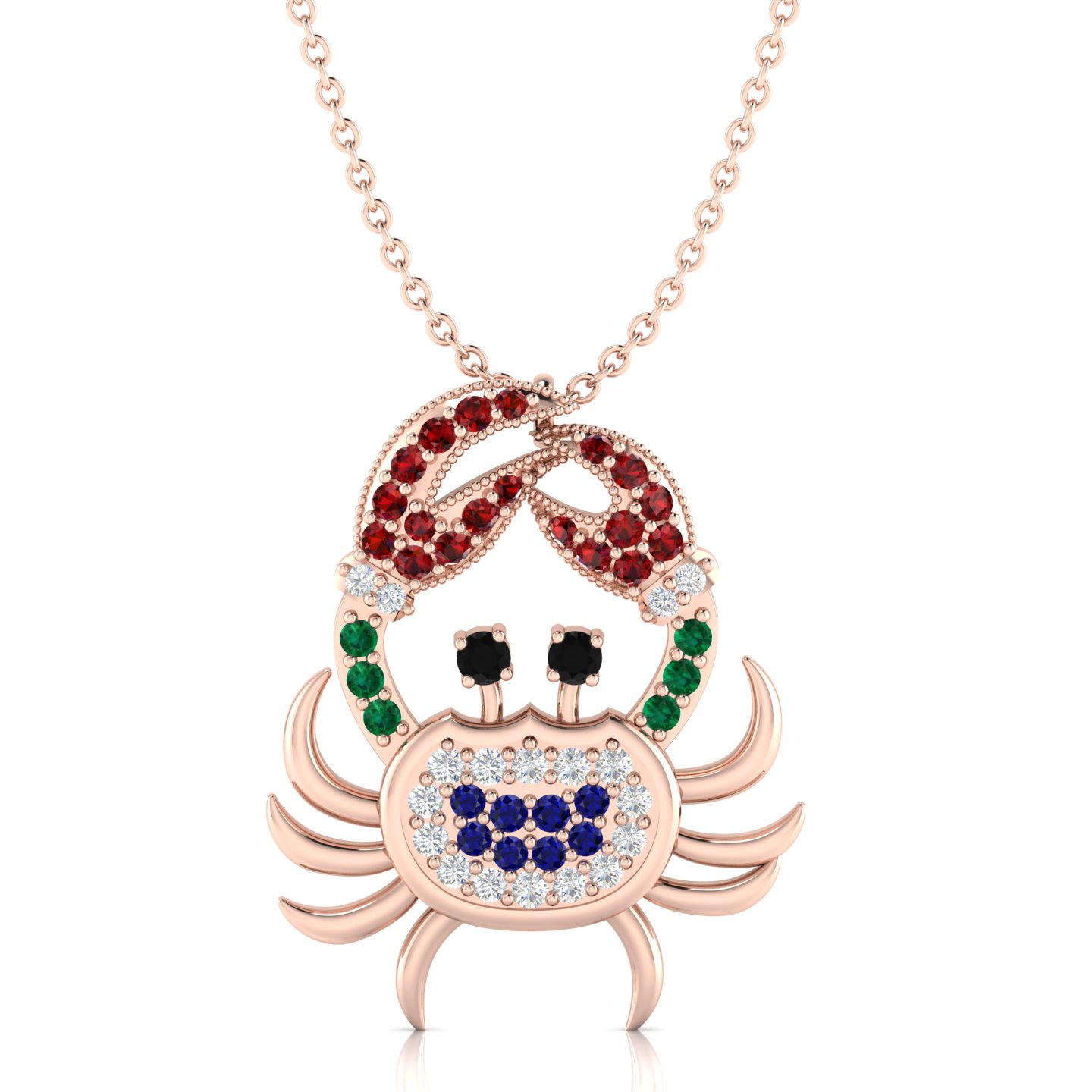
A deep blue sapphire catches your eye first. Then you notice an aquamarine with the exact soft-blue shade you love.
One is traditionally called precious. The other is called semi-precious.
Does that automatically make the sapphire better?
Not at all.
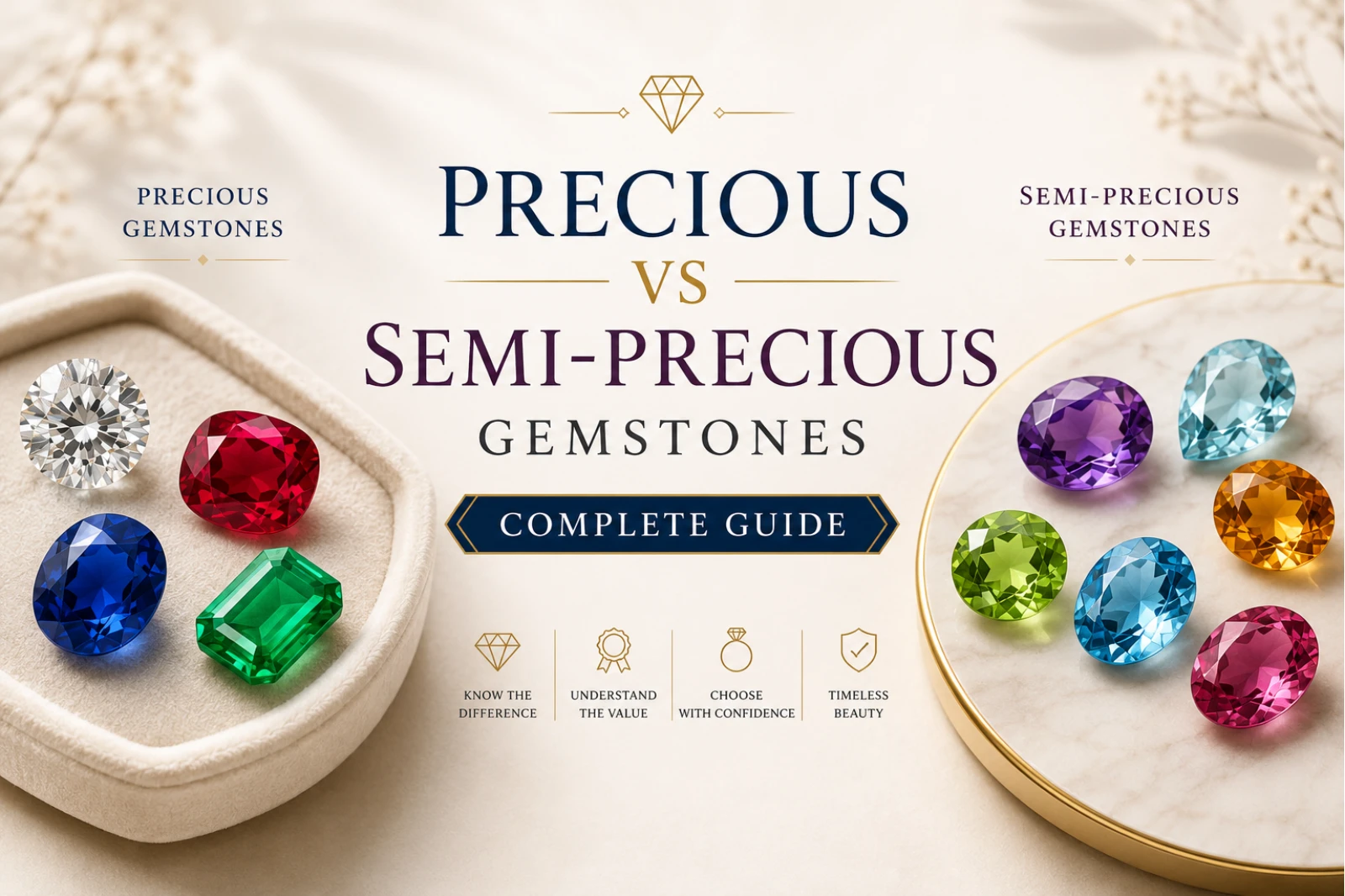
When you compare precious vs semi-precious gemstones, the label tells only a small part of the story. Color, rarity, quality, size, treatment, durability, origin, and personal meaning can matter far more when you are choosing jewelry you will actually wear.
And that is where gemstone shopping becomes interesting.
A ruby may bring old-Hollywood drama to an evening ring. Emerald can give your jewelry unmistakable richness. Amethyst can add regal purple color without demanding the same budget, while aquamarine jewelry creates the soft elegance of a clear spring sky.
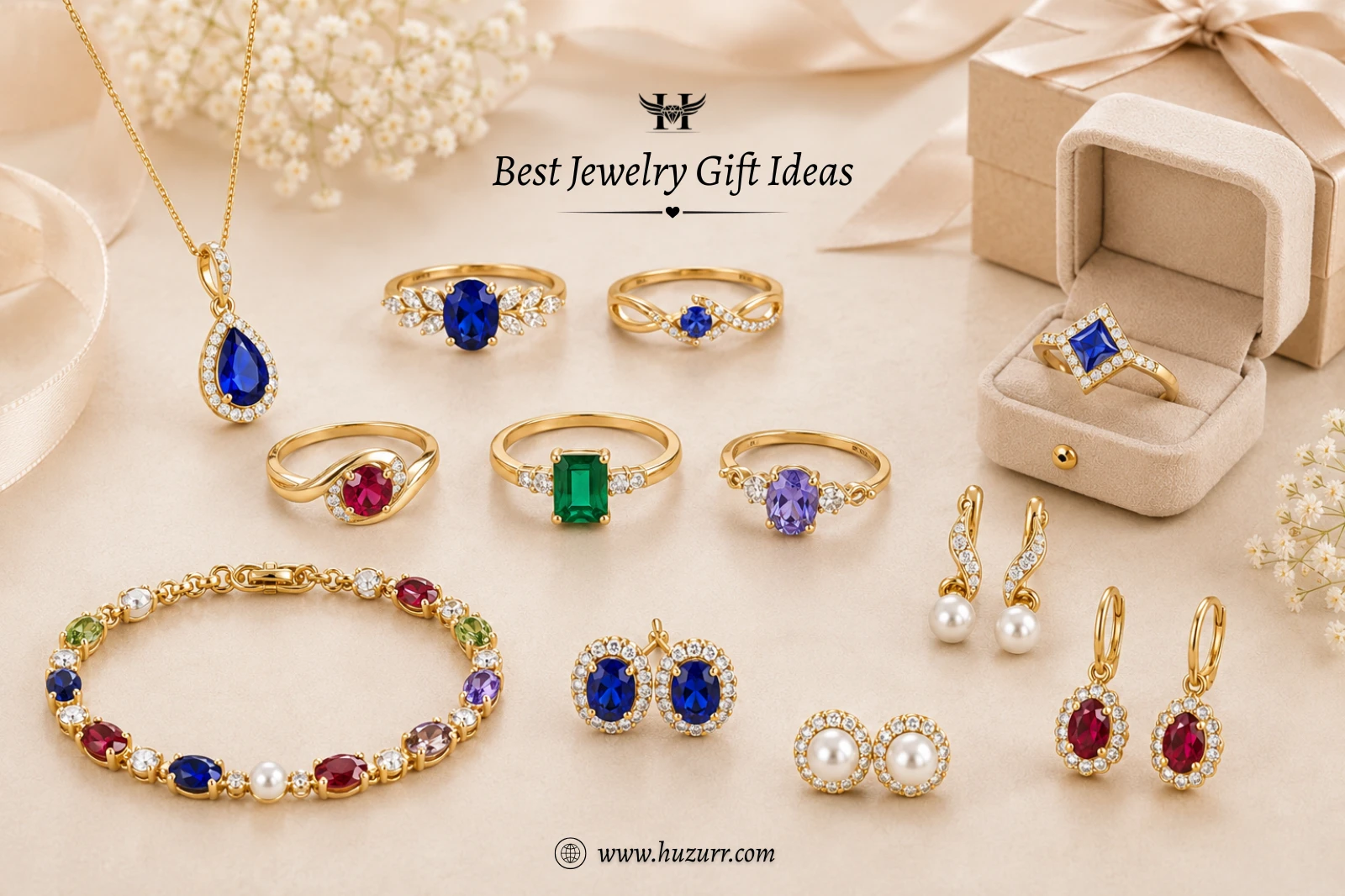
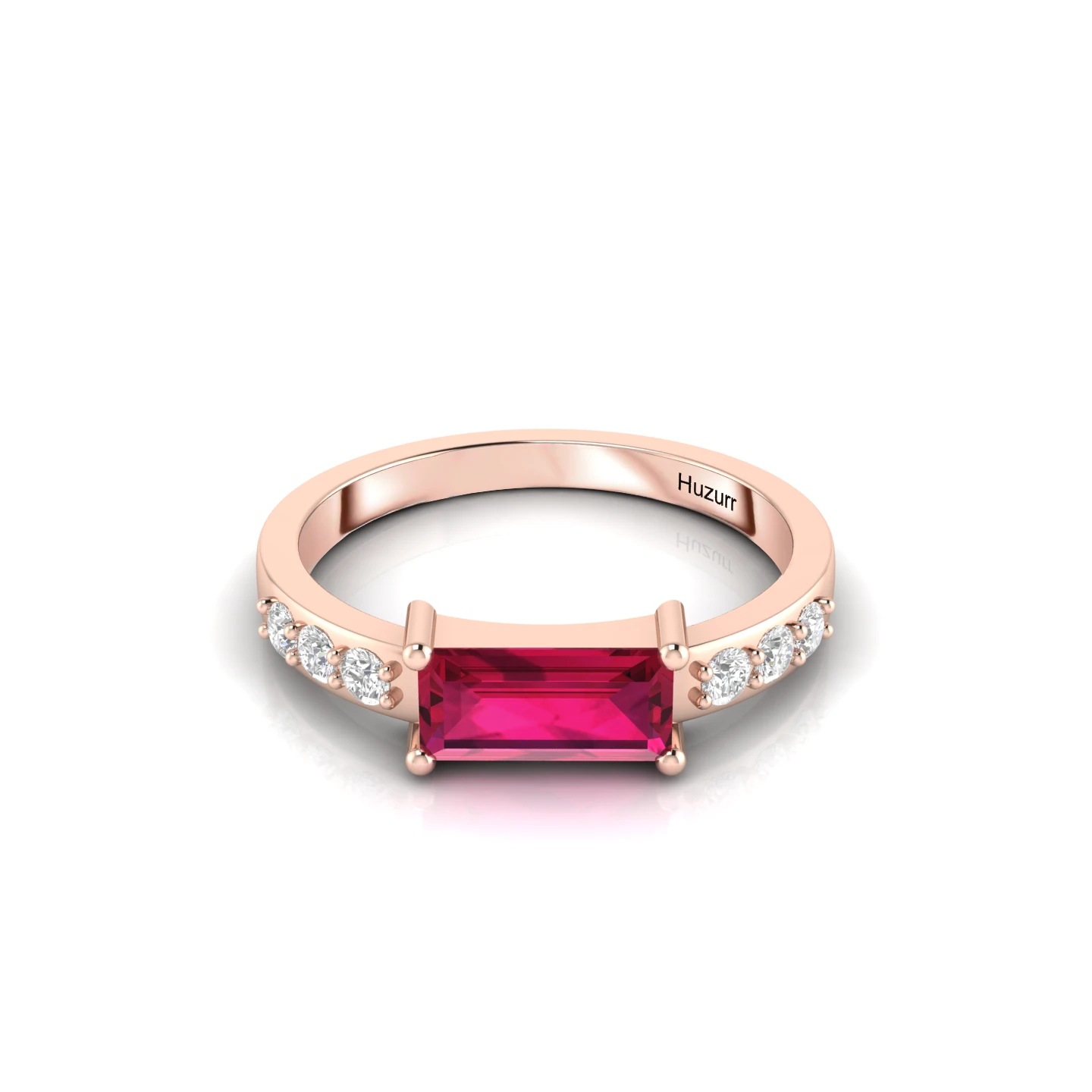
At Huzurr, gemstone jewelry currently includes options such as blue sapphire, emerald, ruby, amethyst, garnet, opal, aquamarine, morganite, London blue topaz, and peridot across rings, earrings, necklaces, bracelets, and customized pieces.
The question is not simply, “Which category is more expensive?”
The better question is:
Which gemstone belongs in your jewelry box?
Quick Answer: Precious vs Semi-Precious Gemstones
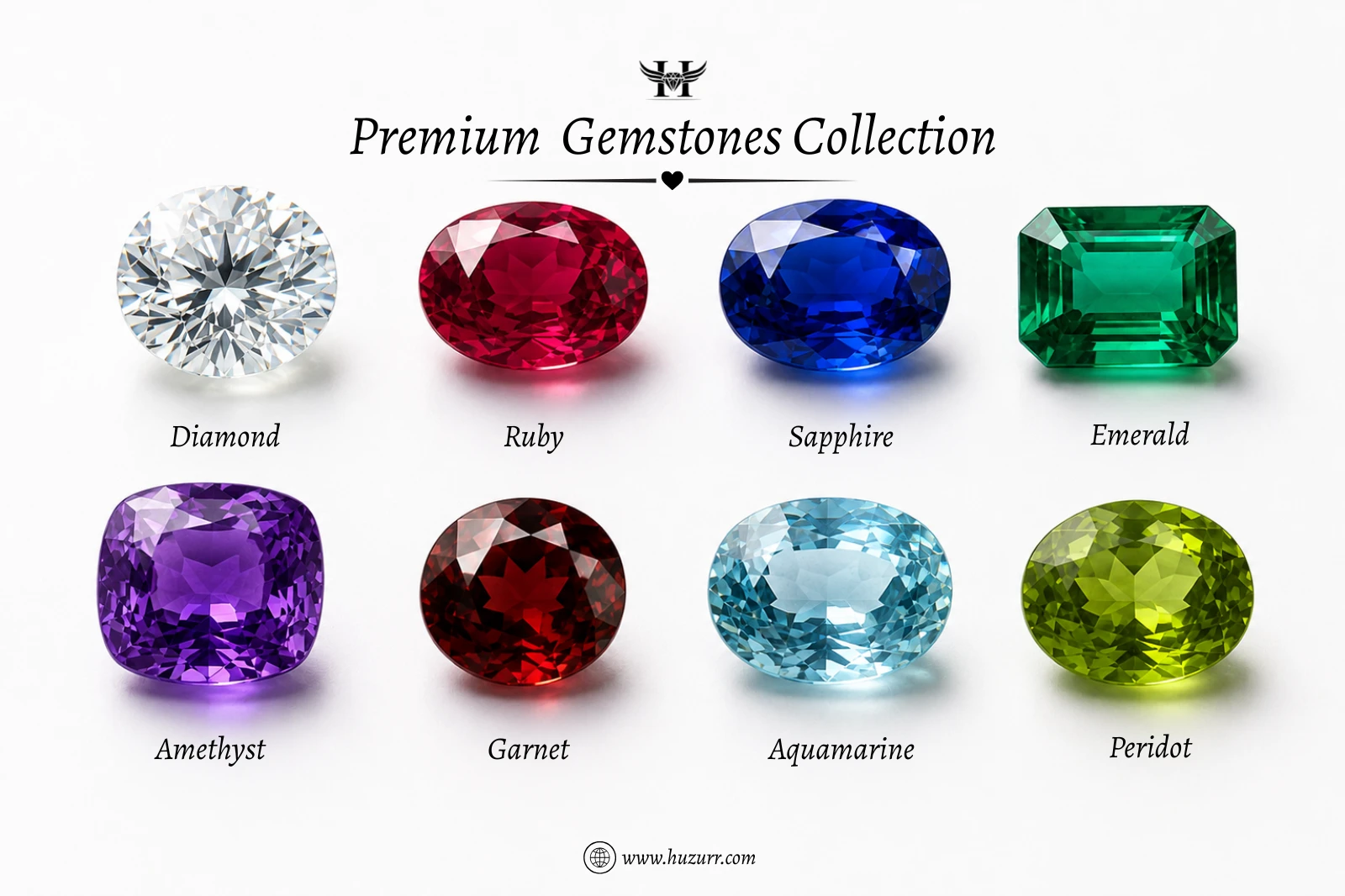
Traditionally, diamond, ruby, sapphire, and emerald jewelry are known as precious gemstones. Stones such as amethyst, aquamarine, garnet, topaz, peridot, tourmaline, citrine, opal, and many others are commonly called semi-precious gemstones.
But “semi-precious” does not mean low quality or inexpensive. An exceptionally rare gemstone from the semi-precious category can be more valuable than a lower-quality precious stone.
When buying gemstone jewelry, compare the actual gemstone's color, rarity, clarity, size, cut, durability, treatments, and overall beauty rather than judging it only by its traditional category.
What Are Precious Gemstones? Meaning, Types & Characteristics
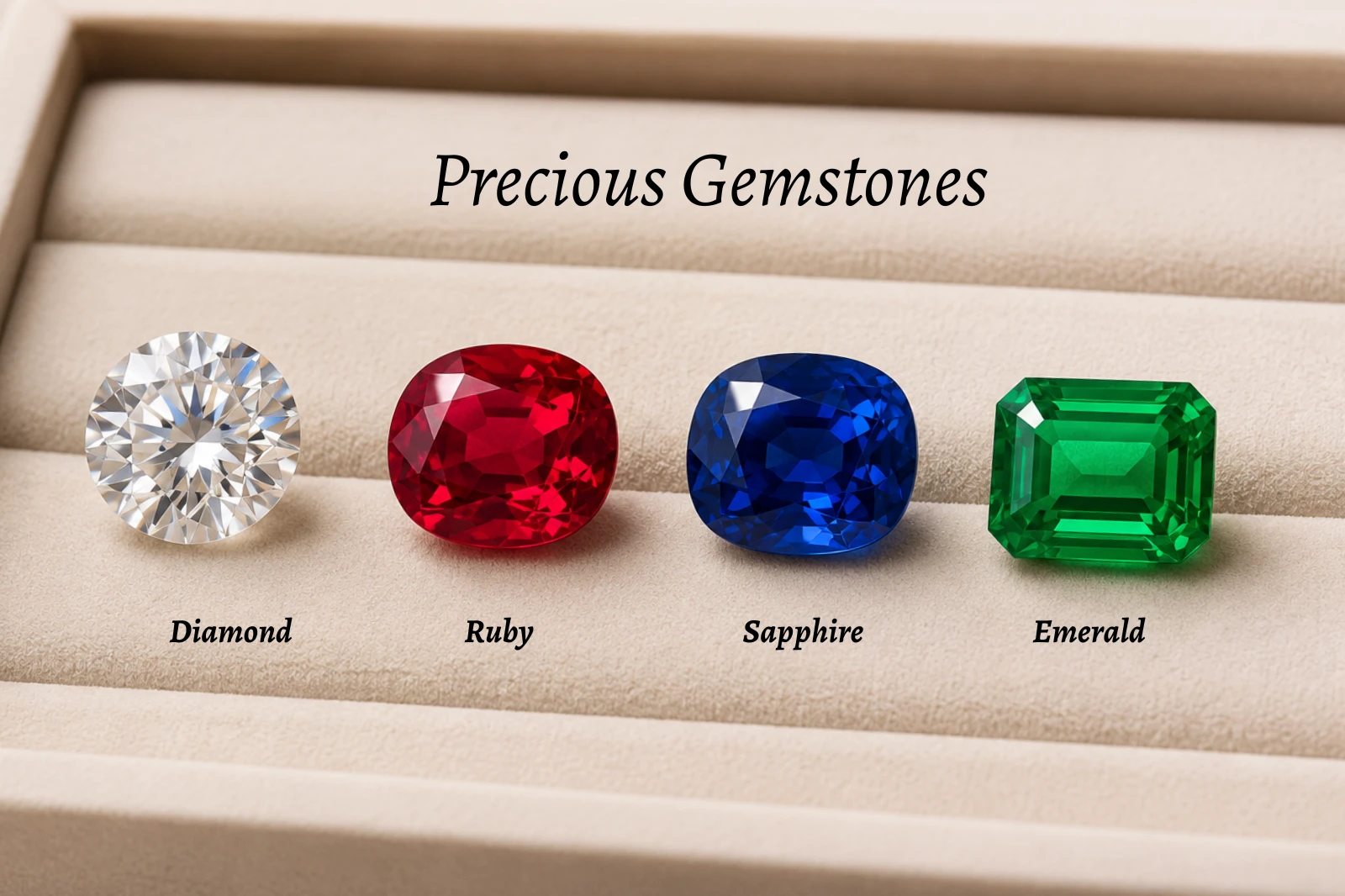
Traditionally, four stones have carried the title of precious gemstones:
- Diamond
- Ruby
- Sapphire
- Emerald
Their reputation comes from centuries of rarity, beauty, cultural importance, and demand in fine jewelry.
Think of a sapphire engagement ring, an emerald statement necklace, a ruby anniversary ring, or the classic diamond solitaire.
These stones have become visual symbols of luxury.
But the word “precious” should not make you assume that every ruby, emerald, sapphire, or diamond is automatically rare or highly valuable.
Quality still matters.
A beautifully colored, well-cut gemstone with desirable characteristics will generally be more compelling than a poor specimen that happens to belong to a famous category.
Diamond
Diamond is prized for brilliance and exceptional resistance to scratching.
On the Mohs hardness scale, diamond ranks 10, the highest rating. However, GIA notes that hardness is only one part of durability; toughness and stability also matter. A diamond can still chip or fracture after a hard impact.
For jewelry you plan to wear often, especially rings, that scratch resistance is one reason diamond remains so attractive.
Ruby
Ruby brings one of the strongest colors in fine jewelry: red.
It can feel romantic, bold, confident, and luxurious all at once.
A ruby ring is especially beautiful when you want jewelry that says more than “classic.” It gives the piece personality.
Sapphire
You may picture royal blue first, but sapphire belongs to a broader family of colors.
For shoppers drawn to timeless blue sapphire jewelry, however, a rich blue sapphire remains difficult to ignore.
Huzurr currently features blue sapphire among the gemstone choices available across its jewelry offering.
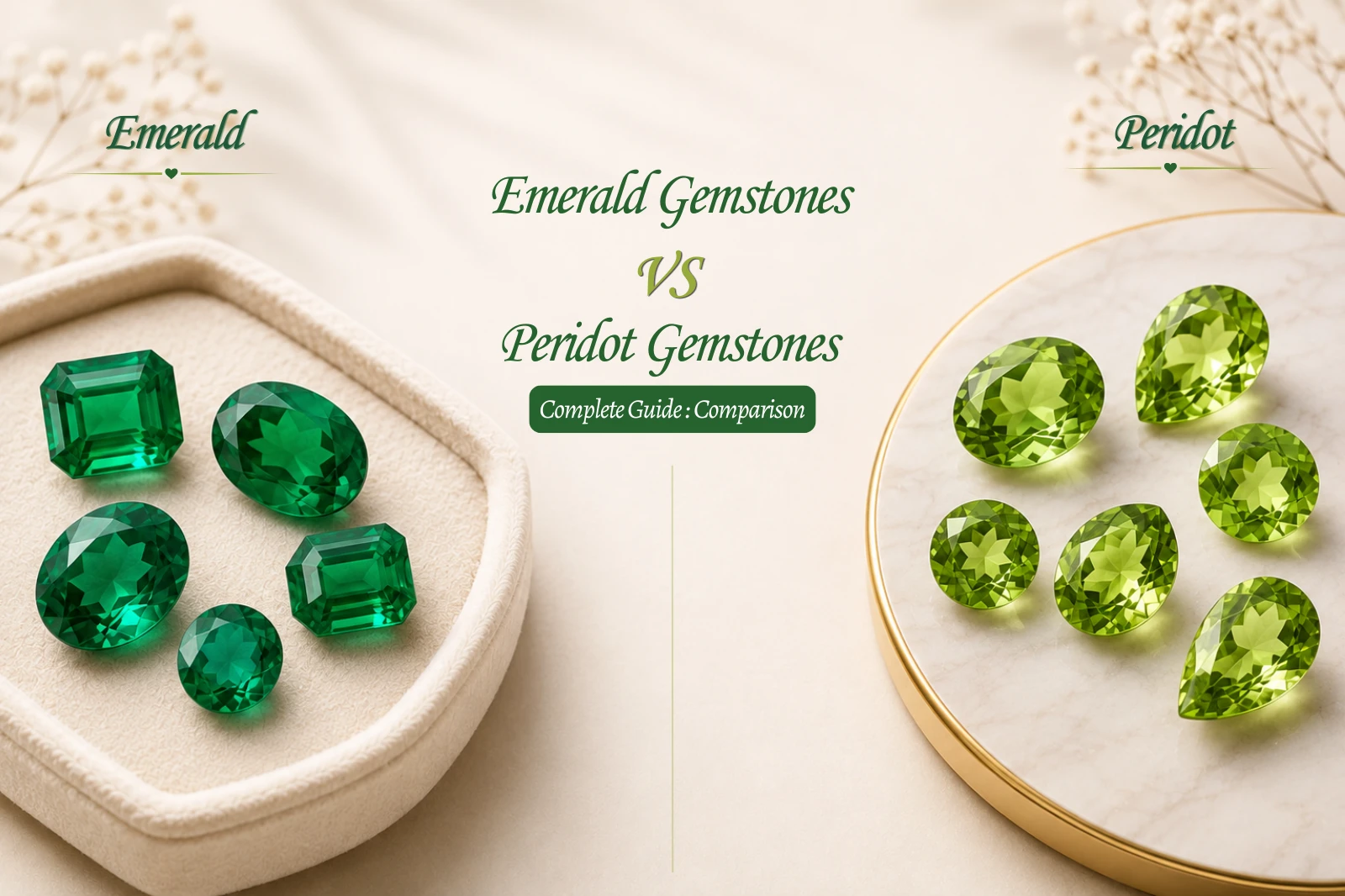
Emerald
Emerald has a completely different kind of luxury.
Its rich green color can feel vintage, dramatic, and sophisticated.
It is the stone you might picture with an elegant evening dress, a meaningful anniversary gift, or jewelry inspired by classic Hollywood glamour.
What Are Semi-Precious Gemstones?
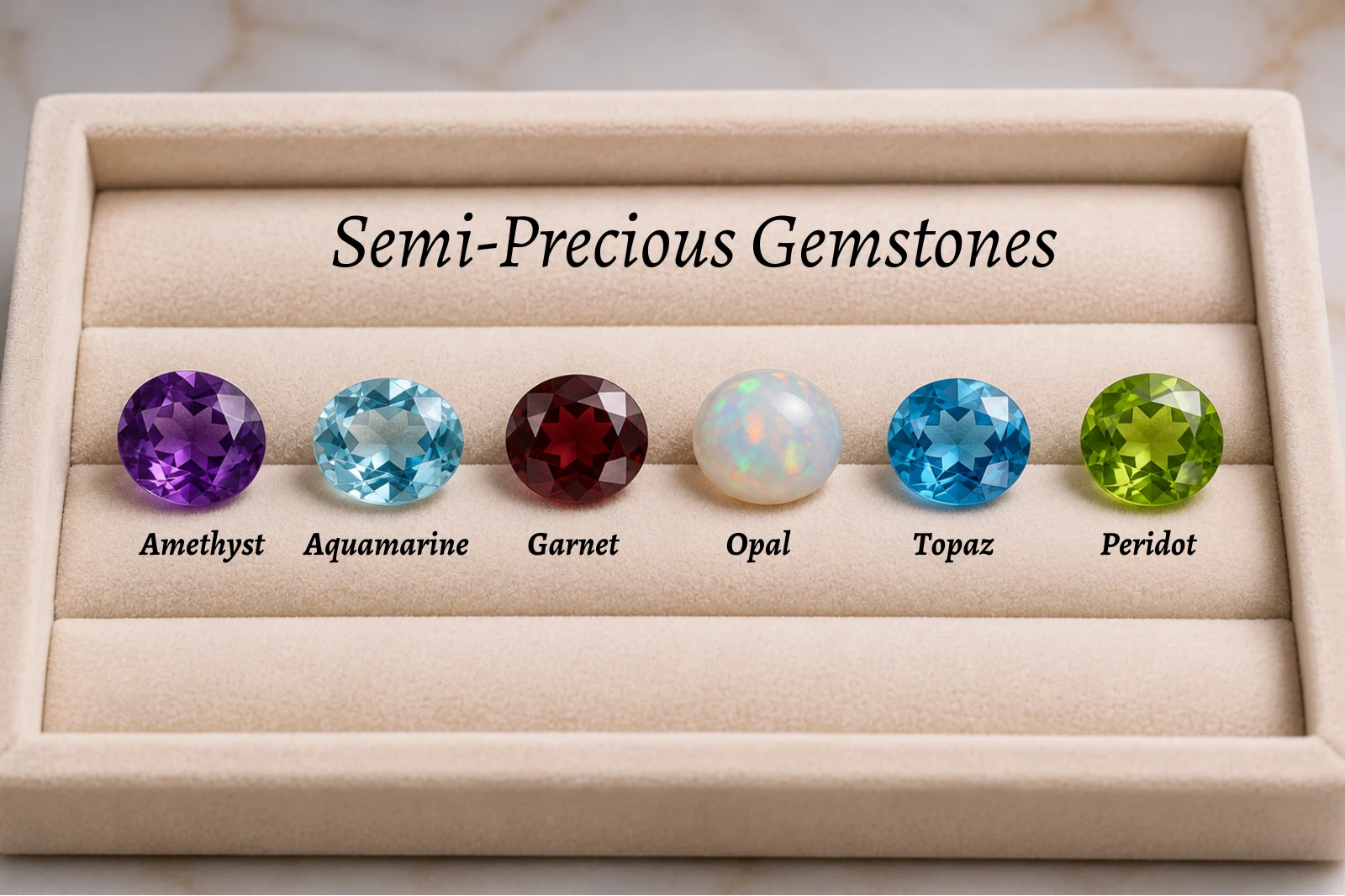
Now step into the more colorful side of the showroom.
Semi-precious gemstones include a much wider family of stones, offering everything from soft pink and sky blue to intense purple, fiery orange, and deep green.
Common examples include:
- Amethyst
- Aquamarine
- Garnet
- Citrine
- Topaz
- Peridot
- Tourmaline
- Morganite
- Tanzanite
- Opal
And this is exactly why the term “semi-precious” can be misleading.
There is nothing “half luxurious” about a beautiful gemstone simply because it is outside the traditional four.
Amethyst
If you love purple, amethyst gives you color that can range from delicate lavender to richer violet.
It works beautifully in rings, necklaces, earrings, and gifts because the color feels distinctive without becoming difficult to style.
Aquamarine
Aquamarine gives you a lighter, softer blue than traditional blue sapphire.
Its calm color works especially well with elegant everyday jewelry and romantic gifts.
Huzurr currently lists aquamarine among the gemstones available within its jewelry assortment.
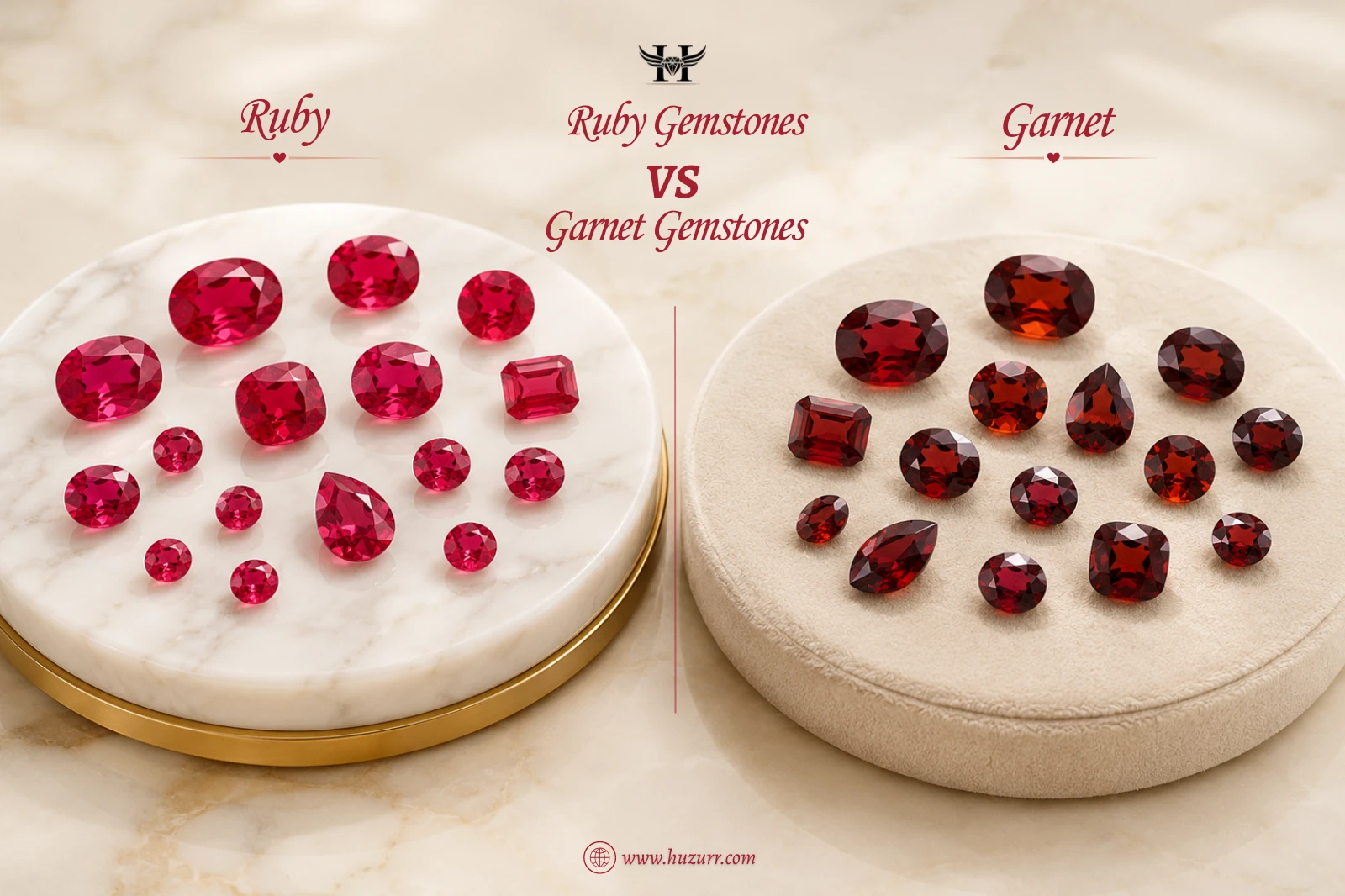
Garnet
Garnet is perfect when you want warmth and depth.
Its red tones can make a piece feel dramatic without looking overly formal.
Morganite
Morganite appeals to you if your style leans romantic.
Its soft pink appearance pairs naturally with feminine designs and warm-toned metals.
London Blue Topaz
London blue topaz jewelry offers a darker, striking blue.
It can give your jewelry the sophisticated color presence of a statement stone while keeping the overall look modern.
Peridot
Peridot brings a lively green that feels completely different from emerald.
Where emerald may feel deep and formal, peridot can feel fresh, bright, and playful.
Opal
Opal does something few gemstones can imitate.
Instead of one simple color, many opals display shifting color effects that make the stone feel different whenever the light changes.
Huzurr's current gemstone assortment includes several of these stones, including opal, aquamarine, amethyst, garnet, morganite, London blue topaz, and peridot.
Precious vs Semi-Precious Gemstones: What Is the Real Difference?
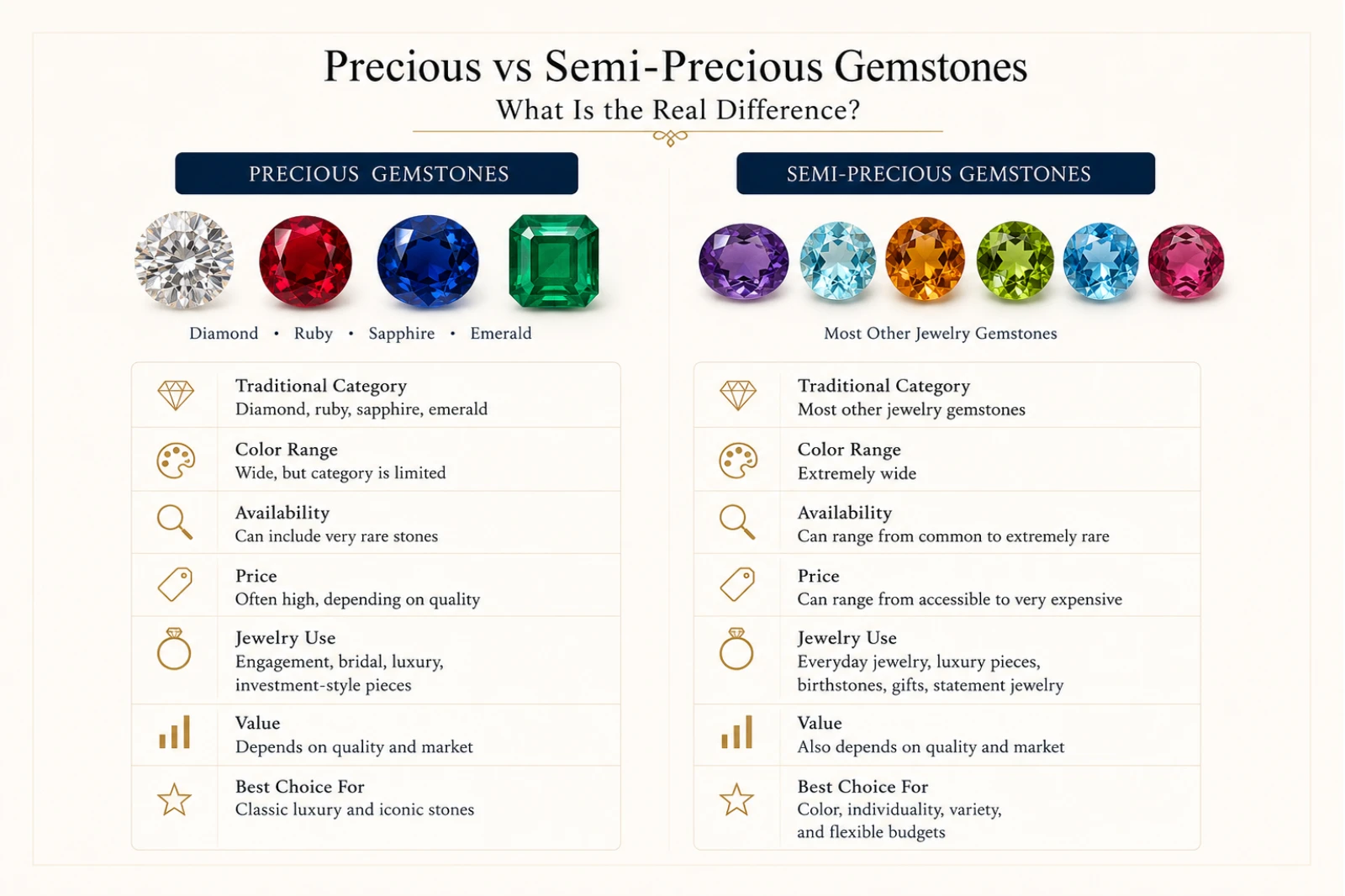
Here is the easiest way to compare them.
|
Feature |
Precious Gemstones |
Semi-Precious Gemstones |
|
Traditional Category |
Diamond, ruby, sapphire, emerald |
Most other jewelry gemstones |
|
Color Range |
Wide, but category is limited |
Extremely wide |
|
Availability |
Can include very rare stones |
Can range from common to extremely rare |
|
Price |
Often high, depending on quality |
Can range from accessible to very expensive |
|
Jewelry Use |
Engagement, bridal, luxury, investment-style pieces |
Everyday jewelry, luxury pieces, birthstones, gifts, statement jewelry |
|
Value |
Depends on quality and market |
Also depends on quality and market |
|
Best Choice For |
Classic luxury and iconic stones |
Color, individuality, variety, and flexible budgets |
The biggest takeaway?
Precious does not always mean better. Semi-precious does not always mean cheaper.
Jewelry value is far more nuanced.
An unusually rare, beautiful, high-quality stone from outside the traditional precious category can command serious value.
A poorly colored or heavily compromised gemstone from the precious category may be much less desirable.
Pro Tip: Shop the gemstone, not the label.
Are Semi-Precious Gemstones Less Valuable Than Precious Stones?
This is one of the most common buying misconceptions.
The word “semi” sounds like it should mean lower quality.
It does not.
Gemstone value depends on several characteristics working together.
Rarity
A gemstone that is difficult to find in desirable quality may command much more attention than one that is widely available.
Rarity can also change by size, location, color, and quality.
Color
Color is often one of the first things you notice.
Ask yourself:
Is the color rich?
Does it look evenly distributed?
Does it have the tone you personally love?
An expensive gemstone you do not enjoy looking at is not the right purchase for you.
Cut
A good cut helps a gemstone display its color and beauty.
The proportions should make the stone feel balanced rather than dull, overly dark, or visually awkward.
Clarity
Different gemstones have different natural characteristics.
Do not compare every stone using the same expectations you would use for a diamond.
Some gemstones commonly contain visible natural features, while others may be valued more when they appear cleaner.
Size
Larger high-quality gemstones can become significantly harder to find.
But larger does not automatically mean better.
A smaller stone with exceptional color can easily feel more luxurious than a larger stone with weak visual appeal.
Origin and Treatment
Where a gemstone comes from and whether it has been treated can affect desirability and price.
For an important fine jewelry purchase, review the product description and available gemstone disclosures instead of relying only on appearance.
Complete List of Precious Gemstones
For traditional jewelry terminology, the core precious gemstones list is simple:
1. Diamond
Best known for brilliance, prestige, and exceptional scratch resistance.
2. Ruby
Known for rich red color and strong romantic appeal.
3. Sapphire
Most famous in blue, with an elegant look suited to bridal and fine jewelry.
4. Emerald
Known for luxurious green color and unmistakable visual character.
These four stones dominate many traditional luxury jewelry conversations.
But your perfect jewelry may easily sit outside this list.
Complete List of Semi-Precious Gemstones
A semi-precious gemstones list is much broader.
Popular choices include:
|
Gemstone |
Signature Look |
Beautiful For |
|
Amethyst |
Purple |
Birthdays, rings, statement jewelry |
|
Aquamarine |
Pale blue |
Elegant gifts, earrings, necklaces |
|
Garnet |
Rich red |
Romantic and vintage-inspired jewelry |
|
Topaz |
Multiple colors |
Statement and everyday jewelry |
|
Citrine |
Yellow-golden |
Warm, cheerful pieces |
|
Peridot |
Bright green |
Colorful everyday jewelry |
|
Morganite |
Soft pink |
Romantic rings and gifts |
|
Tanzanite |
Blue-violet |
Distinctive luxury jewelry |
|
Tourmaline |
Wide color range |
Individual and artistic designs |
|
Opal |
Play-of-color |
Unique statement jewelry |
The wider range makes semi-precious gemstones especially exciting when you want your jewelry to feel personal.
You are not limited to one definition of luxury.
Best Gemstones for Everyday Jewelry: What Should You Choose?
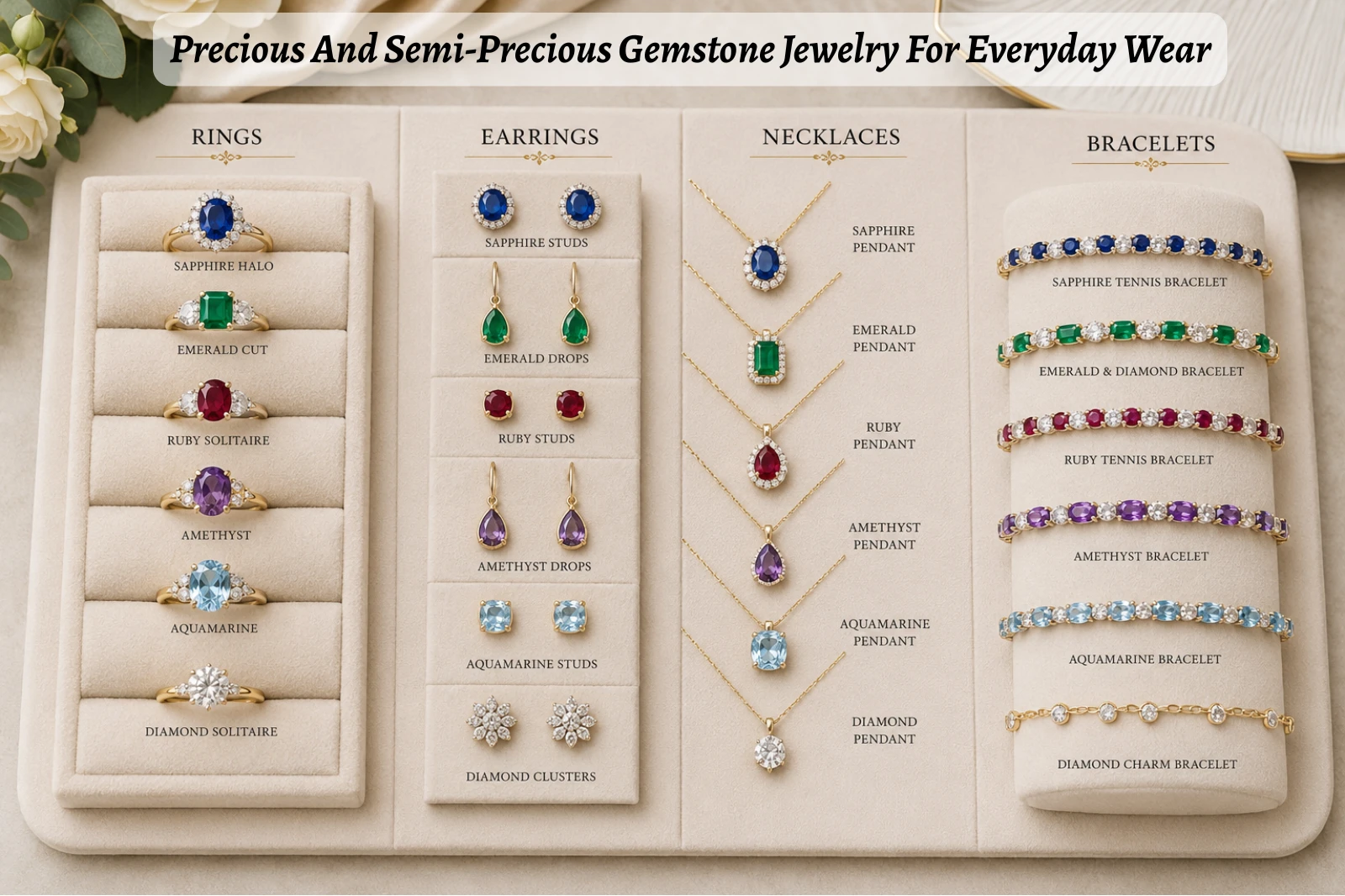
This is where a luxury jewelry consultant should ask more than:
“Which color do you like?”
You also need to think about how you plan to wear the piece.
GIA explains that gemstone durability involves three separate factors:
- Hardness: resistance to scratches and abrasion
- Toughness: resistance to breaking and chipping
- Stability: how well the gem handles heat, light, chemicals, and environmental conditions
This matters most for rings.
A ring lives on your hand.
It can touch desks, doors, bags, countertops, and everything else your hands interact with during the day.
Earrings and necklaces often experience less direct impact.
Pro Tip: A gemstone that works beautifully in earrings may need more thoughtful care when worn in an everyday ring.
GIA also notes that the Mohs scale measures scratch hardness on a relative scale rather than overall durability. Diamond ranks 10, corundum—the mineral family of ruby and sapphire—ranks 9, topaz 8, and quartz 7.
That does not mean you cannot wear softer stones.
It simply means your lifestyle should influence your jewelry choice.
How to Choose Between Precious and Semi-Precious Gemstone Jewelry
Imagine you are standing in front of a glass jewelry case.
You already know every gemstone is beautiful.
Now narrow the choice.
1. Start With Color
Forget the category for a moment.
Which color makes you look twice?
Perhaps you love sapphire blue.
Maybe emerald green feels more like you.
Or perhaps the soft pink of morganite feels more romantic than either.
Begin there.
Jewelry should create an emotional reaction before it becomes a technical decision.
2. Decide How Often You Will Wear It
For daily rings, durability deserves more attention.
For occasional necklaces, cocktail rings, or earrings, you may have greater freedom to choose a delicate or unusual stone.
3. Match the Gemstone to Your Personality
For Classic Luxury
Consider:
- Diamond
- Sapphire
- Ruby
- Emerald
These are strong choices when your wardrobe favors clean tailoring, timeless jewelry, and sophisticated styling.
For Soft Romance
Consider:
- Morganite
- Aquamarine
- Amethyst
Imagine Valentine's Day, date night, an anniversary dinner, or a meaningful birthday gift.
For Bold Color
Consider:
- Garnet
- London blue topaz
- Peridot
- Opal
These stones are ideal when jewelry is part of how you express yourself.
4. Set a Comfortable Budget
Do not assume luxury begins only when you buy one of the four precious gemstones.
A thoughtfully designed piece with a beautiful gemstone can feel far more special than an expensive piece chosen simply for status.
Use your budget to prioritize:
- The gemstone you genuinely love
- A design you will wear
- Quality materials
- Strong craftsmanship
- Appropriate size
- A trustworthy seller
5. Think About the Occasion
Different pieces tell different stories.
A sapphire ring may feel right for a milestone anniversary.
Aquamarine earrings may become the perfect birthday gift.
An emerald pendant can transform a Christmas gift into something memorable.
And an amethyst ring may become your favorite piece simply because the color feels like you.
Best Gemstones for Rings: Durable & Beautiful Choices
Rings place gemstones directly into your everyday life.
For that reason, design and durability should work together.
Diamond Rings
A natural choice for engagement jewelry and classic fine jewelry.
Choose diamond when brilliance and a timeless look matter most.
Sapphire Rings
Sapphire offers rich color with strong hardness.
It works beautifully for engagement rings, anniversary jewelry, and pieces you want to wear often.
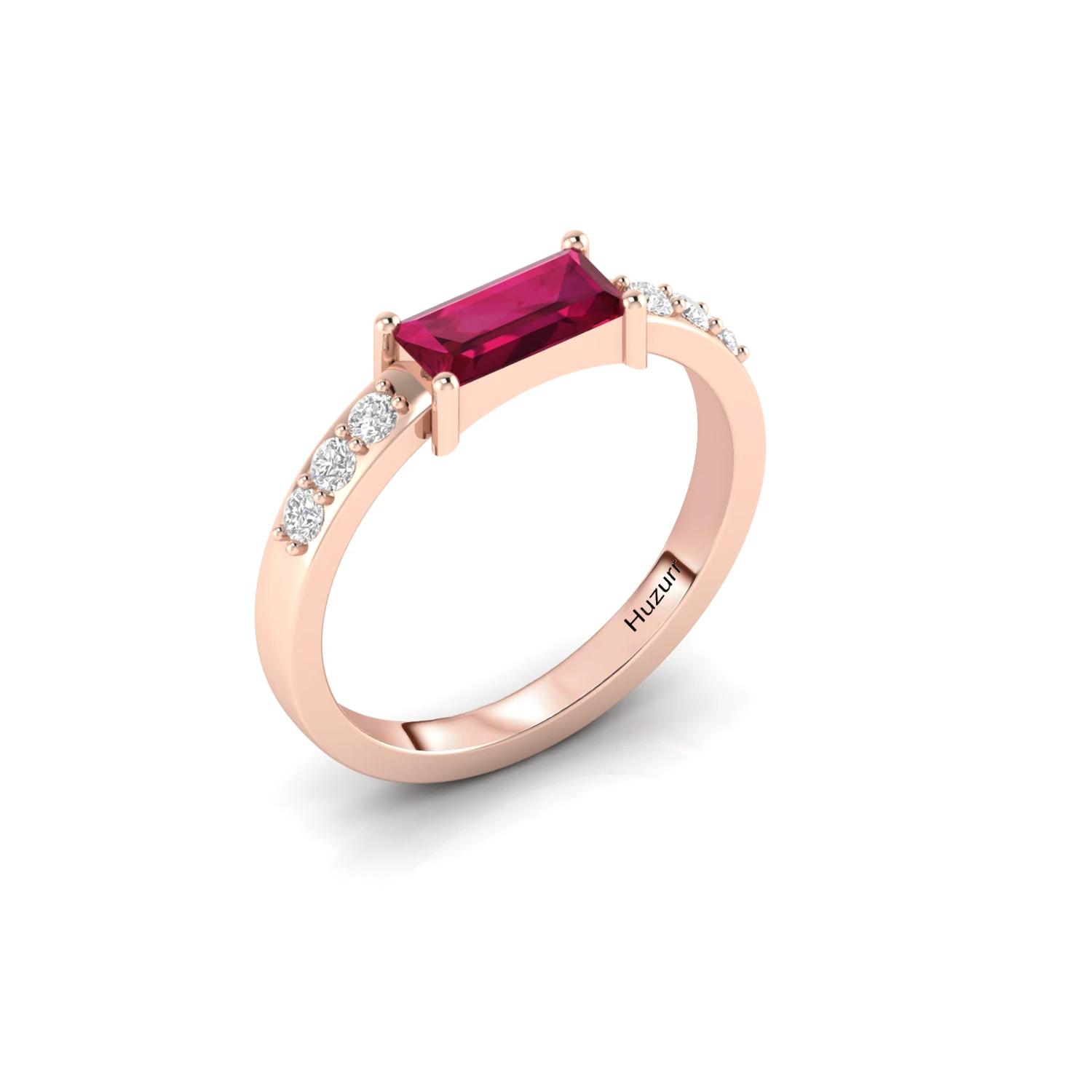
Ruby Rings
Ruby gives a ring instant personality.
A red center stone can feel romantic, glamorous, and unmistakably confident.
Emerald Rings
An emerald ring can look breathtaking.
Because emeralds require appropriate care, think about the setting, your lifestyle, and when you plan to wear the piece.
Amethyst Rings
Amethyst is perfect when you want rich color without staying inside traditional engagement-ring styling.
Aquamarine Rings
Aquamarine makes a ring look delicate and airy.
Pair it with a refined setting, and the result can feel beautifully understated.
Best Gemstones for Necklaces: Elegant Choices for Every Occasion
A necklace lets color sit close to the face without the same daily impact a ring experiences.
That gives you room to explore.
An emerald pendant can create elegant contrast against a black dress.
Aquamarine can make a white or pastel outfit feel softer.
Amethyst adds purple without overwhelming your look.
For an anniversary or birthday gift, a gemstone necklace also solves one common problem:
You usually do not need to know the recipient's ring size.
Huzurr currently offers necklaces alongside its gemstone ring, earring, and bracelet collections.
Best Gemstones for Earrings: Timeless & Colorful Options
Earrings are one of the easiest ways to introduce gemstone color into your jewelry collection.
You can keep them subtle for work or choose larger stones for evenings and special occasions.
Huzurr's earrings currently offer gemstone options including blue sapphire, emerald, ruby, amethyst, and aquamarine, along with jewelry using diamonds and lab-grown alternatives.
Choose blue sapphire when you want rich sophistication.
Choose ruby when you want warmth.
Choose emerald for classic green luxury.
Choose aquamarine when you prefer lighter color.
And choose amethyst when you want the jewelry to feel a little less expected.
Best Gemstones for Bracelets: Stylish Everyday Jewelry
Bracelets let gemstone color move with you.
They work particularly well when you enjoy building a jewelry look rather than wearing one statement piece alone.
You can coordinate a gemstone bracelet with:
- A watch
- A delicate ring
- Matching earrings
- A simple necklace
- Other bracelets in complementary metals
Huzurr's bracelet assortment currently references gemstone choices including aquamarine, emerald, blue sapphire, amethyst, ruby, morganite, garnet, and peridot.
For gifting, bracelets can also be easier to choose than rings because exact sizing is often less complicated depending on the design.
Precious vs Semi-Precious Gemstones for Engagement Rings
Your engagement ring does not need to follow one formula.
Diamond remains iconic, but colored gemstones can make a proposal ring feel unmistakably personal.
Choose Diamond If…
You love classic bridal jewelry and brilliant sparkle.
Choose Sapphire If…
You want strong color while keeping a timeless luxury feel.
Choose Ruby If…
Your style is passionate, bold, and romantic.
Choose Emerald If…
You love rich color, vintage glamour, and distinctive luxury.
Choose Morganite If…
You want a soft pink engagement ring with a romantic mood.
Choose Aquamarine If…
You prefer gentle color and understated sophistication.
The best engagement ring is not the one strangers consider most valuable.
It is the one that feels impossible to imagine on anyone else's hand.
Precious vs Semi-Precious Gemstones for Gifting
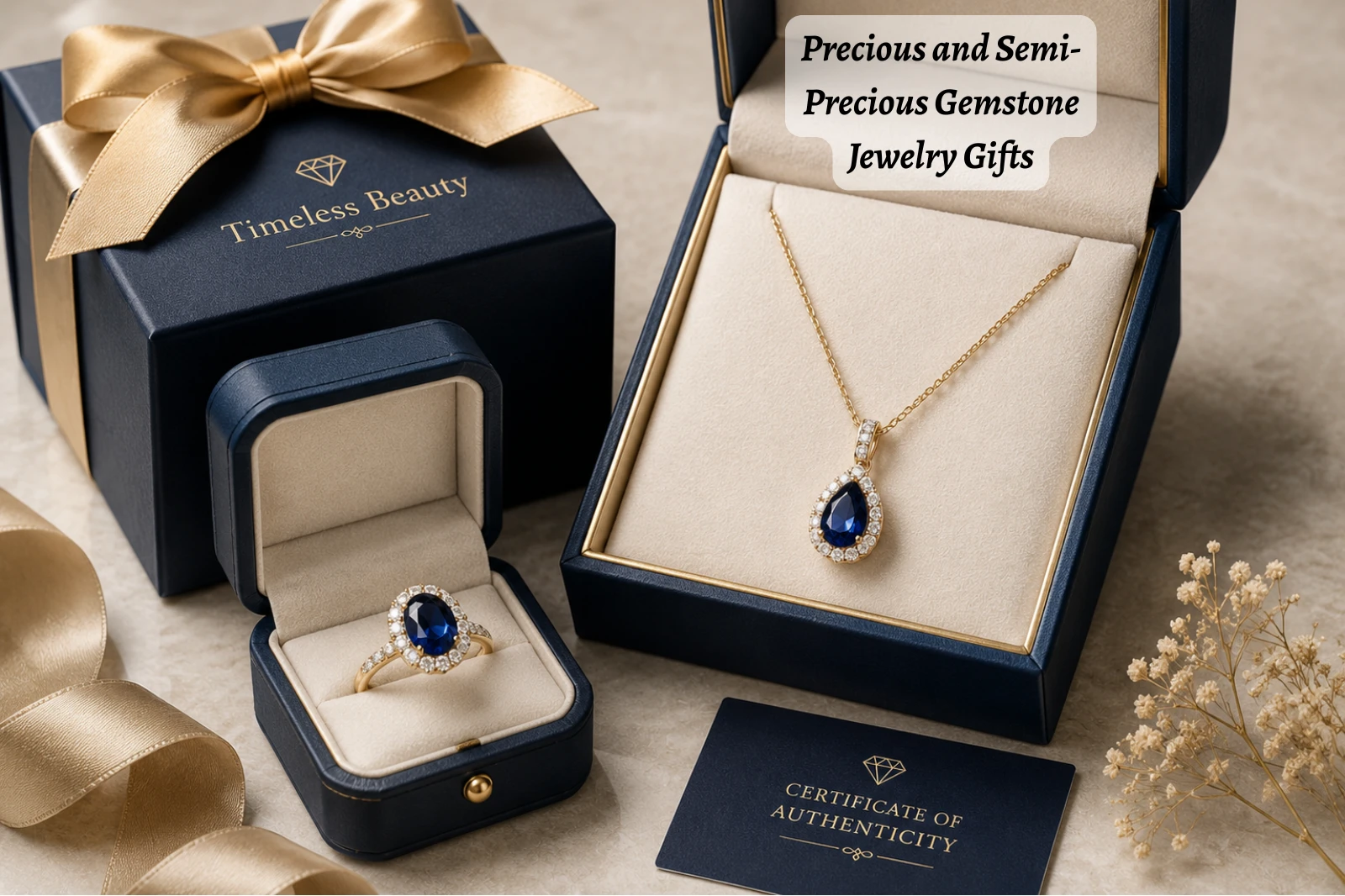
Jewelry becomes more memorable when the gemstone means something to the person receiving it.
Instead of asking:
“Which stone looks most expensive?”
Ask:
“Which stone reminds me of them?”
Perhaps your partner always wears blue.
Choose sapphire, aquamarine, or blue topaz.
Maybe purple is her signature color.
Amethyst suddenly feels much more personal.
For milestone gifts, consider:
- Birthday jewelry
- Anniversary jewelry
- Valentine's Day jewelry
- Christmas gifts
- Graduation jewelry
- Bridal jewelry
- Mother's Day gifts
- “Just because” jewelry
Huzurr currently offers a dedicated gift jewelry section with rings, necklaces, earrings, bracelets, and personalized options.
A gemstone gives you one more layer of meaning.
Natural, Lab-Grown, and Imitation Gemstones: Know What You Are Buying
The gemstone name is not the only detail worth checking.
You should also understand what type of stone is in the jewelry.
Natural Gemstone
A natural gemstone forms in nature.
It may still have received accepted treatments, so review available disclosures.
Lab-Grown Gemstone
A laboratory-grown gem is created through controlled processes rather than formed naturally in the Earth.
The exact terminology and material should be clearly disclosed when you shop.
Imitation Stone
An imitation is designed to resemble another gemstone visually but is not necessarily the same material.
These categories can suit different budgets and shopping priorities.
The important part is transparency.
Huzurr's gift section currently states that its assortment includes lab-grown and imitation gemstone choices alongside various gemstone designs.
Shopping Tip: Read the complete product description before purchasing. Do not assume the stone's origin or composition from color alone.
Shop Precious and Semi-Precious Gemstone Jewelry by Style
Now you know the difference.
The enjoyable part begins.
Minimalist
Choose:
- Small gemstone studs
- Delicate pendants
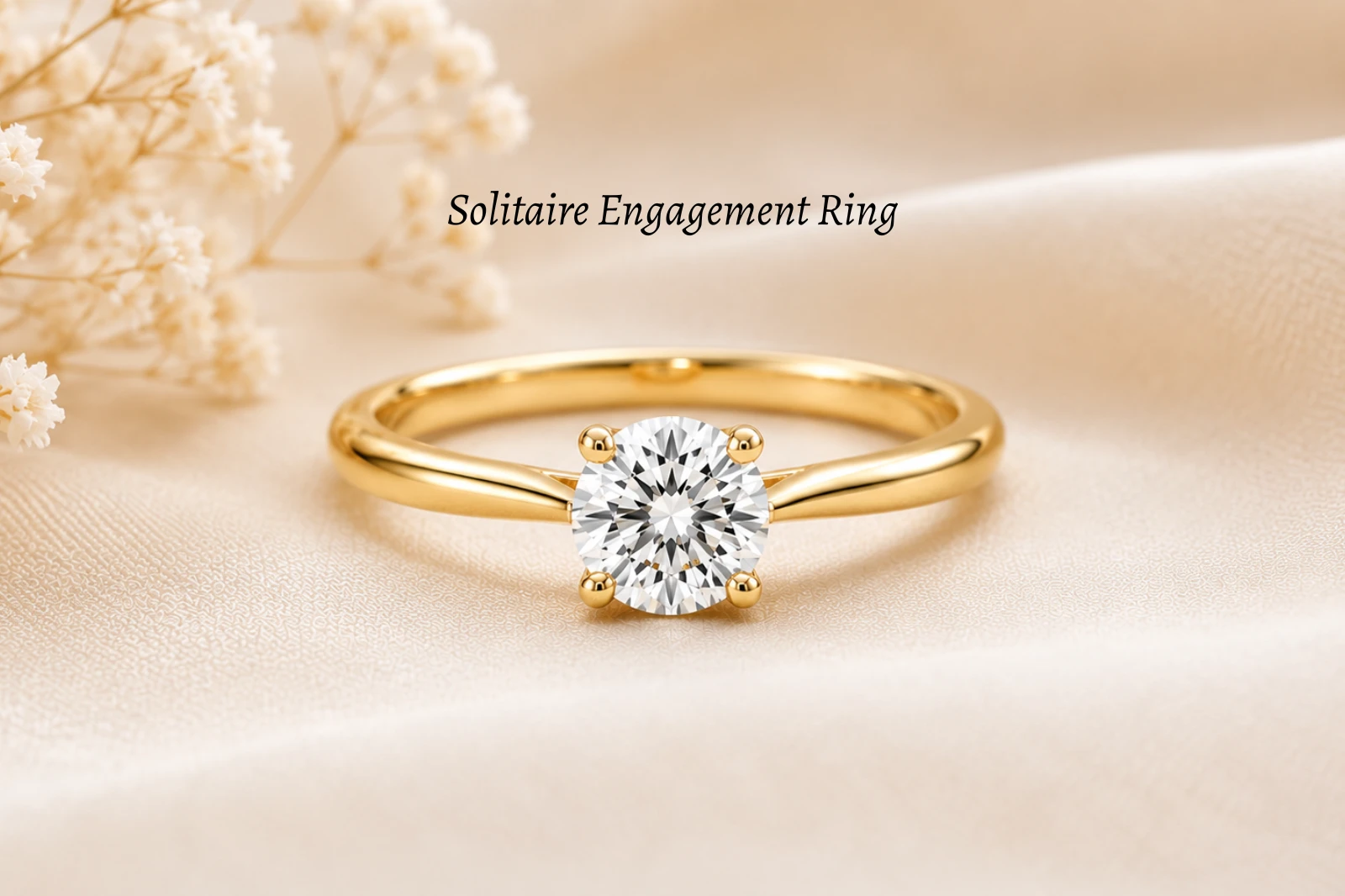
- Simple solitaire rings
- Thin gemstone bracelets
Perfect for everyday wear and understated elegance.
Romantic
Choose:
- Morganite
- Aquamarine
- Ruby
- Amethyst
Look for halos, heart-inspired designs, delicate settings, and warm metal tones.
Classic
Choose:
- Diamond
- Sapphire
- Emerald
- Ruby
Simple designs let an iconic gemstone stay at the center.
Statement
Choose:
- Opal
- London blue topaz
- Emerald
- Garnet
- Larger colorful gemstone combinations
This is jewelry designed to begin conversations.
Vintage Inspired
Emerald, ruby, garnet, amethyst, and sapphire naturally work with designs that feel rich in detail and history.
Imagine an ornate ring beneath restaurant lighting during an anniversary dinner.
That is the mood.
Why Explore Gemstone Jewelry at Huzurr?
Gemstone shopping becomes easier when you can explore different colors and jewelry types in one place.
Huzurr currently carries gemstone jewelry across rings, earrings, necklaces, and bracelets, with featured stones including blue sapphire, emerald, ruby, amethyst, garnet, opal, aquamarine, morganite, London blue topaz, and peridot.
A Wide Gemstone Selection
You do not have to choose between only one or two colors.
You can compare deep blues, vivid greens, romantic pinks, rich reds, purples, and brighter tones according to your wardrobe and occasion.
Different Jewelry Categories
Once you find a gemstone you love, explore it in different forms.
Start with a gemstone ring then compare matching or complementary:
- Necklaces
- Earrings
- Bracelets
- Gift jewelry
Custom Jewelry Options
Sometimes the design in your head is more specific than what you see in a collection.
Huzurr currently states that its custom silver gemstone jewelry service allows shoppers to choose aspects such as the design, gemstone, and metal plating.
That makes customization worth exploring when you are shopping for an engagement, anniversary, birthday, or another milestone.
Jewelry for Gifting
Huzurr's gift section includes rings, necklaces, earrings, bracelets, and personalized pieces for occasions such as birthdays and anniversaries.
Instead of choosing a generic present, you can start with the recipient's favorite color or gemstone and build from there.
Your Gemstone Jewelry Buying Checklist
Before you buy precious or semi-precious gemstone jewelry online, run through this checklist.
Gemstone
- Which gemstone is used?
- Is it natural, lab-grown, or imitation?
- Are treatments disclosed where relevant?
- Do I genuinely love the color?
- Does the gemstone suit how often I will wear it?
Jewelry
- What metal is used?
- What plating or finish is used?
- Are the dimensions provided?
- Is the setting appropriate for the gemstone?
- Does the piece suit my lifestyle?
Purchase
- Have I checked sizing?
- Have I reviewed shipping information?
- Have I reviewed return terms?
- Do I understand the stone description?
- Is customer support available?
- Have I compared similar designs?
- Would I still love this piece without knowing whether someone calls the stone precious or semi-precious?
That last question matters more than it sounds.
FAQs About Precious vs Semi-Precious Gemstones
1. What is the difference between precious and semi-precious gemstones?
Traditionally, diamond, ruby, sapphire, and emerald are called precious gemstones, while most other jewelry gemstones are called semi-precious. The classification does not automatically determine quality or value.
2. What are the four precious gemstones?
The four stones traditionally known as precious gemstones are diamond, ruby, sapphire, and emerald.
3. What are examples of semi-precious gemstones?
Popular examples include amethyst, aquamarine, garnet, citrine, topaz, peridot, tourmaline, morganite, tanzanite, and opal.
4. Are semi-precious gemstones valuable?
Yes. Semi-precious gemstones can be valuable, especially when a stone has exceptional rarity, size, color, quality, or desirable origin.
5. Are precious gemstones always more expensive?
No. The category alone does not determine price. Quality, rarity, size, color, treatments, origin, market demand, and other factors influence gemstone value.
6. Is amethyst a precious or semi-precious gemstone?
Amethyst is traditionally classified as a semi-precious gemstone.
Its purple color makes it popular for rings, earrings, necklaces, and birthstone jewelry.
7. Is aquamarine a precious stone?
Aquamarine is traditionally classified as semi-precious.
Its light blue color is especially popular in elegant, romantic jewelry.
8. Is emerald a precious gemstone?
Yes. Emerald is one of the four gemstones traditionally classified as precious.
It is best known for its rich green color.
9. Is sapphire precious or semi-precious?
Sapphire is traditionally considered a precious gemstone.
Blue sapphire is the best-known variety in jewelry.
10. Is ruby a precious gemstone?
Yes. Ruby is traditionally one of the four precious gemstones and is known for its red color.
11. Which gemstone is best for everyday wear?
The answer depends on the jewelry type and lifestyle.
For frequent wear, consider gemstone durability—including hardness, toughness, and stability—not only beauty. GIA emphasizes all three factors when evaluating how a gem will handle wear.
12. Are semi-precious gemstones good for engagement rings?
Yes.
Sapphire alternatives such as morganite, aquamarine, and other colored stones can create distinctive engagement rings, although durability and care requirements should be considered.
13. How can I tell if gemstone jewelry is good quality?
Look at the gemstone's color, cut, condition, size, disclosures, treatments, origin information when provided, metal quality, setting, craftsmanship, and seller information.
Do not judge quality only by the precious or semi-precious label.
14. Should I choose a precious or semi-precious gemstone as a gift?
Choose according to the recipient's style, favorite color, birthstone, lifestyle, and the meaning of the occasion.
A personally chosen semi-precious gemstone can make a much stronger gift than a precious stone selected only because of its category.
15. Where can I shop precious and semi-precious gemstone jewelry online?
You can explore Huzurr's gemstone jewelry across rings, earrings, necklaces, bracelets, and gifts, including designs featuring stones such as blue sapphire, emerald, ruby, amethyst, aquamarine, garnet, opal, morganite, topaz, and peridot.
Precious or Semi-Precious? Choose the Gemstone You Will Love Wearing
The jewelry counter is full of beautiful stones.
Diamond shines beside sapphire.
Emerald brings unmistakable green.
Ruby necklace feels dramatic.
Then you see aquamarine, amethyst, garnet, morganite, opal, or topaz—and suddenly the traditional categories matter much less.
That is the real lesson behind precious vs semi-precious gemstones.
The label can help you understand jewelry terminology.
It should not choose your jewelry for you.
Look at color.
Think about durability.
Understand what you are buying.
Choose a piece that fits your lifestyle, your budget, and the moment you want it to represent.
Perhaps it will become your engagement ring.
Perhaps you will open it on Valentine's Day.
Maybe it becomes an anniversary gift you still wear years later.
Or maybe you buy it for yourself simply because the stone made you stop scrolling.
Explore Huzurr's gemstone rings, necklaces, earrings, bracelets, and gift jewelry, compare the colors that speak to you, and find the gemstone that deserves a place in your story.
Because the most precious gemstone is not always the one with the most prestigious label.
Sometimes, it is simply the one you never want to take off.